

Key Takeaways
Start here
Why Maintenance Matters From Day One
Next
The Checks You Can Do Yourself
Then
When to Call in a Professional
Put it together
Building a Simple Maintenance Routine
Why Maintenance Matters From Day One
Taking on a car means taking on responsibility for keeping it safe and reliable. Maintenance isn't just about avoiding breakdowns - it directly affects your safety and that of other road users. A car with worn tyres, low brake fluid, or a failing battery is a hazard, not just an inconvenience.
The good news is that most of what keeps a car roadworthy comes down to regular, simple habits rather than mechanical expertise. You don't need to be a trained technician to stay on top of the basics. For a full picture of what ownership involves at every stage, see Car Maintenance from First Purchase to High Mileage.
Your Owner's Manual Is Your Best Starting Point
Every car is different, and manufacturer-specific guidance beats generic advice every time. Your owner's manual lists the correct fluid specifications, tyre pressures, and service intervals for your exact model. Keep it in your glove box and refer to it before buying any product or booking a service.
Your owner's manual is the single most reliable source of guidance for your specific vehicle - it should be your first reference, not a last resort.
The Checks You Can Do Yourself
Several routine checks require no tools and just a few minutes. Building these into a regular habit will help you catch problems early before they develop into something serious.
Tread depth
The measurement of how much rubber remains on a tyre's surface. Less tread means less grip, especially on wet roads.
Coolant
A liquid that circulates through the engine to regulate temperature and prevent overheating or freezing.
Brake fluid
A hydraulic fluid that transfers the force from your brake pedal to the brake components at each wheel.
Service interval
The recommended mileage or time period between professional servicing appointments, as specified by the vehicle manufacturer.
Tyre pressure
The amount of air inside a tyre, measured in PSI (pounds per square inch). Correct pressure affects safety, fuel efficiency, and tyre lifespan.
Tyres
Check tyre pressure monthly using a gauge - the correct values are in your owner's manual or on a sticker inside the driver's door frame. Also inspect the tread depth: the legal minimum in most US states is 2/32 of an inch, but many safety experts recommend replacing tyres before they reach that point. Look for uneven wear, cracks, or embedded objects while you're at it.
Fluid Levels
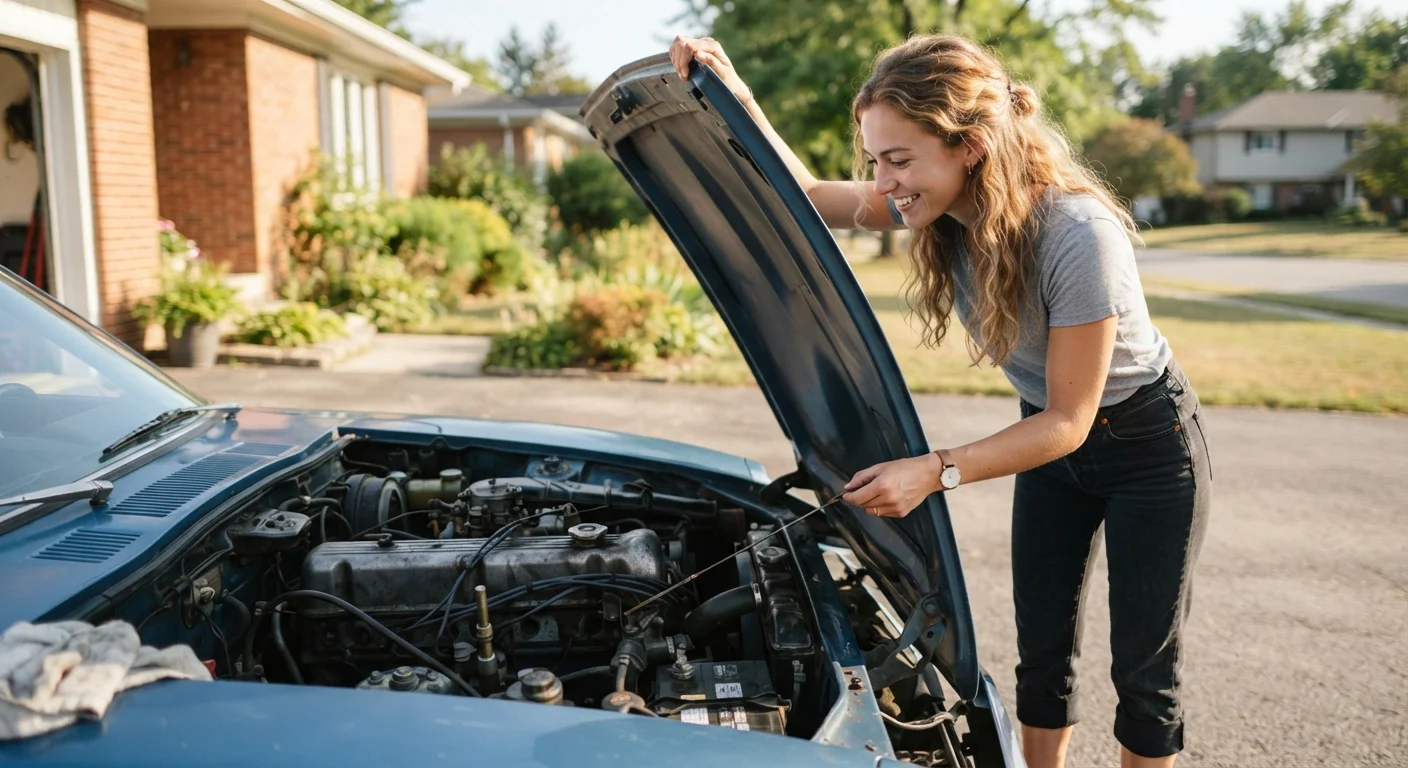
Engine oil, coolant, brake fluid, and windshield washer fluid all have clearly marked reservoirs under the hood. Check them with the engine cold and the car parked on level ground. Car Fluid Basics: What Each One Does Under the Bonnet explains each fluid's role in plain language.
Lights and Wipers
Walk around the car periodically and confirm all exterior lights - headlights, brake lights, indicators, and reverse lights - are working. Replace wiper blades when they start streaking, typically once or twice a year depending on conditions.
Battery
If your car struggles to start or the interior lights seem dim, your battery may be weakening. Battery Care Habits That Extend Its Life covers how driving patterns and climate affect battery health.
When to Call in a Professional
Knowing your limits is part of good car ownership. Some jobs are genuinely risky to attempt without training and proper equipment. Brakes, steering components, suspension, and anything involving the fuel or electrical systems should be handled by a qualified mechanic.
Warning signs that need prompt professional attention include: unusual noises (grinding, squealing, or knocking), warning lights on the dashboard, a pulling sensation when braking or steering, or visible fluid leaks under the car. Ignoring these can turn a modest repair bill into a major one - or, more importantly, create a safety risk.
Don't Ignore Dashboard Warning Lights
Warning lights are your car's way of flagging a problem before it gets worse. If a light appears - particularly for oil pressure, temperature, or brakes - don't assume it will clear on its own. Have it assessed by a qualified mechanic promptly. Driving with an active warning light can turn a minor issue into a costly or dangerous one.
For an honest guide to what you can reasonably handle versus what needs a professional, DIY Car Maintenance vs Taking It to a Mechanic is a useful next read.
Building a Simple Maintenance Routine
The most effective approach to car maintenance is consistency rather than occasional deep-dives. A simple schedule keeps things manageable:
- Monthly: Tyre pressure, tyre condition, fluid levels, exterior lights
- Every 3-6 months: Wiper blades, cabin and engine air filters (check your manual), battery terminals for corrosion
- Per your owner's manual: Oil changes, brake inspections, spark plugs, and scheduled servicing
It's also worth thinking about seasonal demands. Hot summers and cold winters both put extra strain on specific components. Seasonal Car Care: Preparing for Summer and Winter Driving walks through what changes and what to check as conditions shift.
Maintenance and running costs go hand in hand. Keeping Running Costs Under Control Without Cutting Corners on Safety shows how staying on top of routine checks can help manage your overall ownership costs. For a complete rundown of the regular tasks involved, Routine Maintenance Every Car Owner Should Know About is a practical companion guide.