

Key Takeaways
Our Verdict
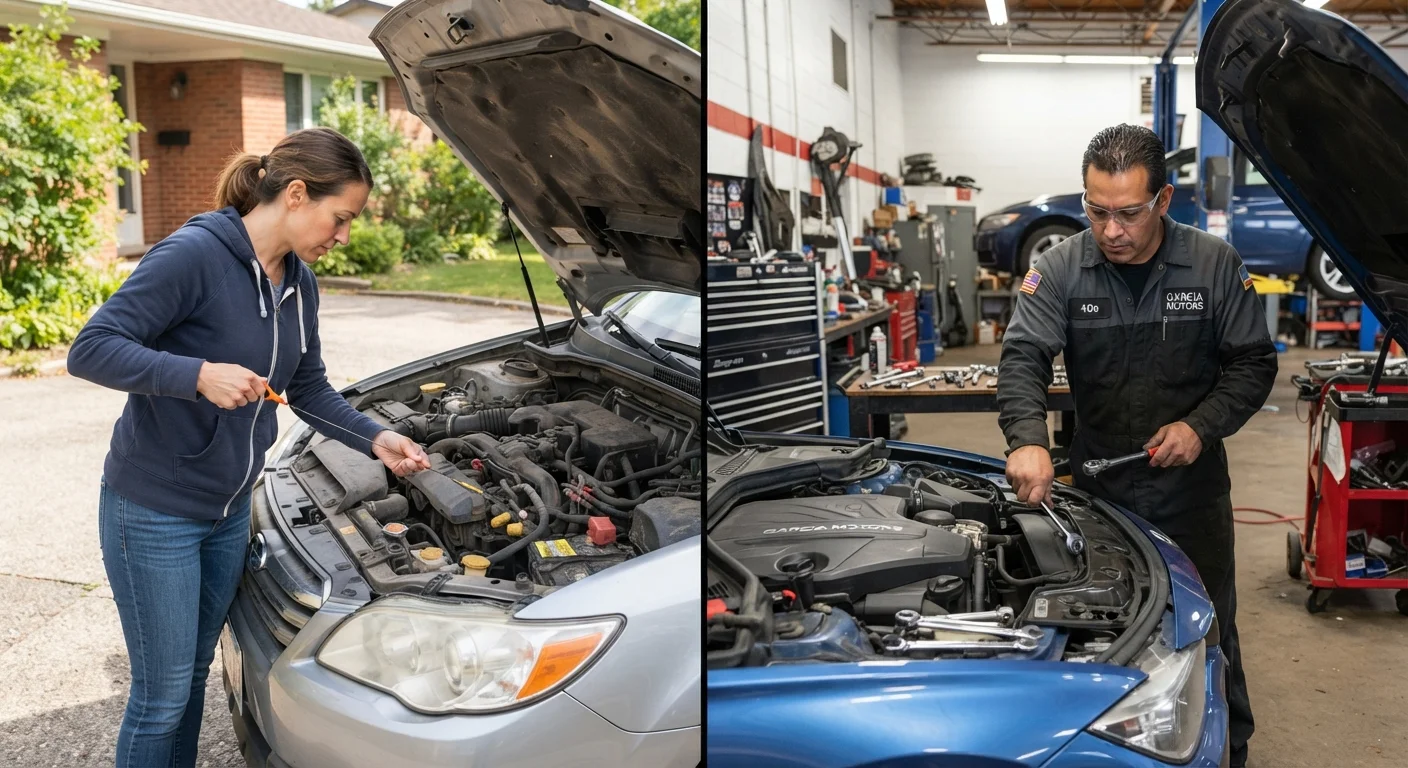
DIY maintenance makes sense for low-risk, accessible tasks that require minimal tools and carry limited safety consequences if done imperfectly. However, anything involving braking systems, structural components, or complex diagnostics is best left to a qualified mechanic. Matching the right approach to the right job keeps your car safer and often saves money over time.
| Best for | Recommended |
|---|---|
| Beginners comfortable following instructions | DIY |
| Safety-critical or complex repairs | Mechanic |
| Routine fluid and visual checks | DIY |
| Unfamiliar warning lights or unusual symptoms | Mechanic |
Why This Decision Actually Matters
For many new car owners, the question isn't just about saving money - it's about understanding what's actually happening under the hood. Tackling the right maintenance tasks yourself builds confidence and helps you spot problems early. Getting the wrong ones wrong, though, can compromise your safety or create repairs far more expensive than the original issue.
The good news: the line between DIY-friendly and professional-only is fairly consistent across most vehicles. See our beginner's guide to car maintenance for a broader foundation before diving in.
| Task | DIY-Friendly | Best Left to a Mechanic | |
|---|---|---|---|
| Fluid checks & top-offs | Yes - quick, low-risk | Not necessary | |
| Wiper blade replacement | Yes - simple clip-on process | Not necessary | |
| Air filter replacement | Usually yes - check manual | Only on complex assemblies | |
| Tire pressure check | Yes - basic gauge required | Not necessary | |
| Brake system work | Not recommended | Yes - safety-critical | |
| Electrical diagnostics | Limited without scan tools | Yes - specialized equipment needed | |
| Timing belt/chain | No - high risk of engine damage | Yes - precision required | |
| Exterior bulb replacement | Often yes - check manual first | Some modern headlights need a pro |
Tasks That Work Well as DIY
The following jobs require little more than basic tools, a clean workspace, and careful attention to your owner's manual:
- Checking and topping off fluids: Engine oil, coolant, brake fluid, and windshield washer fluid all have clearly marked reservoirs. Checking levels and topping them off (using the correct fluid type) is straightforward and takes minutes.
- Replacing wiper blades: Most wiper blades clip on and off without any tools. Replacement intervals vary, but annual checks are sensible - especially before winter.
- Swapping cabin and engine air filters: Both are typically accessible without lifting the vehicle. Your owner's manual will show exactly where they are and how often to replace them.
- Checking tire pressure: A basic tire pressure gauge costs just a few dollars. Keeping tires at the manufacturer's recommended pressure (found on the driver's door jamb sticker) improves safety and fuel efficiency.
- Replacing bulbs: Many exterior bulbs - such as reverse lights and turn signals - can be changed with a screwdriver. Headlight assemblies on some modern vehicles are more complex, so check your manual first.
A simple monthly car check can cover most of these items in under 20 minutes.
Start With Your Owner's Manual
Every vehicle comes with a manufacturer's manual that lists service intervals, fluid specifications, and component locations specific to your car. It's the single most reliable reference for DIY maintenance. If you've misplaced yours, most manufacturers make digital versions available through their websites.
When You Should Call a Mechanic
Some jobs look approachable but carry real risks when performed without proper training or equipment. These include:
- Brake system work: Replacing brake pads, rotors, or calipers requires lifting the vehicle safely, torquing components to precise specifications, and verifying the system afterward. An error here directly affects stopping ability.
- Suspension and steering components: These affect how your vehicle handles. Incorrect installation can make a car unpredictable at speed.
- Electrical diagnostics: Modern vehicles rely on interconnected computer systems. Diagnosing warning lights typically requires a professional scan tool and the expertise to interpret results accurately.
- Timing belt or chain replacement: This is a precise, labor-intensive job. If the timing is set incorrectly, it can cause serious engine damage.
- Transmission service: Fluid changes on automatic transmissions can be simple, but anything beyond that - slipping, unusual shifting, or warning lights - warrants a professional assessment.
Never Work Under an Unsupported Vehicle
If a job requires lifting your car, always use proper jack stands rated for your vehicle's weight - never rely on a floor jack alone. A vehicle falling while you're underneath it is a life-threatening hazard. If you're unsure how to safely lift and support your car, have the job done professionally.
For a broader look at what's required at each mileage milestone, this guide to car maintenance across ownership stages is worth bookmarking.
Making the Call: A Practical Framework
Before starting any job, ask yourself three questions:
- Do I have the right tools? Some jobs require torque wrenches, jack stands, or diagnostic readers. Improvising with the wrong tools is a common source of mistakes.
- What's the consequence of getting it wrong? Fitting the wrong wiper blade wastes a few dollars. A brake job done incorrectly is a safety hazard. Weight the risk accordingly.
- Is my vehicle standard? Electric vehicles, hybrids, and vehicles with advanced driver-assistance systems (ADAS) often have service requirements that differ meaningfully from conventional gas-powered cars. Always check manufacturer guidance.
It's also worth reading up on common car maintenance myths - some widely repeated advice doesn't reflect how modern vehicles actually work. And for a full rundown of routine upkeep, this overview of routine car maintenance covers the essentials clearly.