

Key Takeaways
Why Most Drivers Skip Their Owner's Manual
The owner's manual is the only document written specifically for your exact vehicle - your engine size, your transmission type, your model year. Yet most drivers never open it beyond the first week of ownership, if at all. Generic maintenance advice found online may be useful as a starting point, but it cannot account for the specific intervals, tolerances, and fluid grades your manufacturer has determined through engineering and testing.
Think of it this way: a mechanic who has never seen your specific model before will still reach for a reference guide. Your manual is that reference guide, and it's already in your glove box. Spending 30-45 minutes with it once could save you from unnecessary repairs, incorrect fluid choices, or missed service milestones that affect your vehicle's reliability and - in some cases - its warranty coverage.
Don't Rely on General Advice Alone
Maintenance intervals published online or shared by well-meaning friends are often generalised estimates. Your vehicle's manufacturer has tested and specified exact schedules for your engine, transmission, and fluids. Following generic guidance instead of your manual's specifications could void a warranty or accelerate wear on critical components.
This guide walks you through how to read the sections that matter most, in a practical order that builds useful knowledge fast. For broader context on owning and running a vehicle day-to-day, explore the car ownership basics hub.
Owner's Manual
The primary reference document for your vehicle's maintenance schedules, fluid specifications, and safety information.
Notepad or Notes App
For recording key intervals, fluid types, and tyre pressures so you don't need to re-read the manual each time.
Highlighter or Sticky Tabs
Mark the most frequently referenced pages - maintenance schedule, tyre pressure, and fluid specs - for fast access.
What You'll Need Before You Start
You don't need any tools or mechanical knowledge to use your owner's manual effectively - just the manual itself and a way to take notes. If your physical copy is missing or damaged, visit your manufacturer's official website and search for your model and year; most publish free downloadable PDFs.
What you will need
Set aside a quiet 30-45 minutes - not while parked in a rush. The goal is to extract a small set of key figures and familiarise yourself with two or three critical sections, not to memorise every page.
Can't Find Your Physical Manual?
Many manufacturers publish digital versions of their owner's manuals on their official websites, searchable by vehicle model and year. Check the manufacturer's support or ownership section - you can often download a PDF at no cost. Keep a digital copy on your phone for quick reference.
How to Read the Sections That Matter
Follow the steps below to work through the most important parts of your owner's manual efficiently. You'll come away with a personalised maintenance reference you can act on immediately.
Locate and open your owner's manual
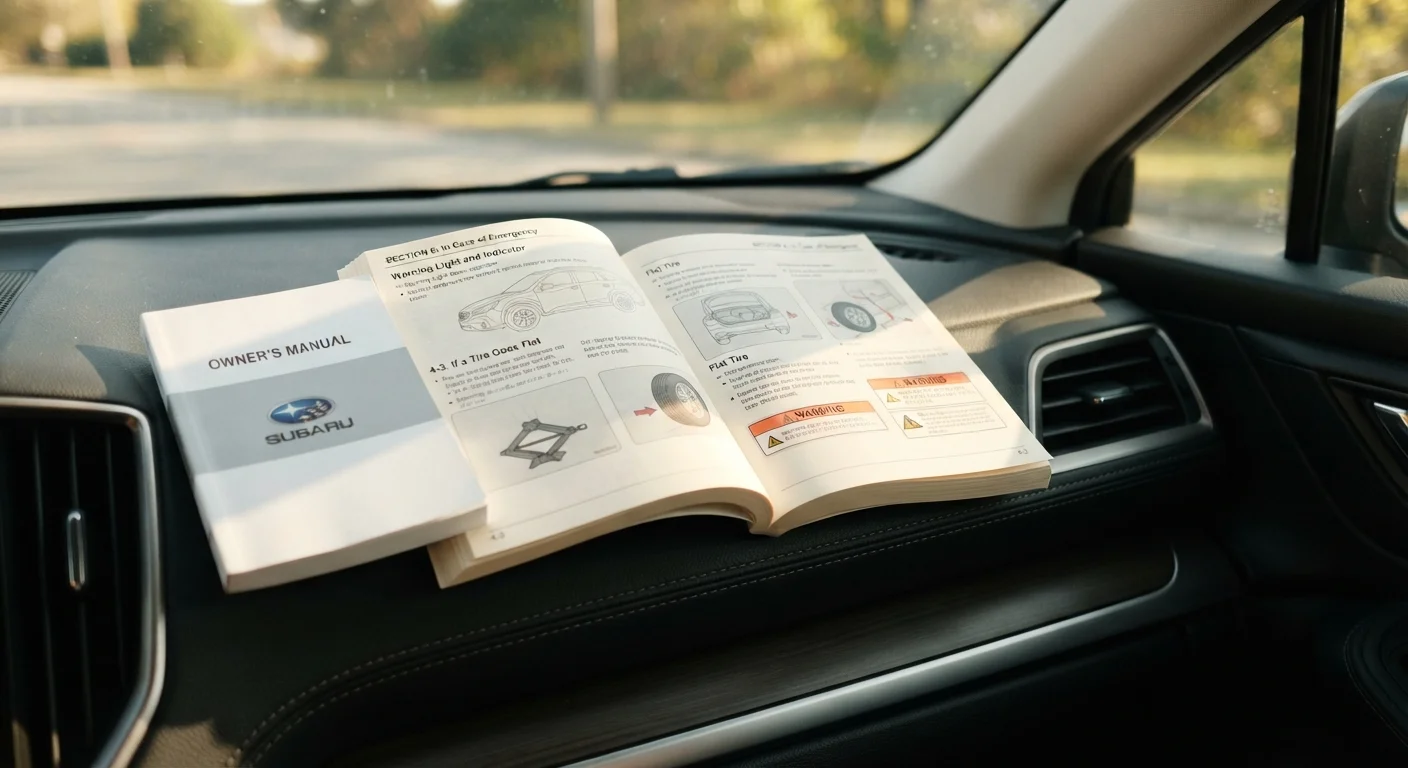
Most owner's manuals live in the glove compartment. If yours is missing, check the manufacturer's official website - most publish free downloadable PDFs organised by model year. Once you have it, flip to the table of contents. You'll find the manual divided into sections covering instruments and controls, maintenance, specifications, and emergency procedures.
Find the recommended maintenance schedule
The maintenance schedule - sometimes called a service interval table - lists every routine task your manufacturer recommends and at what mileage or time interval it should happen. This includes oil changes, air filter replacement, spark plugs, brake inspections, coolant flushes, and more. Note that intervals differ between vehicles: one model may call for an oil change every 5,000 miles, another every 10,000. Write down the tasks and intervals relevant to your current mileage.
For more on building a practical routine around these intervals, see routine maintenance every car owner should know about.
Note your vehicle's fluid specifications
Flip to the specifications section, usually near the back. Here you'll find the exact engine oil viscosity (such as 5W-30 or 0W-20), coolant type, brake fluid grade, and transmission fluid specification for your vehicle. These are not interchangeable across models. Record these in your notes app or on a card stored in the glove box alongside the manual.
To understand what each fluid does before you top anything up, learn what each fluid does under the hood.
Find the correct tyre pressure for your vehicle
Your manual will list the recommended tyre pressures - measured in PSI (pounds per square inch) - for both the front and rear tyres, and sometimes a different figure for when the vehicle is carrying a full load. Do not rely on the number moulded into the tyre sidewall; that figure is the tyre's maximum pressure, not the vehicle manufacturer's recommended operating pressure. The correct figure is specific to your car and is also commonly printed on a sticker inside the driver's door jamb.
For a full walkthrough on checking and adjusting tyre pressure yourself, see tyre pressure: the maintenance task most drivers skip.
Review the warning lights section
Your manual includes a dedicated section explaining every dashboard warning light for your specific vehicle, along with the recommended response - whether that means stopping immediately, scheduling a service, or simply monitoring the situation. Familiarise yourself with the critical ones: oil pressure, engine temperature, and brake warning lights typically require prompt attention. Knowing these in advance means you won't be searching the manual in a stressful roadside situation.
For a broader guide to what dashboard symbols mean and when to act, see our warning lights explainer.
Record your key figures and set reminders
Compile the information you've gathered - oil change interval, fluid specifications, tyre pressures, and next service milestone - into a single reference note. Store it digitally or write it on a card in the glove box. Set a reminder in your phone calendar for your next scheduled maintenance interval so it doesn't slip by unnoticed.
Once you've done this, pair it with a quick monthly visual check. The monthly car check every driver should do shows you a simple no-tools routine you can complete in under 20 minutes.
Wrong Fluids Can Cause Serious Damage
Using the incorrect engine oil viscosity, coolant type, or transmission fluid - even once - can damage seals, degrade performance, or cause long-term mechanical problems. Always cross-check the fluid specification in your manual before topping up or changing any fluid. If you're unsure, ask a qualified mechanic.
Once you've built this foundation, maintaining running costs without cutting corners on safety becomes significantly easier - because you'll know exactly what your vehicle needs and when.