

| Number of key fluids to monitor | 6 (oil, coolant, brake, power steering, transmission, washer) |
| How often to check fluid levels | Monthly and before long trips |
| Engine oil check method | Dipstick, engine cold, car on level ground |
| Coolant safety rule | Never open the cap on a hot engine |
| Brake fluid behavior | Absorbs moisture over time; needs periodic replacement |
| Best fluid reference source | Your vehicle's owner's manual |
Why Car Fluids Matter
Your car is essentially a system of systems - and nearly every one of them depends on a fluid to function. Without the right fluids at the right levels, components overheat, seize, corrode, or fail to respond when you need them most. The good news is that checking fluid levels is one of the simplest maintenance tasks any driver can do, and it costs nothing but a few minutes.
This guide explains what each major fluid does, where to find it, and what to watch for. For a broader look at staying on top of your vehicle, see our routine maintenance guide covering oil changes, tyre checks, and more.
| Number of key fluids to monitor | 6 (oil, coolant, brake, power steering, transmission, washer) |
| How often to check fluid levels | Monthly and before long trips |
| Engine oil check method | Dipstick, engine cold, car on level ground |
| Coolant safety rule | Never open the cap on a hot engine |
| Brake fluid behavior | Absorbs moisture over time; needs periodic replacement |
| Best fluid reference source | Your vehicle's owner's manual |
The Six Essential Fluids Explained
Understanding what lives under the bonnet helps you spot problems before they become costly repairs.
Engine Oil
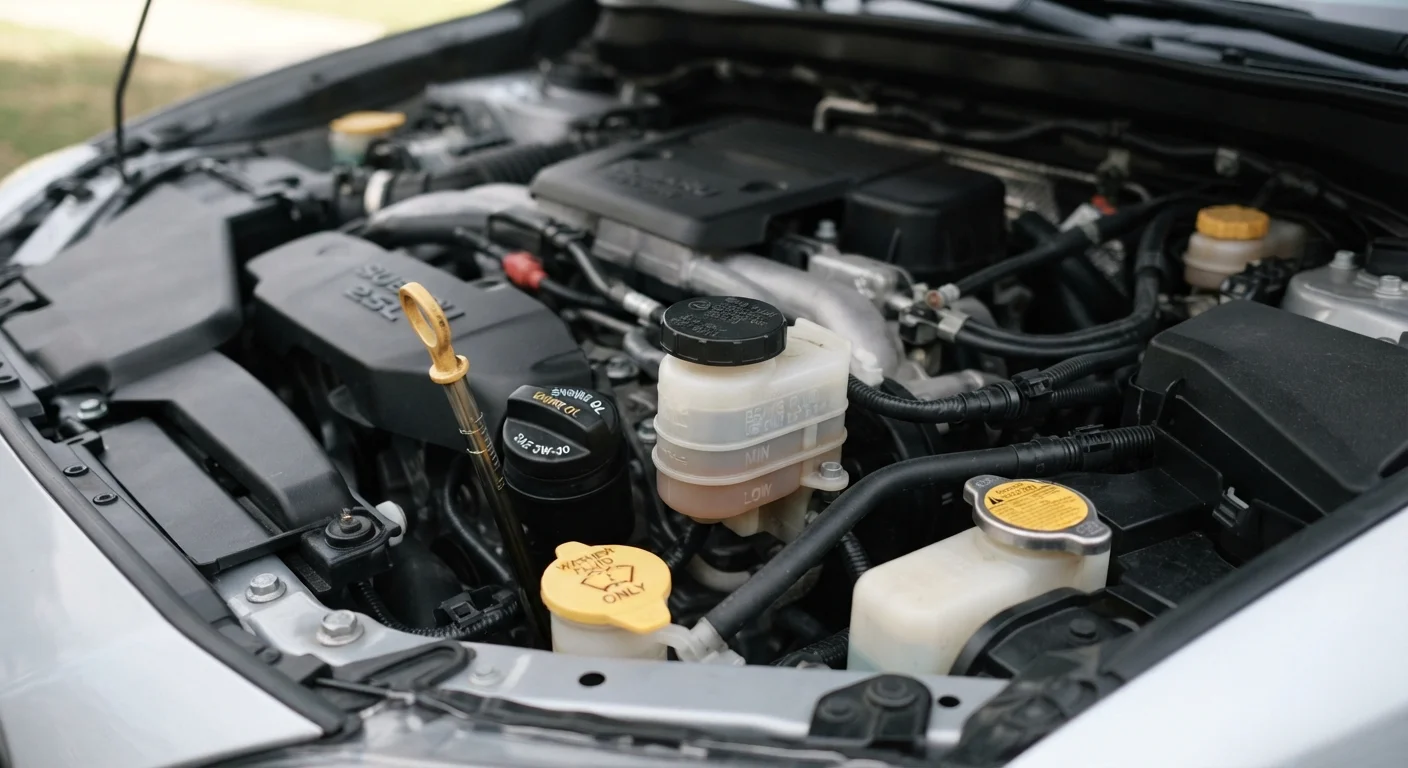
Engine oil lubricates moving metal parts, reduces friction, and carries heat away from the engine. Without it, metal surfaces grind together and an engine can seize within minutes. Check the level using the dipstick - typically a brightly colored loop near the engine - with the car parked on level ground and the engine cold. Oil should sit between the minimum and maximum markers and appear amber to dark brown. Black, gritty oil or a milky appearance can signal problems worth discussing with a mechanic.
Coolant (Antifreeze)
Coolant circulates through the engine and radiator to regulate temperature, preventing both overheating in summer and freezing in winter. It's usually stored in a translucent plastic reservoir near the radiator. Never open the coolant cap on a hot engine - pressurized fluid can cause serious burns. Check the level only when the engine is cold, and look for the min/max markings on the side of the tank.
Brake Fluid
Brake fluid transmits the force of your foot on the brake pedal through hydraulic lines to the brakes themselves. It lives in a small reservoir near the firewall (the wall between the engine and cabin). If the level drops noticeably without a visible leak, have a mechanic inspect your brake system - this is not a fluid that should disappear under normal use. Brake fluid also absorbs moisture over time, which is why manufacturers recommend periodic replacement.
Power Steering Fluid
Vehicles with hydraulic power steering use this fluid to make turning the wheel easier. Many newer cars use electric power steering and have no such reservoir at all - check your owner's manual to confirm what your vehicle uses.
Transmission Fluid
Transmission fluid lubricates the gears and internal components of your gearbox, whether automatic or manual. Some vehicles have a dipstick for this; others require a workshop check. Low or degraded transmission fluid can cause rough gear changes or slipping.
Windshield Washer Fluid
The only fluid on this list that doesn't affect your engine or safety systems directly - but a dry washer reservoir at the wrong moment can become a visibility hazard. Top it up with a purpose-made washer concentrate mixed with water; plain water can freeze in cold weather and may leave mineral deposits on your screen.
Dipstick
A long metal rod inserted into the engine oil reservoir, used to measure the oil level. Pull it out, wipe it clean, reinsert it fully, then withdraw it again to get an accurate reading.
Coolant (Antifreeze)
A liquid mixture, typically water and ethylene glycol, that circulates through the engine to regulate temperature. It prevents both overheating and freezing depending on the season.
Hydraulic brake fluid
A specialized fluid that transmits mechanical force through the brake lines when you press the pedal. It must remain uncontaminated and at the correct level to ensure reliable braking.
Firewall
The metal barrier separating the engine compartment from the passenger cabin. Several fluid reservoirs, including the brake fluid reservoir, are typically mounted near it.
Transmission fluid
A lubricating fluid that keeps the gears and internal components of your gearbox running smoothly. It can degrade over time and may need replacement according to your manufacturer's schedule.
Practical Tips for Checking Fluids
Build a habit of checking fluid levels roughly once a month and before any long trip. Here's a simple approach:
- Park on level ground and let the engine cool for at least 10 minutes before opening anything.
- Open the bonnet and locate each reservoir - your owner's manual will have a labeled diagram if you're unsure.
- Check levels against the marked indicators; top up only with the correct fluid type specified for your vehicle.
- Look for unusual colors, floating particles, or smells - these can signal a problem beyond a simple top-up.
- If any fluid is consistently low between checks, have the vehicle inspected for a possible leak.
If you're new to car ownership, the car maintenance basics guide walks through these habits step by step. And before assuming any maintenance practice is standard, it's worth consulting the common myths that cost drivers money - some widely repeated advice doesn't hold up.
This article provides general information only. Always refer to your vehicle's owner's manual and consult a qualified mechanic for advice specific to your car model and condition.