

Key Takeaways
Start here
Before Your Cat Arrives
Next
Setting Up a Safe Base Room
Then
The First 24 Hours
When you're ready
Expanding Your Cat's World
Ongoing care
Feeding, Grooming, and Vet Visits
Before Your Cat Arrives
Getting prepared before your cat steps through the door makes a real difference to how smoothly those first days go. Read through our practical pre-arrival checklist to make sure nothing essential slips through the cracks.
At minimum, have the following ready:
- Food and water bowls - sturdy, easy to clean, and placed away from each other (cats generally prefer their water source away from food)
- Litter box and litter - one box per cat, plus one extra, is the widely accepted guideline
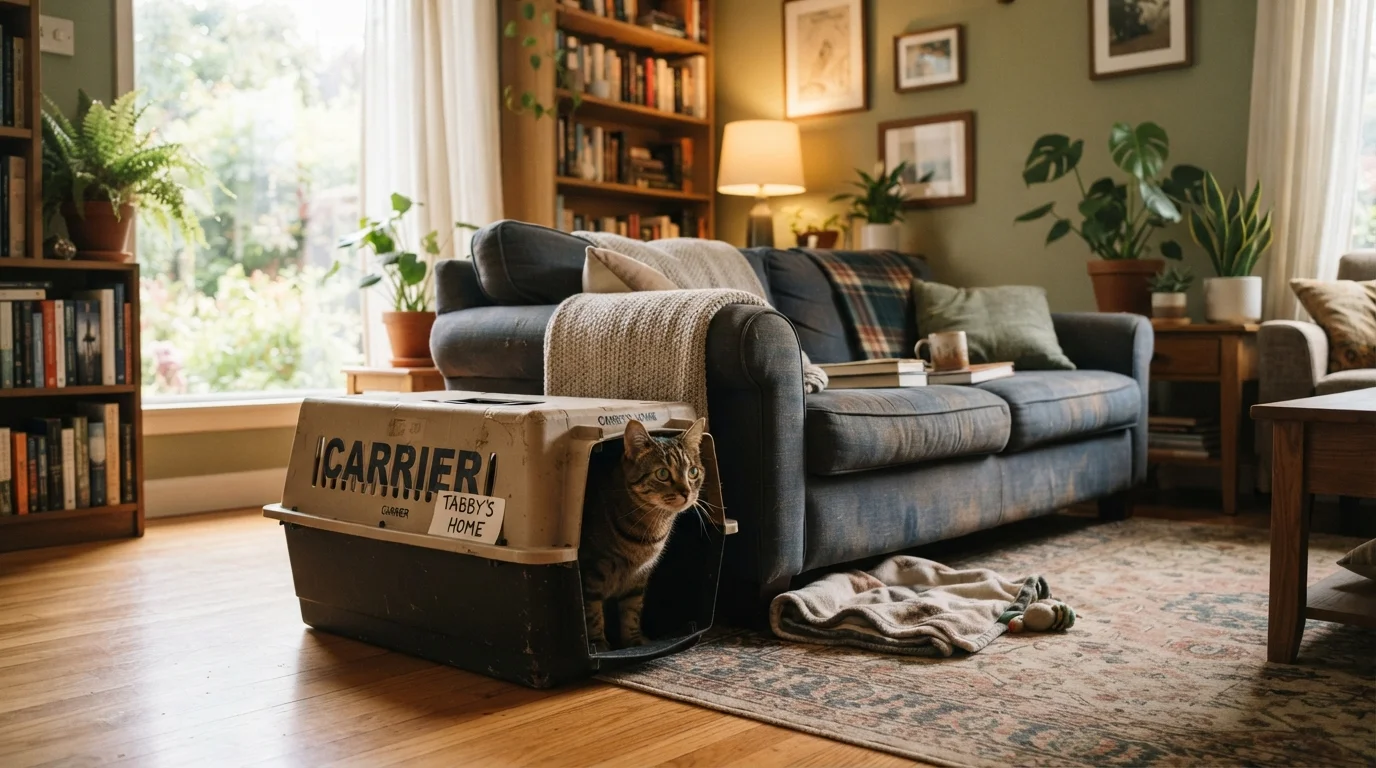
- A carrier that your cat will travel home in and that can stay out as a familiar retreat
- Scratch-appropriate surfaces - a vertical scratching post and, ideally, a horizontal pad
- A cozy bed or blanket your cat can claim as its own
If you have the chance, ask the shelter or breeder to send a small piece of bedding or a worn item with the cat's scent already on it. Placing this in the base room can help your cat feel less disoriented on arrival.
Base room
A single, quiet room where a new cat is first confined to help it decompress and orient itself before exploring a larger home.
Litter box ratio
The general guideline that households should provide one litter box per cat plus one extra to reduce territorial stress and keep boxes clean.
Desensitization
The gradual process of exposing a cat to new experiences (like a carrier or a new room) at a low intensity so it learns not to fear them.
Stress response
Physical and behavioral reactions - like hiding, reduced appetite, or excessive grooming - that indicate a cat is feeling anxious or overwhelmed.
Socialization window
The period in a kitten's early life (roughly 2-7 weeks) when positive exposure to people, handling, and environments shapes its long-term temperament.
Setting Up a Safe Base Room
Rather than opening up your entire home on day one, set aside a single room - a spare bedroom or quiet study works well - as your cat's starting territory. This limits the amount of new sensory information your cat has to process all at once.
The base room should contain everything the cat needs: food, water, litter box (not too close to the food), a cozy sleeping spot, and something to scratch. Keep noise levels low and foot traffic minimal for the first day or two.
Let the cat set the pace
Resist the urge to constantly check on or handle your new cat during the first 24-48 hours. Sitting quietly in the same room - reading or working - lets the cat observe you safely and build confidence on its own terms. Most cats warm up faster when they feel they have a choice.
For a thorough look at making every room in your home safe and comfortable for a cat, see our room-by-room cat-friendly home guide. It covers hazards, resting spots, and litter placement in useful detail.
The First 24 Hours
When you bring your cat home, place the carrier in the base room, open its door, and let the cat exit in its own time. Resist the urge to tip the carrier or pull the cat out - that kind of handling can spike stress hormones and set a negative tone.
Sit quietly nearby, speak softly, and let the cat explore at its pace. Some cats stride out within minutes; others hide under the bed for hours or even a full day. Both responses are within the normal range.
Don't rush introductions with other pets
Bringing a new cat straight into contact with existing pets - even briefly - can trigger fear and aggression that becomes difficult to undo. Always use a phased approach: scent first, visual contact through a gap or barrier second, and face-to-face meetings only once both animals are calm. Rushing this stage is one of the most common mistakes new multi-pet owners make.
Keep children and other pets out of the base room during this initial period. Even well-meaning excitement can be genuinely frightening to a cat that doesn't yet know its environment. Introductions to other animals should always be phased carefully - if you're adding a cat to a home that already has one, our guide on introducing a second cat walks through the process step by step.
Expanding Your Cat's World
Once your cat is eating regularly, using the litter box confidently, and approaching you without obvious anxiety - usually after a few days, though sometimes longer - you can start opening more of the home. Do this gradually: one additional room at a time, with the base room door still accessible as a retreat.
Watch for signs that your cat is comfortable: relaxed body posture, slow blinking, kneading, and willingness to play. If hiding or fear responses return when you expand access, simply slow down the process. There's no fixed schedule to stick to.
Getting your cat comfortable with its carrier during this settling-in phase pays dividends later. Our guide to making the carrier stress-free has practical steps you can work through at a gentle pace.
Feeding, Grooming, and Vet Visits
Establish a consistent feeding routine from the start. Cats respond well to predictability, and regular mealtimes also make it easier to notice if appetite changes - which can be an early sign of illness. For guidance on portion sizes, food types, and label reading, see our cat feeding guide.
Basic grooming - particularly brushing for medium- to long-haired cats - is worth introducing early so your cat gets used to being handled. Our home grooming guide breaks down which tasks owners can handle themselves and when a professional is a better option.
Schedule a vet visit within the first week if at all possible. Even if your cat came with vaccination records, a fresh baseline check, parasite screening, and the chance to ask questions is invaluable. For a broader picture of what responsible, ongoing cat ownership involves - from microchipping to enrichment - our overview of responsible cat ownership is a useful next read.
This article provides general guidance for informational purposes only and is not a substitute for advice from a qualified veterinarian. Always consult a vet for concerns about your cat's health.