

Key Takeaways
Why Cats Fear Carriers in the First Place
For most cats, the carrier appears out of nowhere, signals a disorienting car ride, and ends at a clinic full of strange smells and handling. It's little wonder they bolt under the bed the moment they spot it. The fear isn't stubbornness - it's a learned association backed by genuine stress chemistry.
Cats are also acutely sensitive to their owner's body language. If you approach the carrier with the urgency of someone running late for an appointment, your cat reads that tension before you've come anywhere near them. This is why carrier training needs to happen well before any actual trip is planned.
If you're still in the early stages of settling your cat in, our guide to bringing a cat home for the first time covers how to build foundational trust that makes carrier training - and everything else - significantly easier.
What you will need
What You'll Need
Carrier training doesn't require specialist equipment, but the right setup makes the process smoother. Choose a carrier that gives your cat genuine room to move - an undersized carrier adds physical discomfort to the existing anxiety.
Top-loading or front-loading carrier
Gives you flexible access when placing or removing a reluctant cat, and makes it easier to reward entry from multiple angles.
Soft bedding or a familiar blanket
Carries your cat's own scent into the carrier, making the interior smell safe and recognizable.
High-value treats
Used to reward each step of voluntary approach and entry, building a positive association with the carrier.
Synthetic feline facial pheromone spray
Spraying the carrier interior 15-30 minutes before a session may help reduce anxiety in stress-prone cats.
Step-by-Step: Carrier Conditioning
Work through these steps at your cat's pace. Some cats move through all six steps in a week; others take three or four weeks. Both timelines are normal. Consistency matters far more than speed.
Place the carrier in a living area - and leave it there
Pull the carrier out of storage and set it in a room your cat already uses. Remove the door or prop it fully open. The goal is for the carrier to become background furniture. When it only appears before vet trips, cats learn to associate its arrival with something unpleasant.
Layer the interior with familiar scents
Place a worn t-shirt or your cat's favourite blanket inside the carrier. Scent is the primary way cats assess whether an environment is safe. A surface that smells like home is far less threatening than bare, unfamiliar plastic.
Toss treats near, then inside, the carrier
Start by dropping treats a few feet from the carrier while ignoring your cat entirely. Over the next few sessions, move treats progressively closer to the opening, then just inside the entrance, then deeper inside. Let your cat set the pace - do not push or encourage verbally in a high-pitched way, as this can add excitement that tips into anxiety.
Reward any voluntary entry with calm praise and a treat
The moment your cat steps even one paw inside the carrier, mark it with a calm, quiet "yes" and offer a treat. Avoid the temptation to immediately close the door - that can undo days of progress in seconds. Let your cat wander in and out freely for several sessions before introducing any door movement.
Introduce the door in stages
Once your cat enters and eats treats calmly, begin nudging the door closed for just a second or two, then opening it again before your cat shows any sign of concern. Gradually extend the time the door stays shut over multiple sessions - a few seconds, then fifteen seconds, then a minute or more.
Practice short, calm carry sessions
Once your cat tolerates a closed door calmly, gently lift the carrier and walk a short distance - to another room and back. Place it down, open the door, and reward your cat. These practice carries help distinguish the carrier from the car journey so that the physical sensation of being carried is no longer an automatic alarm signal.
Keep the Carrier Out All Year
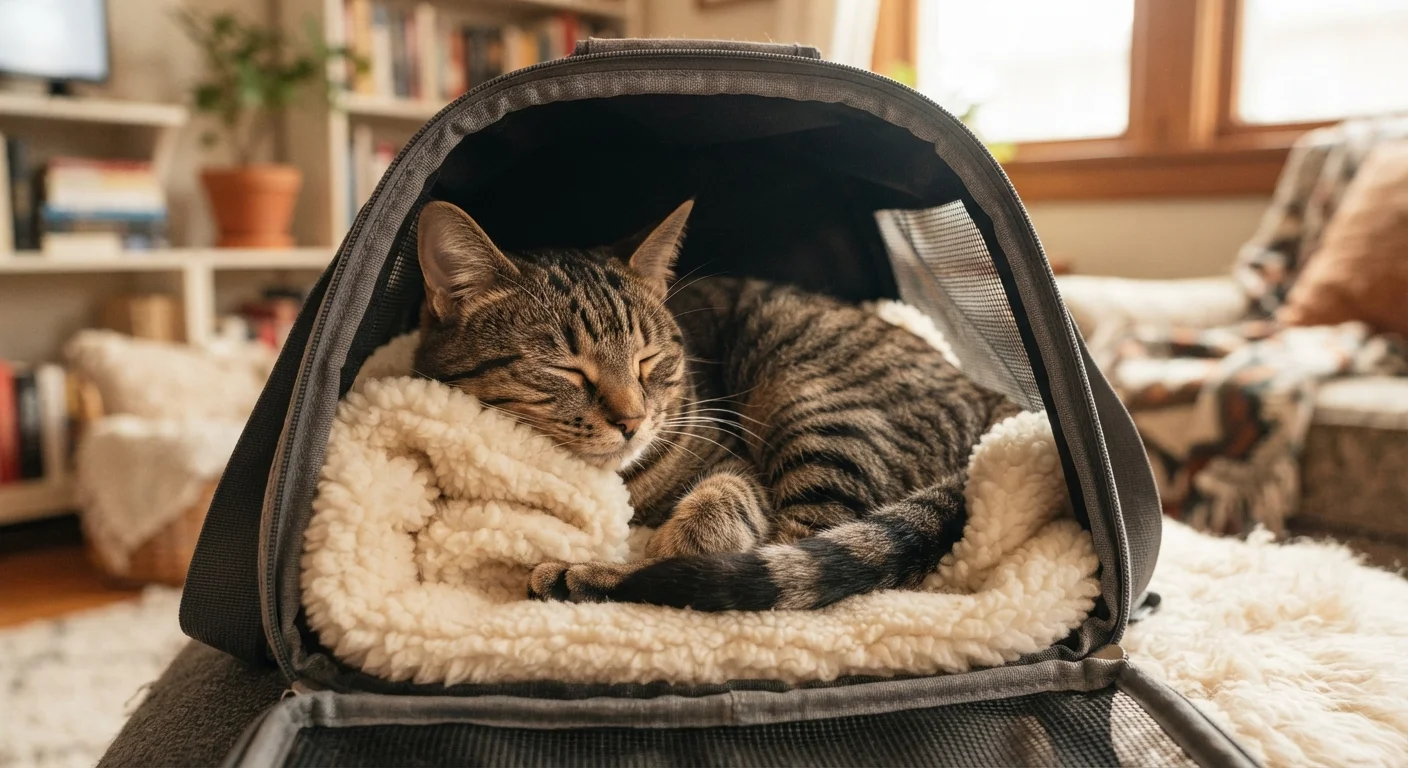
The single most effective long-term strategy is simply never putting the carrier away. Cats that encounter the carrier only on vet days have no opportunity to form neutral or positive associations with it. Treating it like a piece of furniture - a bed, a quiet hideout, a snack station - removes much of the fear before training even begins.
Watch for Signs of Stress
If your cat is panting, drooling excessively, vocalizing intensely, or attempting to escape during a session, stop and give the cat space. Pushing through visible distress is counterproductive and can worsen anxiety long-term. If your cat is consistently highly stressed around the carrier despite gradual conditioning, speak with your veterinarian - they can advise on additional behavioral support.
Keeping Progress Going Long-Term
Carrier acceptance isn't a one-time achievement - it's an ongoing relationship. Continue to occasionally scatter treats in the carrier, refresh the bedding, and let your cat nap in it between vet visits. Cats that use the carrier as a rest spot throughout the year rarely need re-conditioning before a trip.
It also helps to make the space around your cat's routine predictable and enriching. A well-stimulated cat has lower baseline anxiety, which makes novel situations - including vet visits - less overwhelming. Explore our enrichment ideas for solo cats for practical ways to keep your cat engaged at home.
Never Use the Carrier as Punishment
If the carrier is ever used to isolate a cat after unwanted behavior, it permanently damages the association you've worked to build. The carrier must always predict neutral or positive outcomes. Even on actual vet days, do your best to keep the loading process calm and reward-based.
This article is for general informational purposes only and is not a substitute for professional veterinary advice. If your cat shows signs of severe or persistent anxiety, consult a qualified veterinarian or certified animal behaviorist.