

Key Takeaways
Why Cat Introductions Require a Gradual Approach
Cats are territorial animals. Unlike dogs, who often greet new companions with immediate curiosity, cats rely heavily on scent and spatial familiarity to feel safe. When a resident cat suddenly shares its home with a stranger, its core sense of security is disrupted - and stress responses can escalate quickly into hissing, hiding, or outright aggression.
The good news is that most cats can learn to coexist peacefully, and many form genuine bonds over time. The key is patience. A slow, structured introduction allows both animals to process the change at a pace that keeps stress manageable. If you're still deciding whether a second cat is the right choice, our guide on keeping a solo cat mentally stimulated can help you weigh the options.
Before you begin, make sure your home is set up to support two cats. Our room-by-room cat home setup guide covers litter placement, resting spots, and scratch zones - all of which matter even more when two cats share a space.
What you will need
Step-by-Step: How to Introduce Your New Cat
Follow these steps in order. Moving too quickly through any phase is the most common mistake owners make - if either cat shows sustained distress, simply return to the previous step and give more time.
Set Up a Separate Base Room for the New Cat
Before the new cat arrives, prepare a dedicated room - a spare bedroom or bathroom works well - with its own litter box, food, water, bedding, and at least one hiding spot. This space becomes the new cat's entire world for the first several days, giving it time to decompress after the stress of a new environment.
Allow Scent Discovery Under the Door
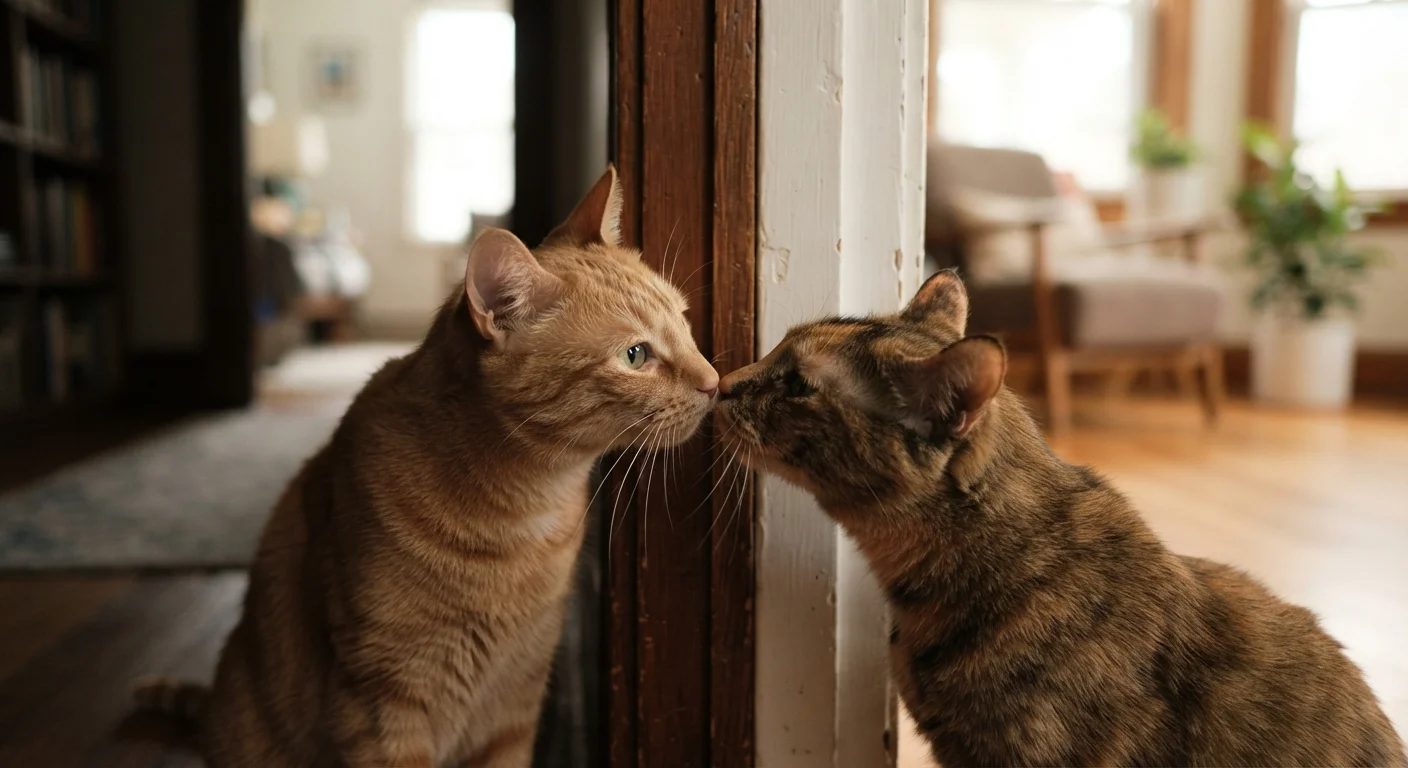
With the base room door closed, both cats will naturally sniff the gap at the bottom. This is their first, low-stakes introduction. Let this happen organically for two to three days - you may hear hissing or growling, which is normal. Do not intervene unless either cat appears severely distressed.
Swap Scents Deliberately
After two to three days, begin active scent swapping. Rub a soft cloth or sock gently around the new cat's cheeks and chin, then leave that cloth near your resident cat - and vice versa. You can also swap the cats' bedding. Repeat this daily until neither cat reacts strongly (hissing, fleeing, or fixating) to the other's scent item.
Let Them Share Space Without Seeing Each Other
Once scent reactions are calm, allow the new cat supervised time in the main home while your resident cat is secured in another room. This lets the new cat explore the broader territory and deposit its scent. Rotate the cats for short sessions of 15 to 20 minutes, gradually increasing duration over several days.
Introduce Visual Contact Through a Barrier
Use a baby gate, a door propped open a few centimetres with a doorstop, or a cracked door to allow both cats to see each other at a distance without physical access. Feed both cats near this barrier - but not so close that either one is too anxious to eat. Gradually move the food bowls closer to the barrier over several feeding sessions.
Allow Supervised Free Access
When both cats can eat calmly within sight of each other, open the barrier and allow them to share the space - with you present to supervise. Keep initial sessions short (10 to 15 minutes) and end them on a calm note. Have a towel or a second person available to safely separate the cats if genuine fighting (not play or posturing) occurs. Gradually extend shared time as tolerance improves.
Never Punish Hissing or Growling
Hissing and growling are normal feline communication - they signal discomfort, not aggression requiring correction. Punishing these behaviours (with spray bottles, raised voices, or physical intervention) increases stress for both cats and can make the introduction process significantly harder. Instead, give both cats more space and slow down the pace of introductions.
What to Expect After the Introduction
Even after the cats are sharing the same space freely, the relationship will continue to develop over weeks and months. Some cats become close companions who groom each other and sleep together. Others settle into a respectful coexistence with minimal interaction - and that is perfectly normal and healthy.
Watch for signs that tension is becoming problematic: one cat consistently blocking another from the litter box or food, significant weight loss, or recurring injuries. If these occur, consult your veterinarian, who may recommend a behaviorist referral.
Making sure both cats feel secure in their environment remains important long after the introduction is complete. Because indoor cats depend entirely on their owners to provide stimulation and space, revisiting how you've arranged your home periodically is worthwhile. You can also explore the trade-offs between indoor and outdoor cat lifestyles as both cats settle in.
Keep Resources Plentiful and Spread Out
Resource competition is one of the most common triggers for ongoing conflict between cats. Maintain at least one litter box per cat plus one extra, and place food and water stations in multiple locations around the home. Vertical space - shelving, cat trees, window perches - also reduces tension by allowing cats to claim separate territories at different heights.