

Key Takeaways
Strengthens the bond between owner and cat
Regular, gentle handling builds trust over time. Cats that are comfortable being touched are generally easier to examine at the vet and less stressed during any kind of handling.
Helps you spot health changes early
Brushing and checking ears or eyes gives you a routine opportunity to notice lumps, skin irritation, parasites, or other changes that might otherwise go unnoticed until they worsen.
Reduces shedding and hairball formation
Removing loose fur with a brush before your cat swallows it during self-grooming can meaningfully reduce the frequency of hairballs, particularly in long-haired breeds.
Costs less than frequent professional grooming
For cats that tolerate handling well, handling basic upkeep at home reduces the need for paid grooming appointments, though professional visits are still worthwhile for complex tasks.
Prevents painful matting in long-haired cats
Mats that go untreated pull at the skin, harbour moisture and bacteria, and often require sedation to remove professionally - regular brushing prevents them from forming in the first place.
Cats may resist, making sessions stressful
Some cats strongly dislike being handled, especially around paws and ears. Forcing the issue can damage trust and make future grooming - or vet visits - significantly harder.
Risk of injury from nail trimming errors
Cutting into the quick causes pain and bleeding. In cats with dark nails, the quick can be very difficult to see, making misjudgement more likely without proper lighting or practice.
Incorrect ear cleaning can cause harm
Probing the ear canal at home can push debris deeper or damage delicate tissue. Ear problems that appear minor - like odour or dark discharge - often require veterinary diagnosis.
Severe matting requires professional removal
Heavily matted fur should never be cut at home; the skin beneath lies too close and is easily nicked. Professional groomers or vets with appropriate tools are better equipped for this task.
Requires time and consistent routine
Effective grooming is not a one-off task - it needs to happen on a regular schedule to be worthwhile, which can be difficult to maintain for busy owners.
Our Verdict
Home grooming is a realistic and valuable habit for most cat owners. Brushing, basic nail trims, and routine ear and eye checks are manageable with a little practice and the right approach. That said, some tasks - like trimming severely matted fur, cleaning infected ears, or expressing anal glands - belong in a professional's hands. Knowing the difference keeps your cat comfortable and you confident.
Best suited to owners who want to build a closer bond with their cat, stay on top of health changes at home, and reduce unnecessary grooming appointments - while knowing when to call in a professional.
What Cats Actually Need From You (Despite Being Great Self-Groomers)
Cats spend a remarkable portion of their waking hours grooming themselves, which leads many owners to assume their involvement isn't needed. In reality, self-grooming has clear limits - cats can't reach every area effectively, long-haired breeds develop mats regardless of effort, and swallowed fur accumulates into hairballs over time.
The tasks that genuinely fall to owners are: coat brushing, nail trimming, ear checks, and occasionally eye cleaning. Bathing is rarely necessary for healthy indoor cats, though some situations - like a skin condition or getting into something sticky - may make it unavoidable. For a broader look at what healthy cat ownership involves day-to-day, see our full guide to responsible cat ownership.
Strengthens the bond between owner and cat
Regular, gentle handling builds trust over time. Cats that are comfortable being touched are generally easier to examine at the vet and less stressed during any kind of handling.
Helps you spot health changes early
Brushing and checking ears or eyes gives you a routine opportunity to notice lumps, skin irritation, parasites, or other changes that might otherwise go unnoticed until they worsen.
Reduces shedding and hairball formation
Removing loose fur with a brush before your cat swallows it during self-grooming can meaningfully reduce the frequency of hairballs, particularly in long-haired breeds.
Costs less than frequent professional grooming
For cats that tolerate handling well, handling basic upkeep at home reduces the need for paid grooming appointments, though professional visits are still worthwhile for complex tasks.
Prevents painful matting in long-haired cats
Mats that go untreated pull at the skin, harbour moisture and bacteria, and often require sedation to remove professionally - regular brushing prevents them from forming in the first place.
The Case Against Going It Alone
Home grooming isn't always the right call. Cats that haven't been handled regularly since kittenhood can find grooming deeply stressful, and a frightened cat can scratch or bite unpredictably. Beyond temperament, some tasks carry real risk if done incorrectly.
Cats may resist, making sessions stressful
Some cats strongly dislike being handled, especially around paws and ears. Forcing the issue can damage trust and make future grooming - or vet visits - significantly harder.
Risk of injury from nail trimming errors
Cutting into the quick causes pain and bleeding. In cats with dark nails, the quick can be very difficult to see, making misjudgement more likely without proper lighting or practice.
Incorrect ear cleaning can cause harm
Probing the ear canal at home can push debris deeper or damage delicate tissue. Ear problems that appear minor - like odour or dark discharge - often require veterinary diagnosis.
Severe matting requires professional removal
Heavily matted fur should never be cut at home; the skin beneath lies too close and is easily nicked. Professional groomers or vets with appropriate tools are better equipped for this task.
Requires time and consistent routine
Effective grooming is not a one-off task - it needs to happen on a regular schedule to be worthwhile, which can be difficult to maintain for busy owners.
Cutting nails too short can nick the quick - the blood vessel inside the nail - causing pain and bleeding. Attempting to remove severe mats by cutting close to the skin risks cutting the cat itself, since matted fur lies flat and the skin beneath can be difficult to see. Ear canals should never be probed deeply at home; if you notice dark discharge, a strong odour, or your cat shaking its head frequently, that warrants a vet visit rather than a home cleaning attempt. If you're just starting out, our new cat owner walkthrough covers how to build handling confidence from day one.
Task by Task: What's Manageable at Home
Breaking grooming down by task helps you decide where to start and where to hold back.
Brushing
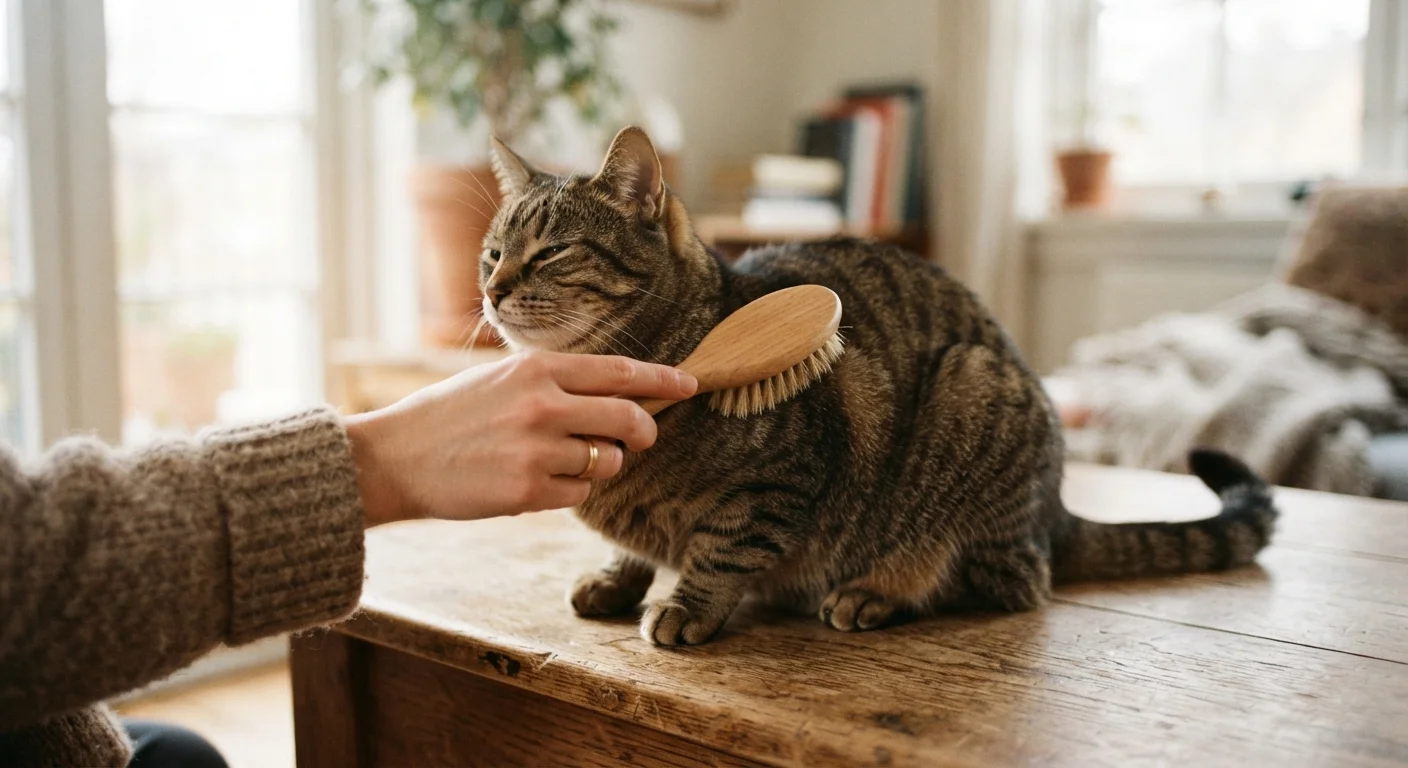
Short-haired cats generally need brushing once a week; long-haired breeds may need daily attention to prevent tangles. Use a brush suited to your cat's coat type - a wide-toothed comb for long fur, a soft slicker brush for shorter coats. Brush in the direction of fur growth and keep sessions brief, especially at first.
Nail Trimming
Most cats need their nails trimmed every two to four weeks. Use nail clippers designed for cats, clip only the transparent tip, and avoid the pinkish quick. If your cat resists, try trimming one or two nails per session rather than all at once.
Ear Checks
Healthy ears look pale pink inside and have little to no visible debris. A gentle wipe around the outer ear with a cotton ball can remove surface dust. Never insert anything into the ear canal.
Eye Cleaning
Some cats, particularly flat-faced breeds, develop discharge in the corners of their eyes. A clean, damp cloth can gently wipe this away. Persistent discharge or redness is worth discussing with a vet - see signs your cat may not be feeling well for other changes to watch for.
Flat-Faced Breeds Need Extra Attention
Brachycephalic cats - breeds with flattened facial features such as Persians and Exotic Shorthairs - are more prone to eye discharge, skin fold irritation, and breathing-related issues. Their grooming needs are generally higher than average, and routine vet check-ins are especially worthwhile to catch problems early. If you have a flat-faced breed, speak with your vet about a care routine tailored to their specific anatomy.
Making Grooming Less Stressful
The single biggest factor in how well grooming goes is how accustomed your cat is to being handled. Cats introduced to brushing and nail handling as kittens tend to tolerate it far better as adults. For older cats, gradual desensitisation works - start by simply touching the paws and ears during relaxed moments, then introduce tools slowly over several sessions.
Short, positive sessions beat long, forceful ones every time. Ending a session before your cat becomes agitated - even if you haven't finished - preserves trust and makes the next attempt easier. Understanding your cat's body language helps enormously here: learning to read your cat's signals can tell you when to pause before tension escalates.
~30-50%
Of waking hours cats spend self-grooming
Veterinary and behavioural sources consistently note that cats dedicate a significant share of their active time to self-grooming, though this does not replace owner involvement in coat and nail care.
Every 2-4 weeks
Recommended nail trimming frequency for indoor cats
Without the natural wear that comes from outdoor surfaces, indoor cats' nails grow continuously and can curl painfully into the paw pad if left untrimmed for extended periods.
If you also share your home with a dog and are curious how cat and dog grooming compare, our home dog grooming guide covers that process step by step.
This article is for general informational purposes only and is not veterinary advice. Consult a qualified veterinarian with any concerns about your cat's health or grooming needs.