

Key Takeaways
Option A
Raised Beds
The controlled, customizable growing environment.
Best for: Gardeners with poor native soil, limited mobility, or small defined spaces who want fast results and tidy organization.
Option B
In-Ground Planting
The traditional, expansive, low-cost approach.
Best for: Gardeners with decent existing soil, larger yard space, and a focus on growing at scale with lower upfront costs.
If you're starting with compacted, rocky, or contaminated soil
Raised Beds
Raised beds let you bypass problem soil entirely by filling with a quality growing mix, giving plants an immediate advantage without years of soil amendment work.
If you want to grow large quantities of vegetables on a budget
In-Ground Planting
In-ground gardens have minimal upfront costs - no lumber, hardware, or bulk soil purchases - making them far more economical for large-scale growing.
If you have back or knee discomfort that makes bending difficult
Raised Beds
A raised bed built 18-24 inches tall significantly reduces how far you need to bend or kneel, making routine tasks like weeding and harvesting more comfortable.
If you're growing deep-rooted crops like squash, corn, or fruit shrubs
In-Ground Planting
In-ground plots give roots unlimited depth to expand, which larger plants need to anchor properly and access deeper moisture reserves during dry spells.
If you're a complete beginner wanting to start small and manageable
Raised Beds
A single 4×8 raised bed is easy to maintain, keeps weeds more contained, and lets you practice core gardening skills before expanding your setup.
The Core Difference Between These Two Approaches
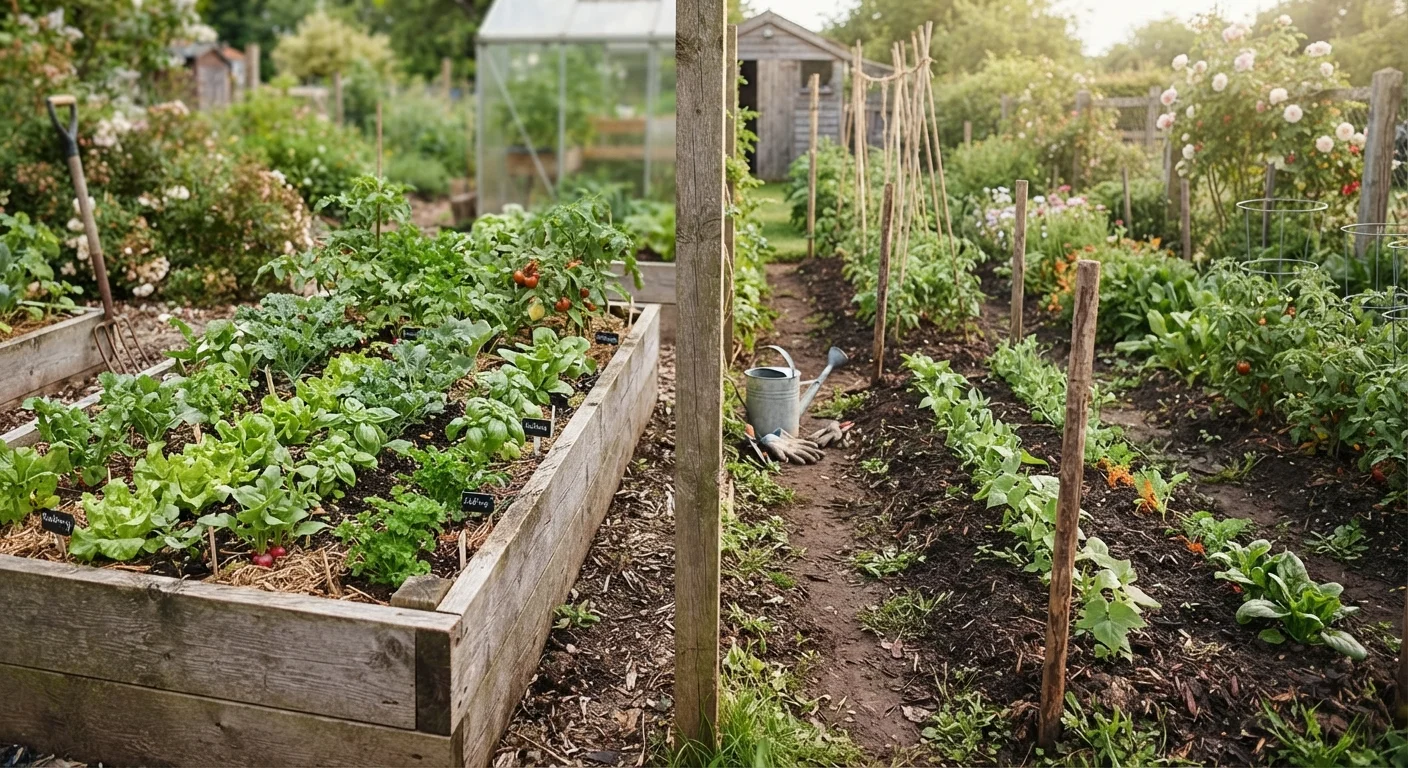
A raised bed is a contained growing area built above ground level - typically a frame made from wood, metal, or composite material filled with a custom soil mix. An in-ground garden is exactly what it sounds like: you dig directly into your existing yard, amend the soil as needed, and plant from there.
Neither method is universally superior. The right choice depends on what you're starting with and what you're hoping to grow. If you're new to gardening altogether, our beginner's garden guide covers the foundational decisions that precede this choice - including how to assess light, water access, and site selection.
Understanding the practical trade-offs between these two setups helps you invest your time and money in a direction that will actually work for your yard and your goals.
| Criterion | Raised Beds | In-Ground Planting |
|---|---|---|
| Upfront cost | Higher (materials + purchased soil) | Lower (tools and amendments only) |
| Soil quality control | Full control from day one | Depends on existing conditions |
| Drainage | Excellent; dries faster in heat | Variable; clay soils drain slowly |
| Weed pressure | Generally lower | Higher; requires regular management |
| Scalability | Moderate; each bed costs to add | Easy to expand at low cost |
| Best crop types | Shallow-rooted vegetables and herbs | Large, deep-rooted, or perennial crops |
| Physical accessibility | High with taller builds | Requires bending to ground level |
| Seasonal startup | Warms faster in spring | Slower to warm in cool climates |
Soil Control and Drainage: Where Raised Beds Shine
One of the most compelling arguments for raised beds is soil quality on your own terms. If your yard has heavy clay soil that drains poorly, sandy soil that dries too fast, or soil that may have been exposed to contaminants, a raised bed lets you start fresh with a purpose-built growing mix.
Raised beds also warm up faster in spring because the soil mass is exposed to sun on multiple sides. This can give you a modest head start on the growing season - particularly helpful in cooler climates. Drainage in raised beds is typically superior, since water isn't fighting compaction, though this also means they dry out faster in summer and may need more frequent watering.
12-18 in.
Recommended raised bed soil depth for most vegetables
Most cooperative extension services recommend at least 12 inches of growing medium for root vegetables and 6-8 inches for greens and herbs.
2-4 weeks
Earlier spring planting potential in raised beds
Raised bed soil can warm up several weeks ahead of in-ground soil in colder climates, according to general horticultural guidance on soil temperature and season extension.
30-50%
Less water needed with proper in-ground mulching
Applying a 2-3 inch layer of organic mulch over in-ground beds can significantly reduce evaporation, though exact savings vary by climate and soil type.
In-ground gardens depend almost entirely on what nature gave you. In regions with naturally rich, loamy soil - the kind that crumbles easily and has good organic matter - in-ground planting can be highly productive with minimal amendment. The right approach to feeding your soil matters in both setups, but in-ground gardens often benefit most from consistent organic matter addition over several seasons.
Cost, Setup, and Long-Term Maintenance
Upfront costs differ significantly. Building a raised bed involves materials - lumber, hardware cloth for the base if needed, and enough quality soil to fill it. A standard 4×8 bed filled to a depth of 12 inches requires considerable volume of purchased growing mix, which adds up quickly. For an honest look at what these startup costs can realistically amount to, see what gardening outdoors actually costs.
In-ground gardening is far less expensive to begin. You need basic hand tools, seed or transplants, and potentially some compost or amendments - but no structural materials or bulk soil. The trade-off is time: building soil quality in the ground is a multi-season process, not an overnight fix.
Ongoing maintenance differs too. Raised beds tend to have fewer weeds (especially in the first few years), are easier to cover with frost cloth or netting, and are simpler to organize. In-ground beds require more frequent weeding and may need annual soil amendments to prevent compaction and nutrient depletion.
Combining Both Methods Is Common
Many experienced gardeners use raised beds for high-maintenance or high-value crops like salad greens and herbs, while reserving in-ground space for larger or lower-maintenance plants. Starting with one raised bed alongside an in-ground plot is a practical way to compare both approaches in your own conditions before committing more space or budget to either.
Which Plants Belong Where
Raised beds work particularly well for crops that thrive in loose, well-draining soil: salad greens, herbs, carrots, radishes, strawberries, and most annual vegetables. Their contained environment also makes it easier to manage pests and rotate crops season to season.
In-ground planting accommodates plants that need more root depth or physical space. Sprawling crops like winter squash, sweet corn, or indeterminate tomatoes perform well when they have unlimited room to expand. Perennial plants - fruit bushes, asparagus, artichokes - often do better in-ground since their permanent root systems benefit from the natural soil ecosystem that develops over years. For help planning a mix of plants that return each season, understanding annuals vs. perennials is a useful next step.
If you're working with very limited outdoor space or no yard at all, a third option exists: containers. Our container gardening guide explains how pots and boxes can be surprisingly productive in small footprints. Before you place your first seed in any setup, run through this garden readiness checklist to make sure you haven't missed a critical preparation step.