

Key Takeaways
Start here
Choosing the Right Spot
Next
Understanding Your Soil
Then
Picking Plants That Are Hard to Fail
When you're ready
Watering Without Overdoing It
Finally
Tools and Costs to Expect
Choosing the Right Spot
Before you buy a single seed, spend a few days observing your outdoor space. Walk out at different times of day and notice where the sun falls. Most food-producing plants - vegetables, herbs, and many fruits - need a minimum of six full hours of direct sunlight daily. Choose the brightest, most open area available to you.
Avoid spots directly beneath large trees: they compete for water and nutrients and block light more than they appear to from a distance. Also consider proximity to a water source; dragging a hose across the yard every day quickly becomes a barrier to consistent care.
If outdoor space is limited, a sunny windowsill or a south-facing balcony can support a surprisingly productive container garden. The fundamentals of light, water, and soil apply equally indoors - only scale changes.
Start Small to Build Confidence
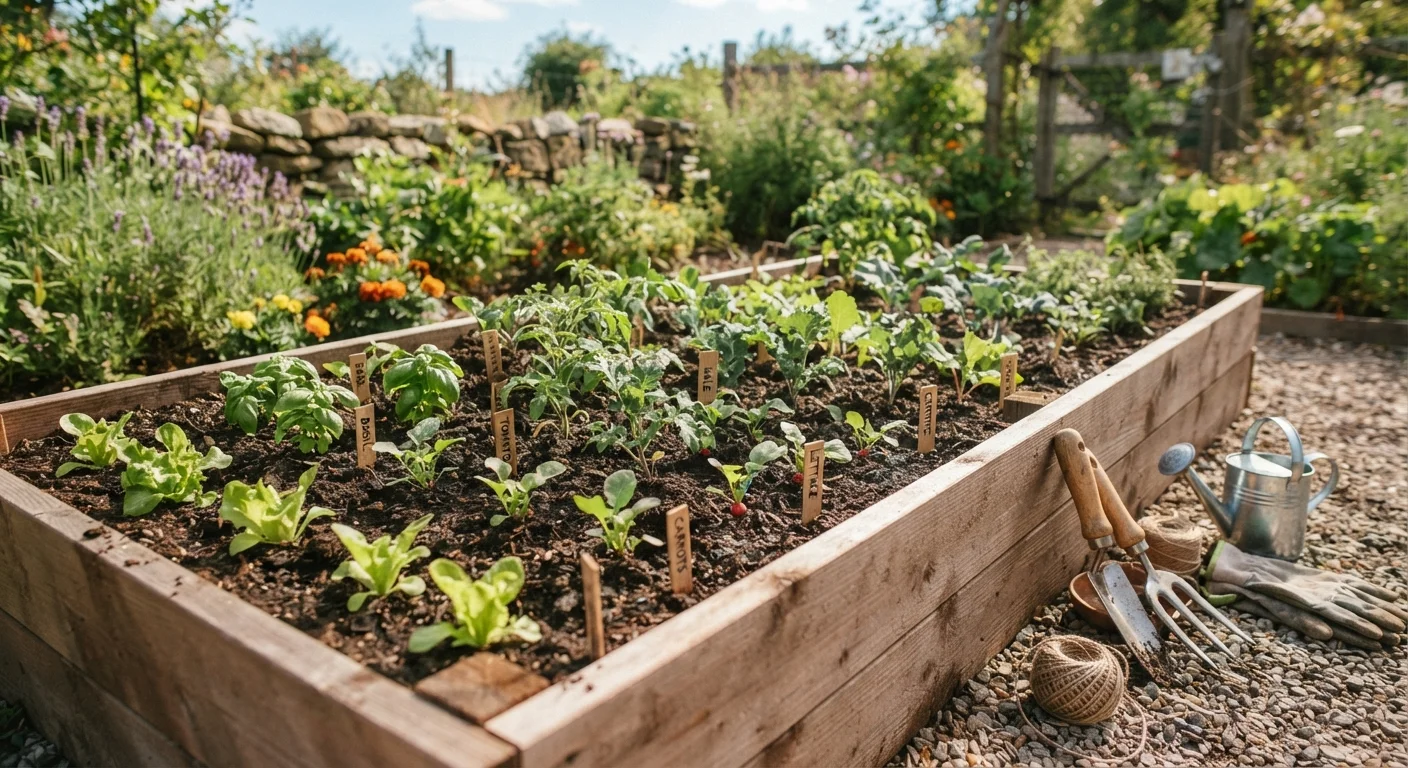
Resist the temptation to plant an ambitious first garden. A well-maintained 4-by-4-foot bed or a handful of containers gives you everything you need to learn - without the overwhelm of managing too much at once. Small successes build the habits and knowledge that make a larger garden achievable next year.
Understanding Your Soil
Soil is not just dirt - it is a living system of minerals, organic matter, water, air, and microorganisms. Healthy soil drains well enough that roots aren't waterlogged, yet holds enough moisture that plants don't dry out between waterings. It also provides the nutrients plants need to grow.
Compost
Decomposed plant and organic material added to soil to improve its texture, drainage, and nutrient content. Think of it as a natural soil conditioner.
Germination
The process by which a seed sprouts and begins to grow. Most seeds need warmth, moisture, and sometimes light to germinate successfully.
Drainage
How quickly excess water moves through or out of soil. Good drainage prevents roots from sitting in waterlogged conditions, which can cause rot.
Hardiness Zone
A geographic classification (used in the US and other countries) that indicates average minimum winter temperatures, helping gardeners choose plants suited to their local climate.
Transplant shock
Temporary stress a plant experiences when moved from one growing environment to another, such as from a pot into the ground. Proper watering and timing reduce its severity.
A simple home test can reveal a lot. Take a handful of slightly moist soil and squeeze it in your fist. If it crumbles gently when you open your hand, drainage is likely good. If it stays in a tight, slick ball, your soil may have too much clay. If it falls apart instantly and feels gritty, it may be too sandy.
For most beginners, improving native soil with compost - decomposed organic matter - is the most effective single upgrade you can make. Spread two to three inches of compost over your garden bed and work it into the top several inches of soil. Repeat each season. If you are building a raised bed from scratch, look for a pre-mixed raised bed soil blend that includes compost and a draining material such as perlite.
Picking Plants That Are Hard to Fail
One of the most important decisions a beginner can make is resisting the urge to grow everything at once. A focused, well-tended small plot will outperform a sprawling, neglected one every time. Just as starting any new skill goes better when you build early wins, gardening confidence comes from plants that respond visibly and quickly.
Start with one or two of the following beginner-friendly categories:
- Leafy greens: Lettuce, spinach, and kale germinate fast, tolerate light frost, and can be harvested within four to six weeks of planting.
- Herbs: Basil, chives, mint, and parsley thrive in containers or beds, require minimal space, and provide immediate culinary reward.
- Zucchini and green beans: Both grow vigorously in warm conditions and produce abundantly, giving beginners visible progress within a single season.
- Radishes: Ready to harvest in as few as 25 days, radishes are ideal for building momentum and testing your soil's readiness.
Avoid starting with plants that have long growing seasons, strict climate requirements, or complex care routines - tomatoes, melons, and peppers are achievable but better suited to your second or third year once you understand your specific conditions. Watch for pest problems early; our guide on managing pests without chemicals offers low-intervention strategies worth bookmarking.
Watering Without Overdoing It
Overwatering is the most common mistake first-time gardeners make. Plant roots need both water and oxygen - when soil stays perpetually soggy, roots suffocate and decay. Signs of overwatering (yellowing leaves, wilting despite moist soil, mold at the base) are often mistaken for signs of underwatering, leading gardeners to add even more water and worsen the problem.
A reliable rule: water deeply but infrequently. When you do water, soak the soil to a depth of several inches so roots are encouraged to grow downward. Then wait until the top two inches of soil feel dry before watering again. In cooler or cloudy weather, that interval might be several days; in peak summer heat, it could be daily.
Watch for Signs of Overwatering
Yellowing leaves, mushy stems, and a sour smell from the soil can all indicate too much water rather than too little. Before reaching for the hose, press a finger two inches into the soil - if it still feels moist, hold off. Consistent overwatering can cause irreversible root rot.
Water at the base of plants rather than overhead when possible. Wet foliage left overnight invites fungal diseases. Soaker hoses or drip irrigation deliver water directly to the root zone and are worth considering even in a small garden. Early morning is the best time to water - the soil absorbs moisture efficiently before heat increases evaporation.
Tools and Costs to Expect
You don't need a garage full of equipment. A beginner garden can be started with just a few hand tools: a trowel for digging and transplanting, a hand fork for loosening soil, and a watering can or hose with an adjustable nozzle. For a raised bed build, a garden fork or spade is also useful. Our overview of essential beginner tools applies as much to the garden shed as it does to the toolbox.
Beyond tools, initial costs typically include seeds or seedlings, soil amendments or raised bed mix, and any containers or bed materials. For an honest breakdown of what to expect to spend - and where you can save - see our guide on what outdoor gardening actually costs.
Keep your first garden small and manageable. A 4-by-4-foot raised bed or three to five containers is genuinely enough to learn the core principles, enjoy real harvests, and build the habit. You can always expand next season with new knowledge and realistic expectations.
USDA Plant Hardiness Zone Map
An official, freely accessible map that helps you identify which plants are most likely to survive and thrive in your local climate based on average winter temperatures.
Cooperative Extension Service
Most US states have a cooperative extension office connected to a land-grant university. They publish free, region-specific gardening guides, planting calendars, and soil testing information.
Seedling Troubleshooting Guide
Our companion article on why seedlings fail covers the most common early-stage problems - leggy growth, collapse, and wilting - and what to do differently next time.