

Key Takeaways
Our Verdict
Neither annuals nor perennials are universally better - the right choice depends on how much time and budget you want to invest each season. Perennials reward patience with long-term low maintenance, while annuals deliver instant, changeable color. Most experienced gardeners use both together to get the benefits of each.
| Best for | Recommended |
|---|---|
| First-time gardeners who want bold, reliable color right away | Annuals |
| Those who prefer a set-it-and-forget-it approach over multiple years | Perennials |
| Gardeners who want flexibility to redesign their beds each season | Annuals |
| Those working toward a low-maintenance, established garden over time | A mix of both |
What Annuals and Perennials Actually Mean
If you're just getting started, the terminology alone can feel like a barrier. Here's the simplest breakdown: annuals are plants that germinate, flower, set seed, and die - all within one growing season. You plant them fresh each spring. Perennials, on the other hand, die back to the ground in winter but regrow from their established root systems each year.
That single difference has a ripple effect on cost, workload, and how your garden looks across the seasons. Before your first seeds go in the ground, it helps to understand which category each plant falls into - see our beginner's guide to starting a garden for a full overview of plant selection basics.
| Annuals | Perennials | |
|---|---|---|
| Lifespan | One growing season | Returns each year |
| Upfront cost | Generally lower per plant | Generally higher per plant |
| Long-term cost | Replanting expense each year | Lower after establishment |
| Bloom duration | Often all season long | Typically a few weeks per year |
| Maintenance level | Moderate; replant yearly | Low once established |
| Design flexibility | Change design each season | Fixed layout year to year |
| Best for beginners? | Yes - forgiving and fast | Yes - with patience |
The Case for Annuals: Color, Control, and Instant Gratification
Annuals are the workhorses of the seasonal garden. Because they put all their energy into flowering before they die, many bloom continuously from planting right through the first frost. That's a long window of color with relatively little effort once they're established.
They're also forgiving for beginners. If a variety doesn't suit your space or you simply don't love the look, you're only committed for one season. Next year, try something completely different. This flexibility is one of the biggest draws for new gardeners still learning what thrives in their specific conditions.
Deadhead Annuals to Extend Blooming
Removing spent flowers - a process called deadheading - signals the plant to keep producing blooms rather than setting seed. For most annuals, this simple habit can meaningfully extend the flowering period. A quick pass through your beds every few days during peak season is all it takes.
Common annuals include marigolds, zinnias, petunias, and impatiens. Most are widely available as transplants in spring, so you don't need to start from seed unless you want to.
The Case for Perennials: Long-Term Investment, Less Replanting
Perennials tend to cost more per plant at the nursery, but that investment stretches across many years. Once established - which typically takes one to two full growing seasons - most perennials need far less attention than annuals. They develop deeper root systems, which often makes them more drought-tolerant and resilient.
The trade-off is patience. Many perennials bloom for only a few weeks rather than all season, and they can look sparse in their first year while roots establish. Planning your garden so that different perennials bloom at different times helps maintain visual interest across the season.
If budget is a consideration, our article on what outdoor gardening actually costs breaks down where plant spending typically adds up and where you can realistically trim.
2-3 years
Typical perennial establishment time
Most perennials reach their full size and reliable bloom cycle within two to three growing seasons after planting.
~3x
Longer perennial root depth vs. annuals
Perennials generally develop significantly deeper root systems over time, improving drought resilience compared to shallow-rooted annuals.
How to Use Both Together
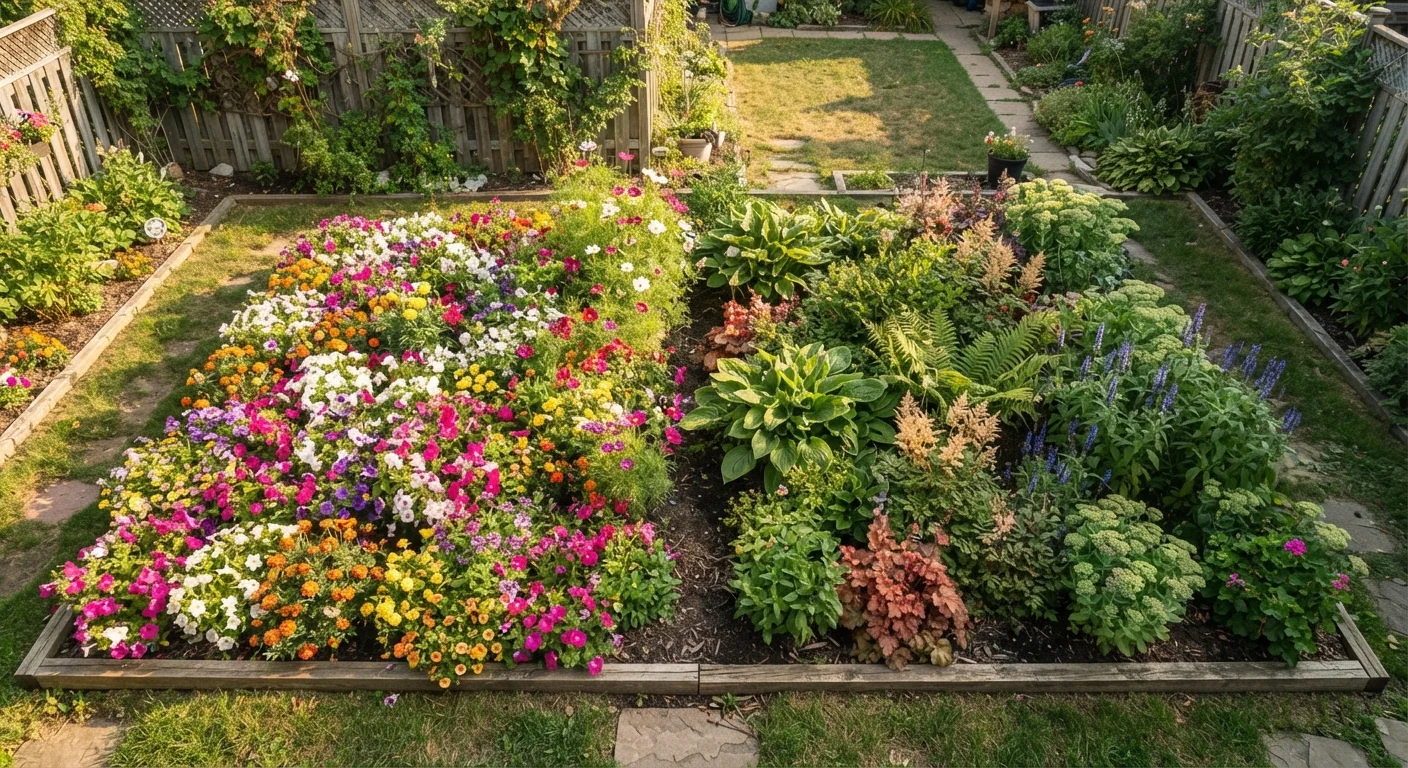
Most seasoned gardeners don't choose one or the other - they layer both strategically. A practical approach: use perennials to create the permanent structure and backbone of a bed, then fill gaps with annuals during the perennials' off-bloom periods. This gives you the reliability of returning plants alongside continuous seasonal color.
A simple starting formula for beginners: plant two or three reliable perennials (such as coneflowers or black-eyed Susans) as anchors, then surround them with annuals that fill in during the same or different bloom windows. Over several seasons, as your perennials multiply and spread, you'll need fewer annuals to fill space.
Watering needs can differ between the two types, especially in the establishment phase. Our guide on watering timing and technique can help you calibrate your routine as your garden evolves. Before planting anything, it's also worth running through a garden readiness checklist to make sure your soil and spacing are set up for success.