Key Takeaways
Why Nutrition Labels Feel Confusing (And Why They Don't Have To)
Most people glance at the front of a package - "high protein," "low fat," "all natural" - and make a decision. The problem is that those front-of-pack claims are marketing, not regulation. The real information lives on the back, in the Nutrition Facts panel. Once you know how to read it, you'll find it's actually quite logical.
The U.S. Food and Drug Administration (FDA) updated the Nutrition Facts label format in 2020 to make key information more prominent. So if your label looks slightly different from older versions you've seen, that's why. This guide walks through each section in order, the same way the label is laid out. Once you've done it a few times, it takes about ten seconds per product.
This is general nutrition information to help you make more informed choices - not medical or dietary advice. If you have a specific health condition or dietary need, a registered dietitian is the right person to consult.
Start at the Top: Serving Size and Calories
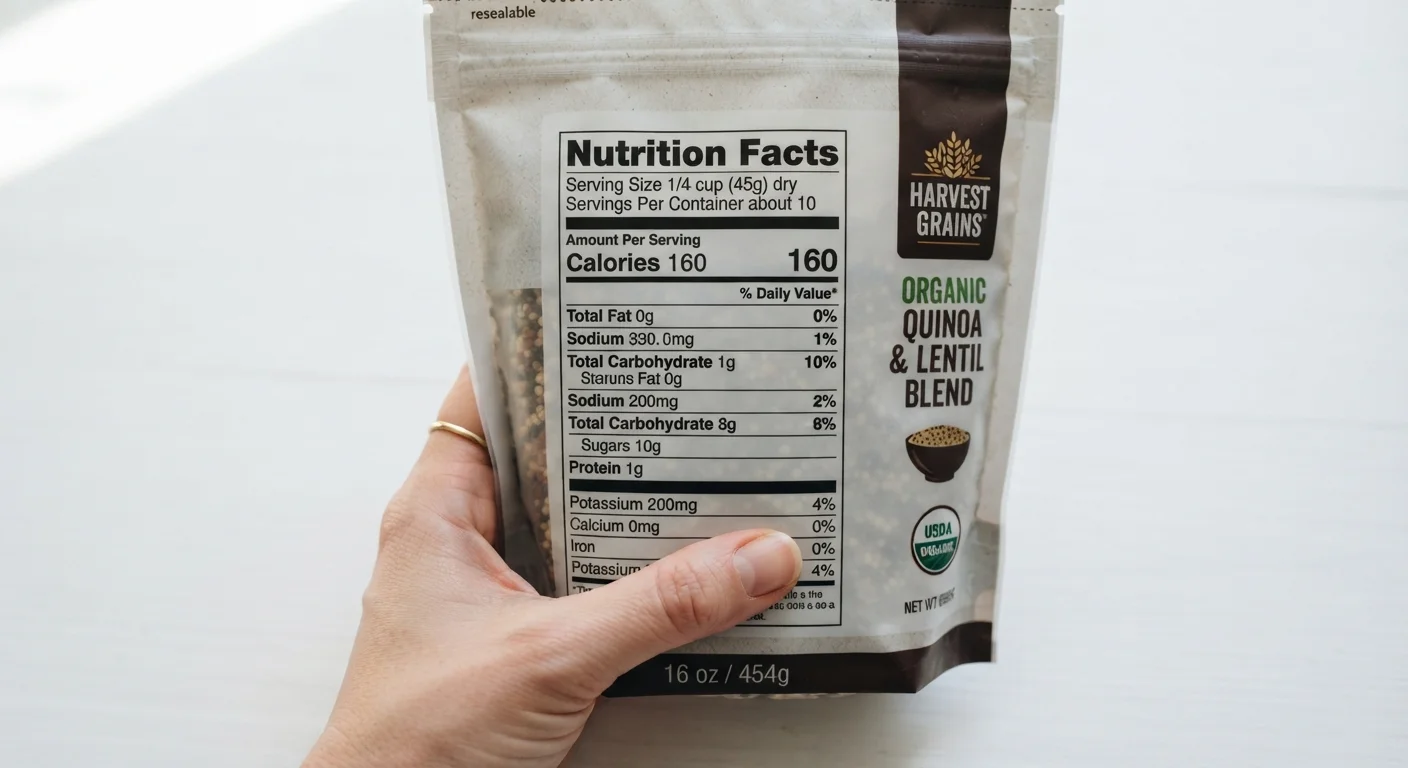
The serving size is the single most important line on the label, because every other number on the panel is calculated for that amount. If the serving size is 1 cup but you eat 2 cups, you're doubling every figure listed - calories, sodium, sugar, everything.
Serving sizes are standardized by the FDA to reflect amounts people actually eat, not ideal or recommended portions. They're descriptive, not prescriptive. You'll see them listed in common measures (cups, tablespoons, pieces) followed by the gram weight in parentheses. The gram weight is the more precise figure.
Directly below serving size, you'll see Calories displayed in a large font. This is the energy content per serving. For a broader understanding of what calories represent in your diet, see our guide on understanding calories and energy balance.
Grams vs. Ounces: Stick With Grams
When comparing products, the gram weight in parentheses next to the serving size is your most reliable reference point. It's a fixed, precise unit that doesn't change with scooping or pouring variation. Getting comfortable with a few gram benchmarks - a slice of bread is typically around 30-40g, for example - makes comparisons much faster over time.
The % Daily Value Column: Your Fast-Track Shortcut
The right-hand column shows % Daily Value (% DV) for each listed nutrient. This percentage is based on a general 2,000-calorie reference diet - your actual needs may differ - but it gives you a consistent way to compare products and judge whether a serving is nutritionally significant.
A simple rule of thumb recognized by the FDA: 5% DV or less is considered low for a nutrient; 20% DV or more is considered high. Use this to your advantage:
- For nutrients you generally want more of - such as dietary fiber, vitamin D, calcium, iron, and potassium - look for higher % DV values. Our article on dietary fiber and why most people undereat it explains why fiber deserves particular attention.
- For nutrients you often want less of - saturated fat, sodium, and added sugars - aim for lower % DV values where possible.
Front-of-Pack Claims Can Be Misleading
Terms like "natural," "multigrain," or "light" are not tightly regulated in the same way that Nutrition Facts data is. A product labelled "reduced fat" may compensate with added sugar; a "multigrain" product may use mostly refined grains. The Nutrition Facts panel and ingredients list give you the information that marketing language doesn't. For a deeper look at this pattern, see our article on foods often labelled healthy that are worth a second look.
The Middle Section: Fats, Carbohydrates, and Protein
Total Fat is broken down into saturated fat and trans fat. Saturated fat is worth monitoring as part of an overall balanced diet; trans fat is best kept as low as possible, and most manufacturers have reformulated products to eliminate it. Unsaturated fats (not always listed separately) are generally considered more favorable.
Total Carbohydrate breaks into dietary fiber, total sugars, and - critically - added sugars. Added sugars is one of the most useful lines on the updated label. It tells you how much sugar was added during manufacturing, separate from sugar that occurs naturally in ingredients like fruit or milk. To understand the difference in more depth, see our explainer on natural versus added sugars.
Protein does not currently carry a % DV on most labels (an exception applies when a product makes a protein-related claim). The gram amount is still useful for comparison across products.
The Ingredients List: A Different Kind of Information
Below the Nutrition Facts panel, the ingredients list tells you what's actually in the food, listed in descending order by weight. The first ingredient is the most abundant. If sugar - under any of its many names (corn syrup, dextrose, cane juice, maltose) - appears in the first three ingredients of a product not intended to be a dessert, that's worth noting.
A shorter ingredients list isn't automatically better, but it's often a useful signal. Ingredients you recognize are generally easier to evaluate than a long string of additives. For a broader perspective on how processing affects food quality, our piece on whole foods versus processed foods offers a balanced, non-alarmist take.
Once you're comfortable reading labels, you can use that knowledge at the grocery store itself - our weekly grocery shop as a nutrition audit shows how to apply these skills in a practical shopping context. And if you want to put balanced eating into action without any tracking tools, building a balanced plate without counting anything is a natural next step.
This article is for general informational purposes only and is not a substitute for advice from a qualified healthcare professional or registered dietitian.