
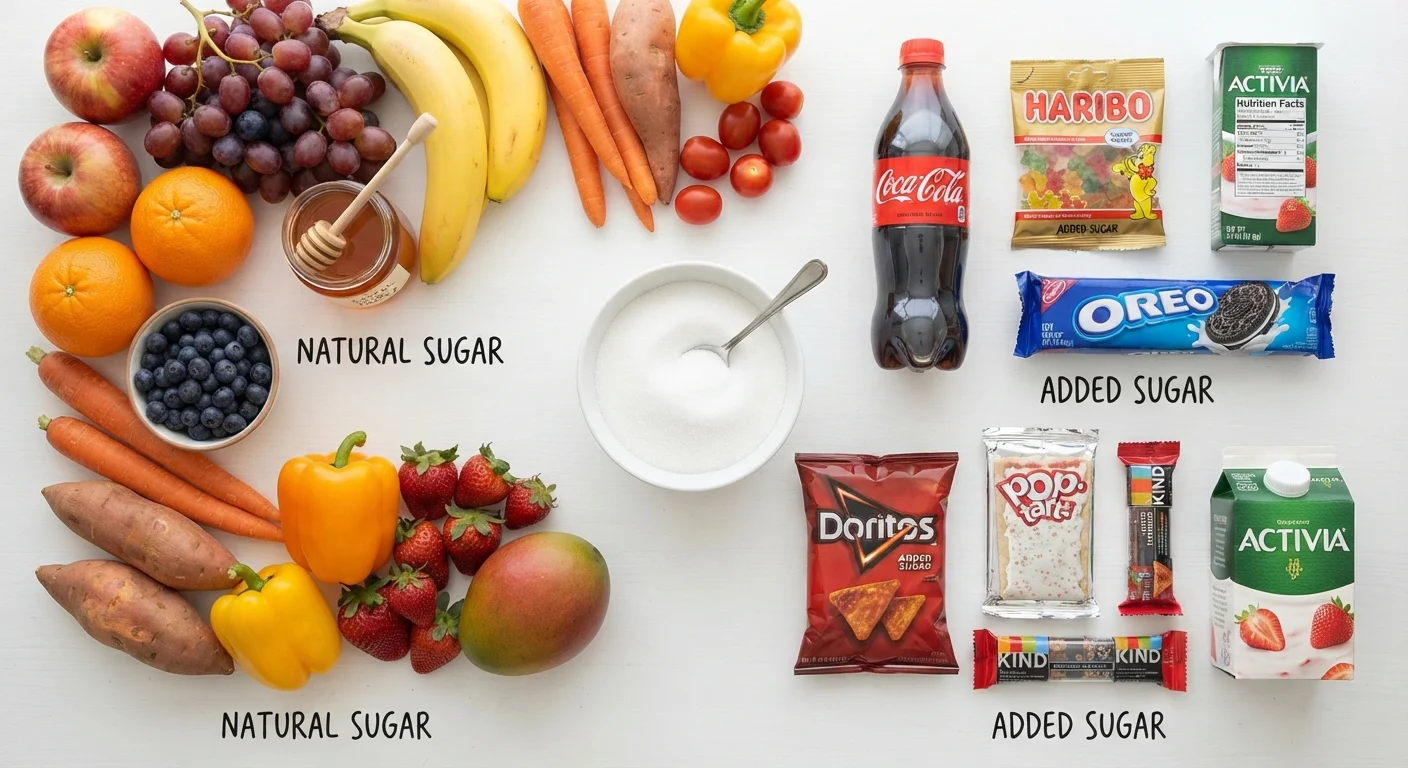
Key Takeaways
Natural vs. Added Sugar
Sugar is a type of carbohydrate found in many foods. Natural sugars occur on their own in whole foods like fruit, vegetables, and dairy. Added sugars are sugars or sweeteners that are put into foods and drinks during manufacturing or preparation - they don't come built into the food naturally.
Both natural and added sugars are chemically similar, but they arrive in your body alongside very different packages of fiber, vitamins, and minerals - which affects how your body processes them.
Why the Source of Sugar Actually Matters
When most people hear "cut back on sugar," they picture candy and soda. But sugar appears in nearly every food category - from a fresh peach to a granola bar. Understanding where the sugar in a food comes from is the first step toward making sense of nutrition labels and eating in a way that feels sustainable.
The core distinction is simple: natural sugars are those found inherently in whole foods, while added sugars are introduced during food processing or home cooking. Both register as sugar in your body, but the surrounding nutrients in each case make a real difference to your health over time.
This Is General Information, Not Medical Advice
The information in this article is intended for general educational purposes. It is not a substitute for personalized guidance from a registered dietitian or healthcare provider. If you have a health condition such as diabetes that affects how you manage carbohydrates and sugar, please consult a qualified professional before making significant dietary changes.
Natural Sugars: Built Into the Food
Natural sugars are found in foods that haven't been processed to include them. The main examples are:
- Fructose in whole fruit
- Lactose in milk and plain yogurt
- Natural starches that break down into sugars in vegetables like sweet potatoes and beets
What makes these sugars different in practice is everything that comes with them. An apple, for example, delivers fructose alongside fiber, vitamin C, and water. That fiber slows digestion, meaning the sugar hits your bloodstream more gradually - a smoother curve rather than a spike. This is one reason why nutrition guidance consistently recommends eating whole fruit rather than replacing it altogether. For more on how whole food packaging changes nutritional value, see our guide to whole foods vs. processed foods.
17 tsp
Average daily added sugar intake in the US
According to CDC data, American adults consume on average about 17 teaspoons of added sugar per day - well above recommended limits.
10%
Recommended added sugar limit (daily calories)
The Dietary Guidelines for Americans advise that added sugars should make up less than 10% of total daily caloric intake for adults and children over age 2.
~70%
Added sugar from packaged & restaurant foods
Research published in nutritional epidemiology literature suggests the majority of added sugar Americans consume comes from ultra-processed packaged foods and restaurant meals.
Added Sugars: What Gets Put In
Added sugars are any sugars or caloric sweeteners added to foods during processing or preparation. This includes obvious sources like:
- Table sugar (sucrose) stirred into coffee
- High-fructose corn syrup in soft drinks
- Honey or maple syrup mixed into a marinade
But added sugars hide in less obvious places too - salad dressings, bread, flavored yogurt, pasta sauce, and many breakfast cereals. Because they arrive without fiber or significant micronutrients, they contribute calories with minimal nutritional return. Over time, consistently high added-sugar intake has been linked by researchers to increased risk of weight gain, dental issues, and other health concerns - though individual health situations vary considerably.
A Simple Label-Reading Habit
When picking up a packaged food, go straight to the "Added Sugars" row on the Nutrition Facts panel rather than the "Total Sugars" line. A low added-sugar number in a food that naturally contains sugar - like plain dairy or tomato-based sauces - is generally a good sign. Aim to make this a quick, low-pressure check rather than a stressful calculation.
Reading Labels and Making Sense of the Numbers
Since 2020, US Nutrition Facts labels are required to list "Added Sugars" as a separate line under "Total Sugars." This is genuinely useful. If a plain yogurt shows 12 grams of total sugar and 0 grams of added sugar, that sugar is coming from naturally occurring lactose. If a flavored yogurt shows 22 grams of total sugar and 10 grams of added sugar, you know half of it was put in during manufacturing.
The Dietary Guidelines for Americans recommend keeping added sugars below 10% of total daily calorie intake. That's a general population guideline - your own needs may differ based on health conditions, activity level, or other factors, so speaking with a healthcare provider or registered dietitian is the best way to get personalized direction.