Key Takeaways
Start here
Why Counting Isn't the Only Way
Core concept
The Visual Plate Method Explained
Apply it
Filling Each Section with Real Food
Build the habit
Making It Work at Every Meal
Why Counting Isn't the Only Way
The idea that eating well requires a tracking app, a food scale, and a daily calorie target can make nutrition feel like a second job. For many beginners, that pressure is exactly what derails healthy intentions before they even start. The good news: research consistently shows that food quality and proportions matter enormously - and you can manage both without counting a single number.
Calorie counting has its place, but it isn't the only path to better eating. Visual tools give your brain an easy shortcut: look at your plate, check the proportions, adjust if something looks off. That's a skill you can use anywhere - at home, at a restaurant, or at a family dinner.
This Is General Guidance, Not Personal Advice
The plate method is a broad educational tool suited to most healthy adults, but individual nutritional needs vary significantly based on age, health status, activity level, and medical history. If you have a chronic condition, are pregnant, or have specific dietary requirements, please work with a registered dietitian or your healthcare provider for personalized recommendations.
This article is for general informational purposes only and is not a substitute for personalized medical or dietary advice. Always consult a qualified healthcare professional before making significant changes to your diet, especially if you have an existing health condition.
The Visual Plate Method Explained
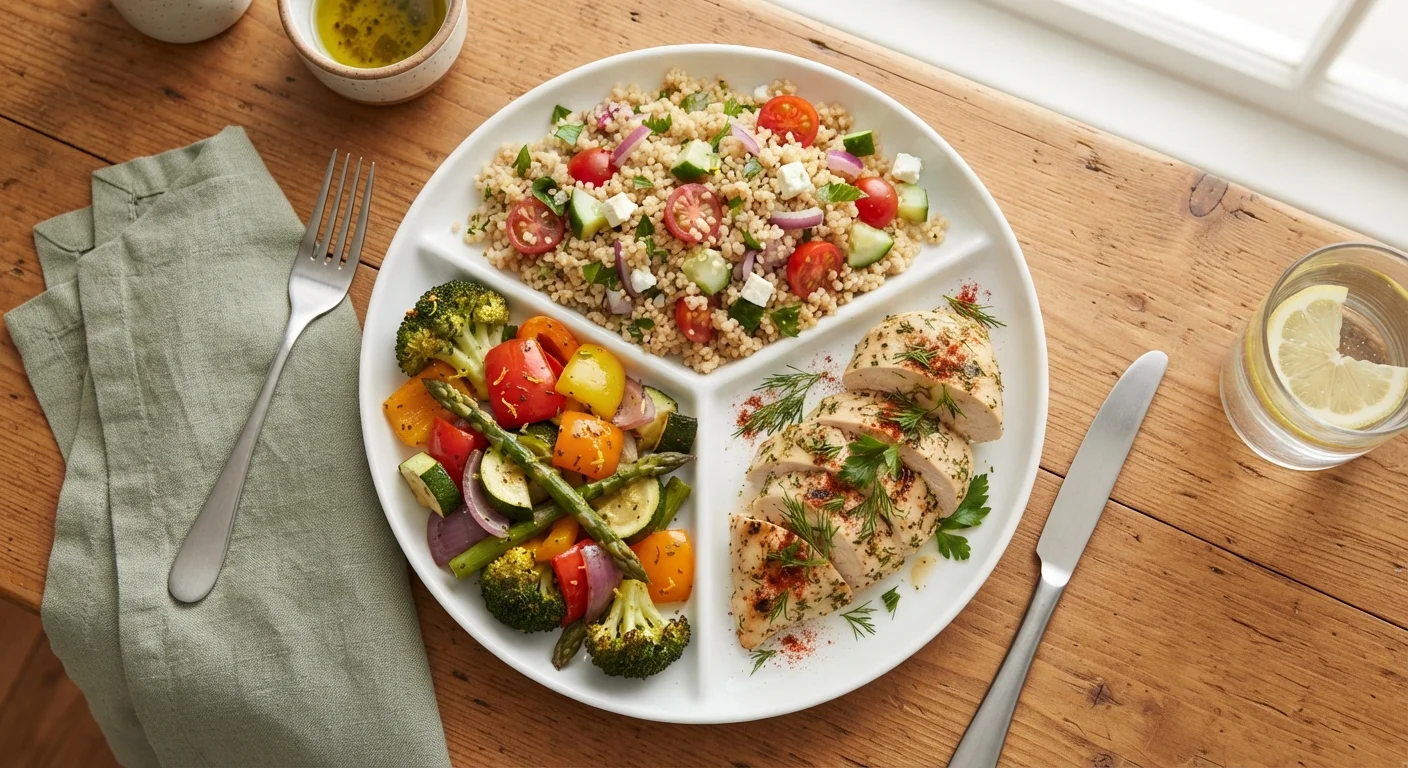
The most practical visual framework is straightforward: imagine your plate divided into four sections. Fill half the plate with non-starchy vegetables and fruit. Give one quarter to whole grains or starchy vegetables. Use the remaining one quarter for a protein source. Add a small amount of healthy fat on the side - a drizzle of olive oil, a few slices of avocado, or a small handful of nuts.
This structure mirrors guidance from leading nutrition bodies and makes it easy to eyeball a meal in seconds. You don't have to be precise. A plate that's roughly 45% vegetables instead of exactly 50% is still a genuinely balanced plate.
Plate method
A visual eating guide that divides your plate into proportional sections for vegetables, grains, and protein - helping you balance nutrients without measuring anything.
Whole grains
Grains that still contain their outer bran and inner germ layers, such as brown rice, oats, and whole-wheat bread, providing more fiber and nutrients than refined versions.
Lean protein
Protein sources that are relatively low in saturated fat, including chicken breast, fish, legumes, eggs, and tofu.
Healthy fats
Unsaturated fats found in foods like olive oil, avocado, nuts, and seeds - these support heart health and help your body absorb certain vitamins.
Non-starchy vegetables
Vegetables that are low in carbohydrates and calories but high in fiber and micronutrients, such as leafy greens, broccoli, peppers, and cucumbers.
If you want to understand what's in packaged foods alongside your fresh ingredients, our guide to reading a nutrition label walks you through the basics without the confusion.
Filling Each Section with Real Food
Knowing the proportions is useful; knowing what to actually put there makes it actionable.
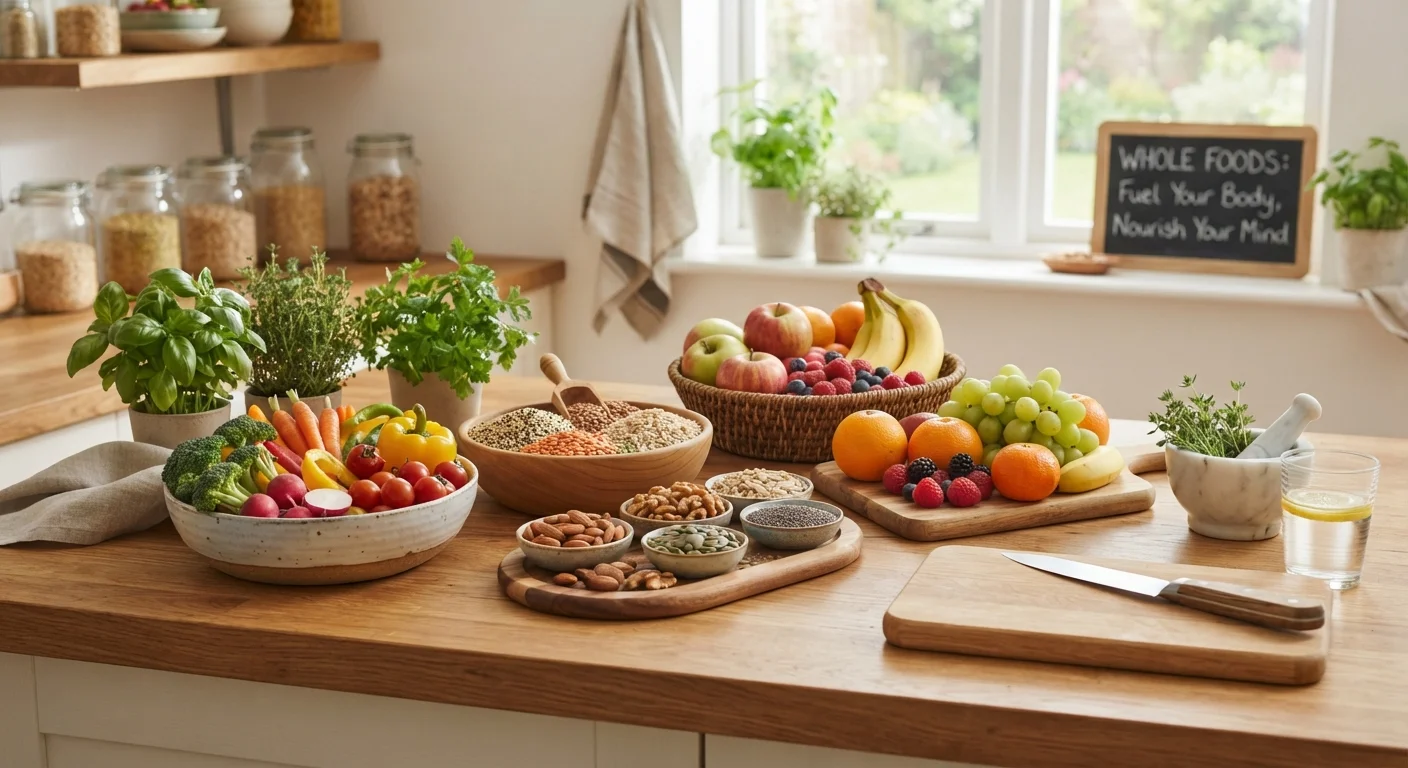
- Vegetables and fruit (half the plate): Leafy greens, broccoli, peppers, tomatoes, cucumbers, berries, and citrus all work well. Variety in color generally signals variety in nutrients, so mixing different options across the week is a practical goal.
- Whole grains and starchy vegetables (one quarter): Brown rice, quinoa, oats, whole-wheat bread, sweet potato, or corn. These provide steady energy and fiber. Refined grains like white rice aren't off-limits - just aim for whole-grain options most of the time.
- Protein (one quarter): Chicken, fish, eggs, beans, lentils, tofu, or low-fat dairy. Rotating between plant and animal sources helps broaden your nutrient intake over the course of a week.
- Healthy fats (small addition): Olive oil, avocado, nuts, or seeds. These support nutrient absorption and satisfaction - a little goes a long way.
Let Your Grocery Cart Do the Work
If your kitchen is stocked with vegetables, whole grains, and proteins, building a balanced plate becomes almost automatic. Spend a few minutes before your weekly shop listing one item from each plate section you'd like to try. Our weekly grocery audit guide makes this even easier.
Building your shopping basket around these four categories is its own nutritional audit. Our weekly grocery audit guide shows you how to spot gaps before you even start cooking.
Making It Work at Every Meal
The plate method is forgiving by design. Breakfast might look different - a bowl of oatmeal with fruit and a boiled egg captures the same spirit even if it's not literally on a divided plate. A burrito bowl at lunch works if you mentally check that vegetables, grain, and protein are all represented. The goal is pattern, not perfection.
Treat this as a habit you're building from scratch, not a rule you'll be graded on. Even shifting one meal a day toward this structure tends to crowd out less nutritious options over time. On busy nights when cooking isn't realistic, these practical principles for eating well on a busy schedule can help you maintain the approach without any elaborate planning.
MyPlate (USDA)
The USDA's official visual eating guide offers practical tips and food group breakdowns to help Americans build balanced meals without calorie counting.
Nutrition Basics Hub
Explore our collection of beginner-friendly nutrition articles - from reading food labels to eating well on a busy schedule - all in plain, practical language.