
Key Takeaways
Summary
22 items · 10-20 minutes
Why Treat Your Cart Like a Nutrition Audit?
Most of us don't follow a meal plan or track nutrients - and that's perfectly fine. But it does mean nutritional gaps can quietly accumulate over weeks without anyone noticing. Common shortfalls include dietary fibre, leafy greens, and foods rich in omega-3 fatty acids, all of which are easy to overlook when shopping on autopilot.
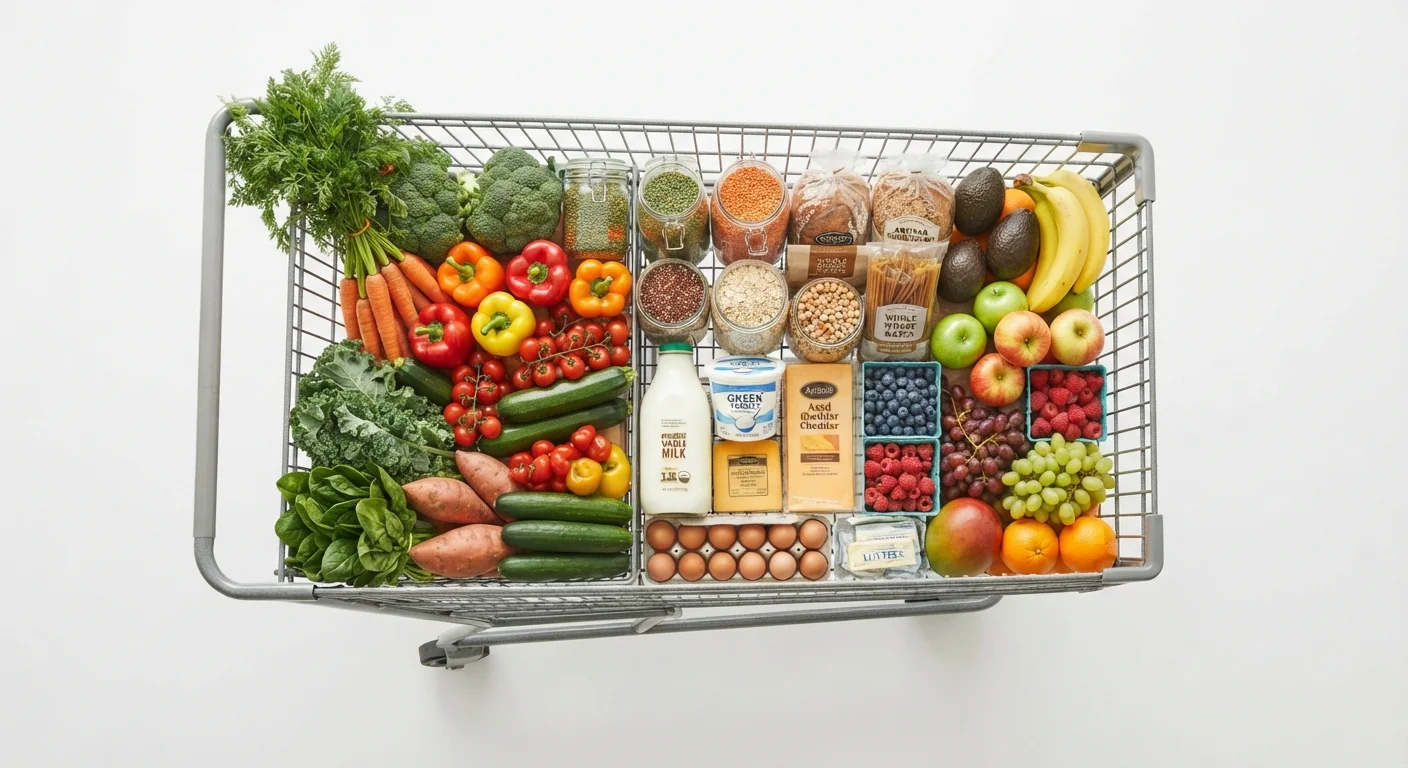
Treating your weekly grocery shop as a brief nutrition audit is a low-effort way to course-correct before habits harden. You're not aiming for perfection - just awareness. A two-minute cart check before you head to the checkout can surface patterns that matter: too much processed food, not enough colour variety, or a protein gap that leaves you reaching for snacks all afternoon.
For a deeper look at balancing meals without any tracking apps, our guide on building a balanced plate without counting anything is a great complement to this checklist. And if reading labels on packaged items trips you up, reading a nutrition label without getting lost walks you through the basics clearly.
Watch Out for 'Health Halo' Products
Granola bars, flavoured yoghurts, and cold-pressed juices are often marketed as nutritious but can carry significant added sugar or lack the fibre of whole foods. Check the nutrition label rather than relying on front-of-pack claims. Our article on foods often labelled 'healthy' that are worth a second look covers the most common examples in detail.
What You'll Need Before You Start
This audit is designed to be done right in the store - or at home before you write your list. No special tools required. However, a few habits make it more effective.
Your existing grocery list
Use your usual list as the starting point - the audit works by reviewing what's already there, not building from scratch.
Nutrition label on packaged items
Check fibre, protein, added sugar, and sodium content on any packaged product before it goes in the cart.
Notes app or pen and paper
Jot down one or two gaps you spot this week so you can address them intentionally on your next shop.
Vitamins and minerals reference
Our <a href="/health-wellness/nutrition-basics/vitamins-and-minerals-a-plain-language-reference-guide">plain-language vitamins and minerals guide</a> is handy if you want to understand why a particular nutrient matters.
The Nutrition Audit Checklist
Work through these groups as you review your cart or list. You don't need every single item - the goal is to spot obvious gaps and make one or two intentional additions each week. Over time, small adjustments compound into genuinely better eating patterns. If fibre is a nutrient you're not sure you're getting enough of, our article on the fibre most people quietly undereat explains exactly what to look for.
Produce - Colour and Variety
Protein Sources
Whole Grains and Fibre
Healthy Fats
Dairy or Fortified Alternatives
Label and Ingredient Check
This Checklist Is Not a Personalised Diet Plan
Everyone's nutritional needs vary based on age, health status, activity level, and other individual factors. This checklist is a general educational tool designed to help you spot common gaps in typical eating patterns. If you have a specific health condition, dietary restriction, or concern, please consult a registered dietitian or your healthcare provider before making significant changes to your diet.
Pair this habit with the daily habit starter checklist if you want to make this audit a reliable weekly routine rather than a one-off exercise.
This article is for general informational and educational purposes only and is not a substitute for personalised nutrition or medical advice. Please consult a qualified healthcare professional or registered dietitian for guidance specific to your health needs.