

Key Takeaways
Cultural Immersion
Cultural immersion is the practice of actively engaging with the daily life, customs, language, and people of a place - rather than simply observing its landmarks from a distance. It means stepping into a community's rhythm: eating what locals eat, learning a few words of the language, attending neighborhood events, and building genuine human connections. The goal is understanding, not just seeing.
Anthropologists and travel educators sometimes describe cultural immersion as 'participant observation' - a method originally used in ethnographic fieldwork, now embraced by experiential travelers worldwide.
The Gap Between Seeing and Experiencing
Most of us have taken a photo of a famous landmark and moved on within minutes - and there's nothing wrong with that. But there's a quieter, richer kind of travel that goes beyond the photo op. When you linger at a neighborhood bakery long enough to watch the morning regulars, when you ask a vendor how to pronounce the name of what you're buying, when you sit with discomfort instead of retreating to the familiar - that's the beginning of cultural immersion.
Sightseeing is about checking places off a list. Cultural immersion is about letting a place check you. It challenges your assumptions, expands your sense of what's normal, and leaves you with stories you couldn't have scripted in advance. The difference isn't always dramatic - sometimes it's as small as choosing the crowded local café over the tourist-facing restaurant one street away.
“Travel is fatal to prejudice, bigotry, and narrow-mindedness, and many of our people need it sorely on these accounts.”
— Mark Twain, Author, 'The Innocents Abroad'
What Cultural Immersion Actually Looks Like
Cultural immersion doesn't require extreme measures or months abroad. It's built from deliberate, everyday choices about how you engage with a new environment. Here are the building blocks most immersive travelers return to:
- Language effort: Even a few words in the local language signals respect and curiosity. You don't need fluency - you need willingness.
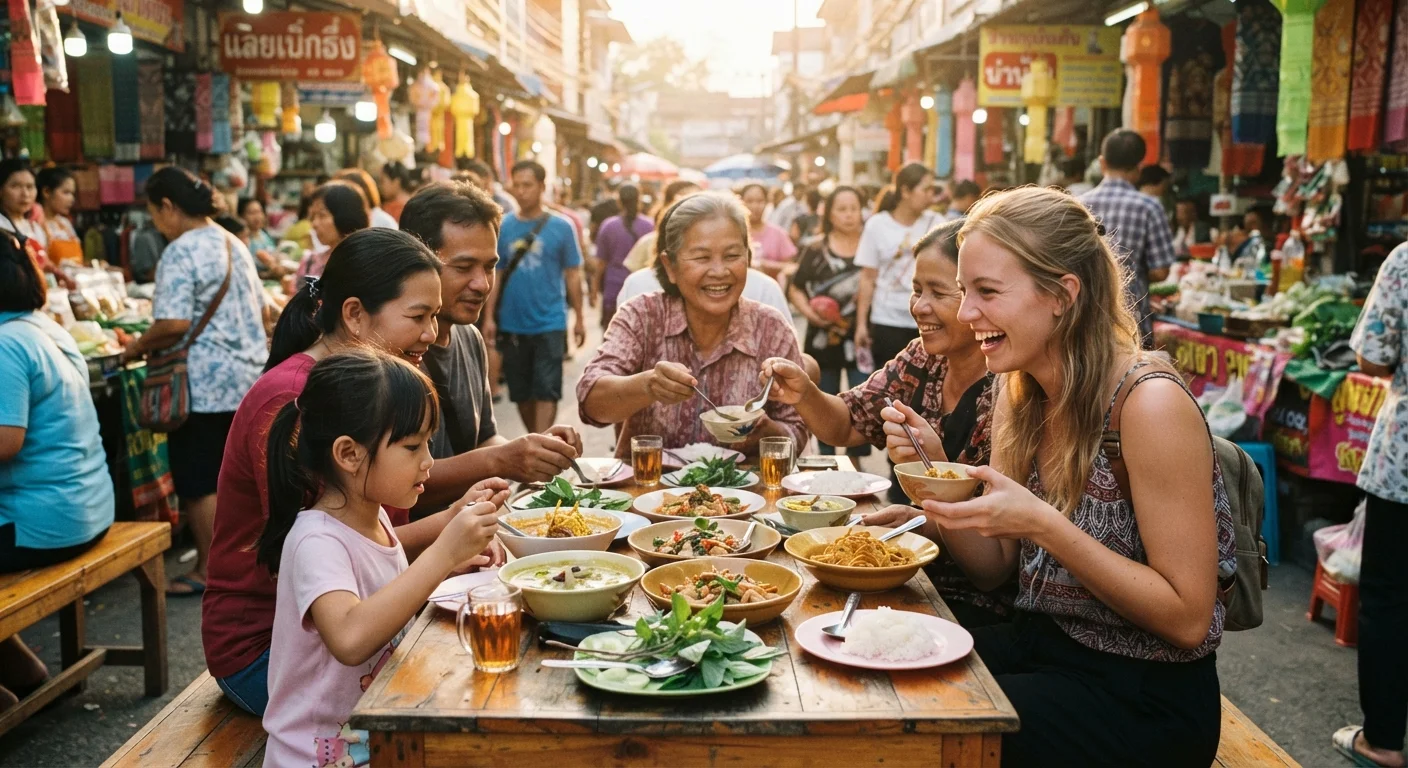
- Food as a doorway: Eating where locals eat, trying unfamiliar dishes, and asking about ingredients opens conversations that sightseeing never would.
- Routine observation: Sitting in a park, riding public transit, or visiting a neighborhood market gives you an unfiltered window into daily life.
- Community participation: Attending a local event, class, or ceremony - with appropriate respect and research - connects you to living culture rather than its museum version.
For guidance on attending cultural events with the right etiquette, see our article on attending cultural events as an outsider.
Start Small, Then Go Deeper
You don't have to upend your entire itinerary to practice cultural immersion. Begin with one intentional choice per day - a neighborhood meal, a locally recommended walk, a market visit without a shopping list. Small decisions compound into genuinely different travel experiences.
Why It Feels So Different - and Why That's the Point
Sightseeing produces memories. Cultural immersion produces perspective shifts. When you share a meal with a family whose daily life looks nothing like yours, or navigate a city without the help of familiar signage, something changes in how you see the world - and yourself.
That productive discomfort is the mechanism. Anthropologists call it defamiliarization: the process of seeing ordinary things - food, family, work, time - through an unfamiliar lens that makes you reconsider your own defaults. It's not always comfortable, but it's almost always worthwhile.
72%
Travelers seeking authentic local experiences
According to Booking.com's Sustainable Travel Report, a large majority of global travelers say experiencing authentic local culture is a top priority when choosing a destination.
3x
More likely to return to a destination
Travel research consistently finds that travelers who form personal connections with locals are significantly more likely to revisit a destination compared to those focused on sightseeing alone.
This is also why the setting matters. A village homestay and a capital city offer radically different cultural lenses - something our piece on rural vs. urban cultural experiences explores in depth. Both are valid; the key is choosing intentionally.
How to Start - Especially If You're New to This
You don't need a background in anthropology or a gap-year budget to begin. Here's a realistic starting framework for first-timers:
- Do a little homework first. Read about local customs, greetings, and taboos before you arrive. Basic awareness prevents accidental offense.
- Slow your itinerary down. Replace one structured attraction with unstructured neighborhood time. Wander without a destination.
- Choose experiences over amenities. A local guesthouse often offers more cultural insight than a chain hotel - not because it's cheaper, but because it connects you to people and place.
- Ask open questions. When you meet locals, ask what they love about where they live. People are rarely indifferent to that question.
If you're thinking about a dedicated first solo cultural adventure, our guide on your first solo cultural adventure walks you through planning, mindset, and making meaningful connections abroad. And if you're weighing how much structure you want, our comparison of independent travel vs. guided cultural tours can help you decide which approach fits your comfort level best.