

Key Takeaways
Option A
Independent Travel
The self-directed, freewheeling approach to cultural discovery.
Best for: Travelers who thrive on flexibility, spontaneous detours, and setting their own pace through a destination.
Option B
Guided Cultural Tours
The structured, expert-led path to deeper cultural context.
Best for: Travelers who want curated access, insider knowledge, and logistical peace of mind built right in.
If you're taking your first cultural trip abroad and feel nervous about logistics
Guided Cultural Tours
A well-structured tour removes guesswork around transport, entry, and etiquette - letting you focus entirely on absorbing the experience rather than managing details.
If you value spontaneity and want to linger wherever curiosity takes you
Independent Travel
Going solo means you can spend three hours in a market, change your itinerary midday, or follow a local's recommendation without anyone else's schedule to consider.
If you're visiting a site with deep historical or spiritual significance you want to truly understand
Guided Cultural Tours
A knowledgeable local guide can surface layers of meaning that no guidebook fully captures, transforming a landmark into a lived story.
If budget flexibility and long-term travel are priorities
Independent Travel
Traveling independently gives you full control over where your money goes, from accommodation style to meal choices, making budget adjustments easier on the fly.
If you want structured access to communities or ceremonies that are otherwise difficult to enter respectfully
Guided Cultural Tours
Reputable cultural tour operators often have established community relationships that provide access - and built-in etiquette guidance - that independent travelers may struggle to replicate.
What Each Approach Actually Looks Like on the Ground
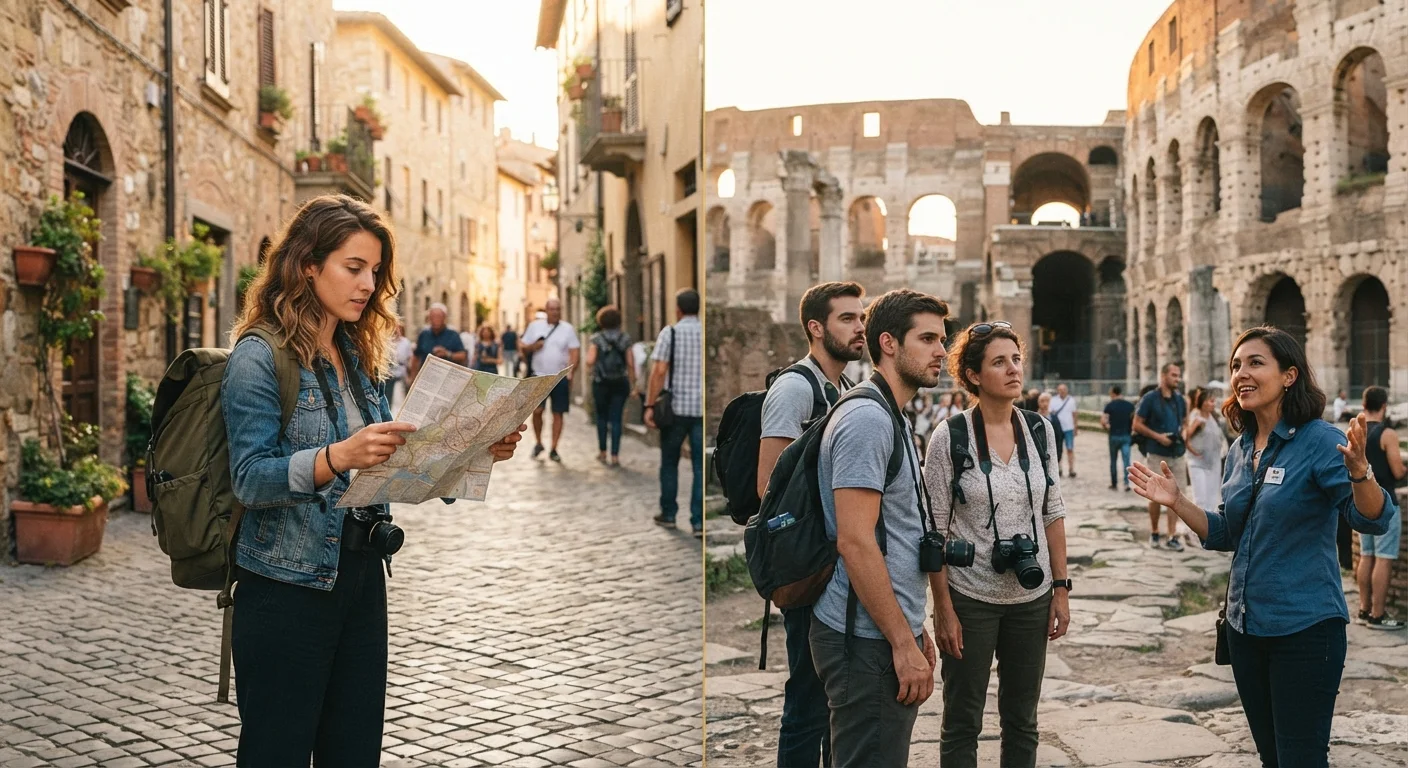
Independent travel means you're the architect. You book your own transport, choose your accommodation, and decide each morning what the day holds. It can mean stumbling onto a neighborhood festival nobody put on a map, or spending an afternoon talking with a shopkeeper who becomes a memorable part of your trip. For a deeper look at this unhurried style of exploration, see our guide to slow travel.
Guided cultural tours, by contrast, hand you a structured experience. A local expert - ideally one with deep roots in the community - leads you through sites, explains context, and often brokers access that's genuinely hard to arrange solo. Think a textile workshop in Oaxaca, a tea ceremony in Kyoto, or a walking tour of a medina with someone who grew up in its lanes. The format varies widely: half-day excursions, multi-week programs, small-group experiences, and everything in between.
| Criterion | Independent Travel | Guided Cultural Tours |
|---|---|---|
| Flexibility | Full control over schedule | Fixed itinerary, limited deviation |
| Cultural context | Self-researched, variable depth | Expert-provided, often richer |
| Logistical effort | High - you arrange everything | Low - mostly handled for you |
| Access to local communities | Organic, unpredictable | Curated, often pre-arranged |
| Budget control | Fully customizable | Fixed package cost |
| Best for beginners | Challenging without preparation | Yes - structure reduces overwhelm |
| Spontaneity | High - change plans anytime | Low - group schedule applies |
| Language barriers | Must navigate independently | Guide typically handles this |
Where Each Approach Shines - and Where It Can Fall Short
Independent travel rewards resourceful, curious people who enjoy problem-solving. The freedom is real and exhilarating. But without local context, it's easy to visit a sacred site without understanding its significance, or to miss that the most interesting neighborhood is a 20-minute walk from where the tourist crowds thin out. If you're preparing for your first independent cultural adventure, our solo cultural travel guide walks you through practical preparation and mindset.
Guided tours shine when the destination is genuinely complex - politically, linguistically, or culturally. A skilled guide doesn't just translate language; they translate meaning. The limitation? You're on someone else's clock, and the experience is shared. That can dilute intimate moments and make spontaneous detours impossible. It's also worth noting that not all tours are created equal - some prioritize throughput over depth. Look for operators with clear community ties and transparent practices.
A Note on Cultural Immersion vs. Sightseeing
Neither independent travel nor a guided tour automatically equals genuine cultural immersion. Immersion is about engagement - eating where locals eat, asking questions, sitting with discomfort, and resisting the urge to filter everything through a familiar lens. Our piece on what cultural immersion really means explores this distinction in depth. Whichever travel style you choose, approach the destination with genuine curiosity rather than a checklist.
The question of respectful access - especially at living cultural sites - is worth thinking through carefully regardless of which path you take. Our piece on sacred sites and respectful curiosity is a useful companion read.
Thinking Through the Decision for Your Next Trip
There's no universally correct answer here - the right choice depends on your destination, your experience level, and what you actually want to walk away with. A few honest questions worth sitting with:
- How familiar are you with the destination's language and customs? Greater unfamiliarity often tips the balance toward guided options, at least for key experiences.
- What's driving you? If you want to understand a culture's history deeply, a guide adds enormous value. If you want to live inside daily rhythms, independent movement often gets you closer.
- How do you handle uncertainty? Independent travel involves missed trains, plan changes, and occasional confusion. Some travelers find that energizing; others find it draining.
Many savvy travelers blend both: they book a guided experience for a significant cultural moment - a ceremony, a historical site, a culinary tradition - then spend the surrounding days exploring freely. It's a flexible middle ground worth considering, especially if you're newer to international travel. For a broader look at how your travel style affects planning, see our solo vs. group travel planning guide.
72%
Travelers who cite cultural experience as a primary trip motivator
According to Expedia Group's 2023 travel trends research, nearly three-quarters of surveyed travelers say experiencing local culture is a key driver of destination choice.
2-3x
More historical sites visited per trip on guided tours
Tour operators and travel researchers generally note that structured itineraries allow visitors to cover significantly more curated landmarks compared to unplanned independent travel.
Ultimately, cultural discovery isn't a format - it's a posture. Whether you're following a guide through ancient ruins or getting cheerfully lost in a side street market, what you bring - your curiosity, your respect, your willingness to be surprised - shapes the experience more than any itinerary.