

| Greeting styles worldwide | Handshakes, bows, cheek kisses, forehead touches, and more |
| Eye contact norms | Vary from culturally expected to considered rude |
| Gift-opening etiquette | Immediate opening (Western) vs. later opening (Japan, China) |
| Gesture risk | Common US gestures (thumbs-up, pointing) can offend in many regions |
| Best preparation approach | Country-specific etiquette guides, travel forums, cultural blogs |
Why Social Customs Matter More Than You Think
You've booked your flights, packed your bag, and memorized a few phrases in the local language. But do you know whether to bow, shake hands, or press your palms together when you meet someone? Small social gestures carry enormous weight in many cultures - and getting them right (or at least making a genuine effort) can open doors that no guidebook can unlock.
This isn't about performing perfection. It's about showing up with awareness. As our guide to habits that open doors in any culture explains, curiosity and humility do more than fluent grammar ever could. Social customs - greetings, gestures, and gift-giving - are the handshake of cultural fluency.
| Greeting styles worldwide | Handshakes, bows, cheek kisses, forehead touches, and more |
| Eye contact norms | Vary from culturally expected to considered rude |
| Gift-opening etiquette | Immediate opening (Western) vs. later opening (Japan, China) |
| Gesture risk | Common US gestures (thumbs-up, pointing) can offend in many regions |
| Best preparation approach | Country-specific etiquette guides, travel forums, cultural blogs |
Greetings: More Than Just Hello
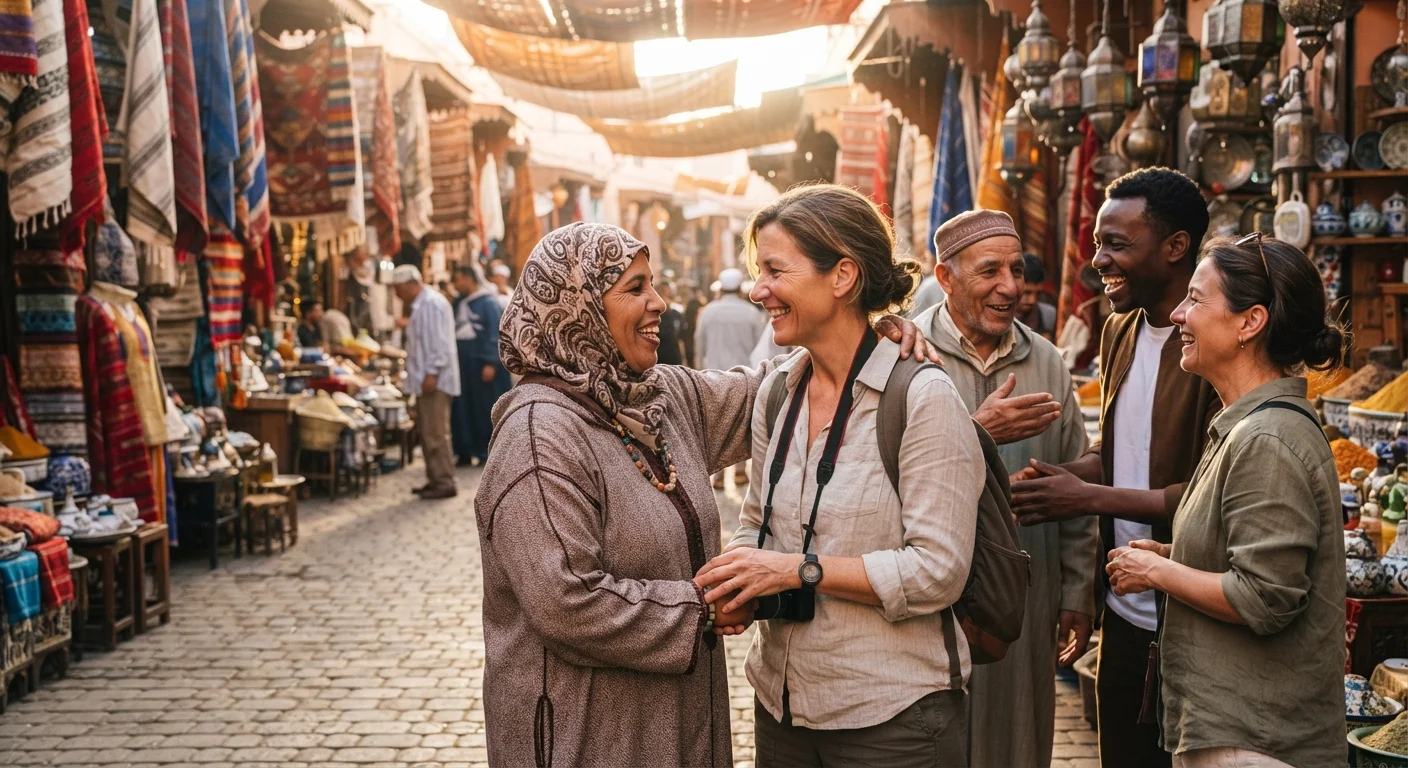
Greetings set the tone for every interaction. Across much of East Asia, a slight bow signals respect - the depth varies by formality and the relationship between people. In many parts of the Middle East and South Asia, a hand placed over the heart after a handshake conveys warmth and sincerity. In France and parts of Latin America, cheek kisses are a standard greeting among acquaintances, though the number of kisses and which cheek comes first varies by region.
A few broad patterns worth knowing:
- Physical contact norms differ widely. Hugging a near-stranger is common in some countries and uncomfortable in others. When in doubt, mirror the local person's lead.
- Eye contact is culturally loaded. Sustained eye contact signals confidence and honesty in the U.S. but can feel confrontational or disrespectful in parts of East Asia and some Indigenous cultures.
- Titles matter. Using a person's first name immediately can feel presumptuous in Germany, Japan, or South Korea, where formal titles are standard until you're invited to do otherwise.
Before you land, a quick check of the cultural preparation checklist for first-time international travellers can help you anticipate these moments without anxiety.
Cultural norm
An accepted behavior or expectation within a specific society or community. Cultural norms are learned, not instinctive, and vary significantly between regions and groups.
Proxemics
The study of personal space and how people use physical distance in social interactions. Comfortable interpersonal distance varies across cultures.
Non-verbal communication
The transfer of meaning through body language, gestures, facial expressions, and eye contact rather than spoken words. Often more culture-specific than verbal language.
Gift taboo
A culturally specific prohibition around certain types of gifts due to symbolic meaning, religious belief, or superstition. What is generous in one culture may be offensive in another.
Formality register
The level of formal language or behavior expected in a given social situation. Many cultures distinguish strictly between formal address for strangers versus informal address for friends.
Gestures: Watch Your Hands
Hand gestures are among the easiest ways to cause unintentional offence - or genuine delight. The thumbs-up, considered encouraging in the U.S., is considered rude in parts of West Africa and the Middle East. Beckoning someone with a finger is insulting in several Asian countries, where an open-hand wave is preferred. Pointing at objects or people with a single finger is considered impolite in many Southeast Asian cultures - an open hand or a chin nod is a gentler alternative.
Nodding and head-shaking also aren't universal. In Bulgaria and parts of Greece, the head movements for "yes" and "no" are inverted compared to American convention - a detail that can cause real confusion during simple transactions.
Good intentions don't automatically translate, which is why understanding common cultural missteps is so worthwhile before any trip.
When You Get It Wrong - And You Might
Even well-prepared travellers occasionally misread a situation. A sincere apology and a willingness to learn are recognized across virtually every culture. Most locals appreciate the effort of trying, even imperfectly. Humor, humility, and an open attitude will take you further than anxious perfectionism ever could.
Gift-Giving: When a Present Is More Than a Present
Bringing a gift when visiting someone's home is a warm gesture almost everywhere - but what you bring and how you present it carries deep cultural meaning.
- In Japan, the wrapping is nearly as important as the gift itself. Gifts are often not opened in front of the giver to avoid any visible disappointment.
- In China, clocks are traditionally avoided as gifts because the phrase for giving a clock sounds like a phrase associated with death. Similarly, green hats carry negative connotations.
- In many Middle Eastern cultures, gifts are given and received with the right hand or both hands - never the left.
- In much of the U.S. and Western Europe, gifts are typically opened immediately with visible appreciation.
Numbers also matter: four is considered unlucky in Japan and Korea (the word sounds like "death"), while sets of four items can be unwelcome. If you're planning a first solo cultural adventure, a small locally sourced gift from your home region is almost universally welcomed and sparks genuine conversation.
Cultural events like festivals add another layer - learn more in our guide to attending cultural events as an outsider.