

Key Takeaways
Why Good Intentions Aren't Enough
Here's the uncomfortable truth: you can be an enthusiastic, warm-hearted traveller with nothing but goodwill in your heart - and still cause real offence. Cultural missteps rarely come from bad people. They come from people who packed their assumptions in their carry-on and forgot to leave them at home.
The most common cultural errors aren't acts of arrogance. They're acts of unawareness. And that's actually great news, because unawareness is fixable. A bit of research before you land and a willingness to observe before you act will carry you further than any guidebook phrase ever could.
If you're planning your first international trip, start with our guide to your first solo cultural adventure, which walks through both the mindset and the logistics of showing up well in unfamiliar places.
74%
Travellers who didn't research local customs
A Expedia Group survey found a majority of respondents admitted to not researching cultural etiquette before international trips.
1 in 3
Sacred sites report visitor-caused damage
UNESCO has documented that a significant proportion of heritage sites report recurring issues with visitor behaviour that disregards posted rules or local guidance.
The Mistakes Themselves - and How to Sidestep Them
The missteps below come up again and again across destinations and traveller types. None of them require expert cultural knowledge to avoid - just a pause, a question, or a quick bit of pre-trip reading.
Photographing people, ceremonies, or sacred objects without asking permission first.
Why it happens: Travellers are caught up in the excitement of a new place and treat photographing locals the same way they'd photograph a landscape - as a natural, harmless act.
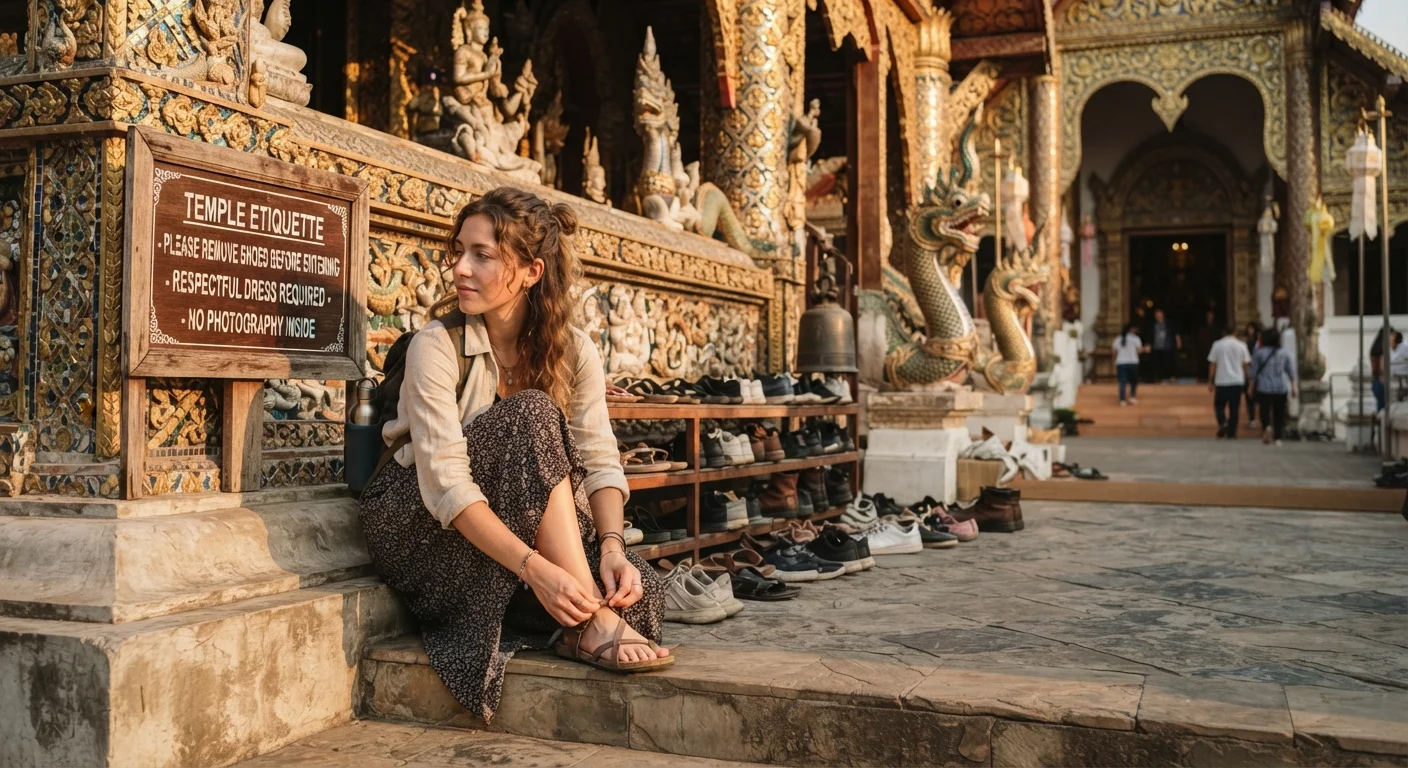
Dressing inappropriately for religious sites or conservative communities.
Why it happens: Travellers pack for comfort or heat without researching local dress expectations, then enter temples, mosques, or villages underprepared.
Speaking loudly or dominating shared spaces with noise, assuming others don't mind.
Why it happens: Conversational volume norms differ widely. What feels like normal enthusiasm in North American social settings can read as aggressive or disrespectful in quieter cultures.
Refusing food or drink offered by a host without explanation.
Why it happens: Dietary preferences or simple discomfort lead travellers to decline hospitality without realising that in many cultures, offering food is an expression of deep respect.
Treating bargaining as a fun game rather than a respectful economic exchange.
Why it happens: In cultures where negotiating prices is standard, travellers sometimes bargain aggressively for sport or walk away after agreeing on a price - both of which can cause genuine offence.
Assuming English fluency or expecting locals to accommodate your language entirely.
Why it happens: English-speaking travellers often expect to be understood everywhere and show frustration - even unintentionally - when communication breaks down.
Assuming a Gesture Is Universal Can Backfire
A thumbs-up, an 'OK' sign, or a friendly wave can carry very different - sometimes offensive - meanings in certain countries. What reads as friendly enthusiasm at home may land as a rude signal abroad. Check country-specific gesture norms before you travel, particularly if you're an expressive communicator.
Disrespect at Sacred Sites Has Real Consequences
Inappropriate behaviour at religious or ceremonial sites - including improper dress, uninvited photography, or entering restricted areas - can result in fines, removal, or damage to community trust in travellers. Some sites have permanently restricted visitor access after repeated incidents. Before visiting any sacred space, research the specific expectations and follow posted guidelines without exception.
If you want a more complete framework for navigating these situations in real time, the Curious Traveller's Toolkit is full of practical habits that work across cultures, from how to ask better questions to how to sit comfortably with uncertainty.
And if you'd like a pre-departure checklist that covers dress codes, dining norms, and greeting customs all in one place, our cultural preparation checklist is a great place to start.
When You Do Get It Wrong
You will, at some point, get something wrong. Everyone does. The measure of a respectful traveller isn't perfection - it's how you respond when a misstep happens.
A simple, sincere apology delivered with a calm demeanour and genuine attentiveness goes a long way in almost every culture. Avoid over-explaining or being performatively distressed - that can shift the emotional burden onto the person you've inadvertently offended. Instead, acknowledge what happened, adjust your behaviour, and move forward with more care.
The world doesn't need travellers who are so terrified of offending that they never engage. It needs travellers who are curious enough to prepare, humble enough to learn, and honest enough to course-correct. That combination - enthusiasm plus awareness - is what transforms a trip into something genuinely meaningful for everyone involved.