

Key Takeaways
Guinea Pig Social Behaviour
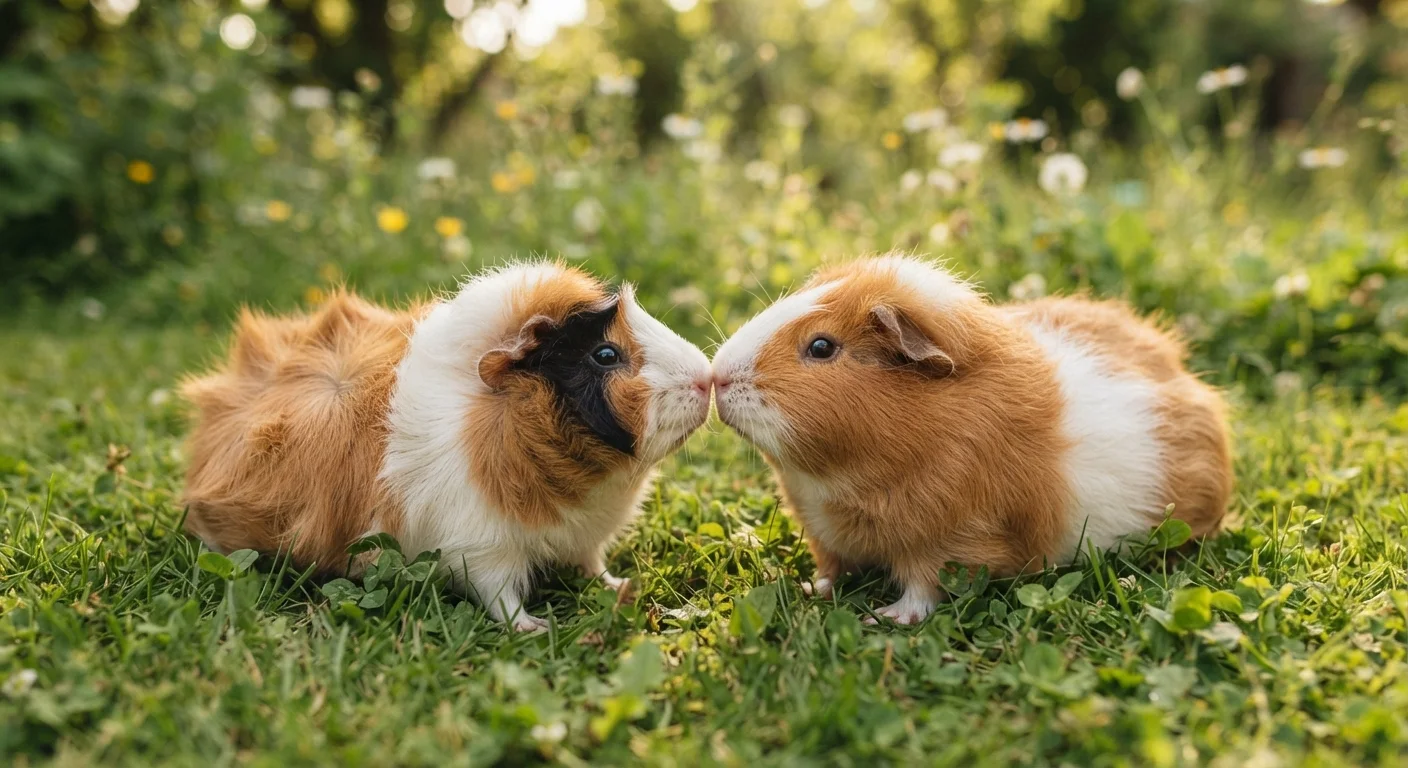
Guinea pigs (Cavia porcellus) are inherently social animals that live in groups in the wild and rely on companionship for emotional wellbeing. They communicate through a rich vocabulary of sounds, body postures, and physical contact. A guinea pig kept in isolation can experience significant stress, which may affect its health and quality of life.
In ethology, guinea pigs are classified as obligate social species - meaning social living is not simply preferred but is a core welfare need recognised by many veterinary and animal welfare bodies.
More Than a Quiet Cage Pet
Guinea pigs are often marketed as low-maintenance starter pets, but that description sells them short. In the wild, Cavia porcellus lives in loose herds across South American grasslands, constantly communicating, foraging together, and keeping watch for predators. That social wiring doesn't disappear in a domestic setting - it shapes everything from how your guinea pig greets you in the morning to how it handles stress.
Understanding this social nature isn't just interesting trivia. It directly affects the decisions you make about housing, companionship, and daily enrichment - all of which influence your guinea pig's long-term health.
11+
Distinct guinea pig vocalisations identified
Animal behaviour researchers studying Cavia porcellus communication have catalogued over eleven separate calls, each used in distinct social contexts.
~5 years
Average domestic guinea pig lifespan
With proper social housing, diet, and veterinary care, domestic guinea pigs typically live four to seven years - social stress is considered a factor in lifespan variation.
2+
Recommended minimum group size
Many veterinary and animal welfare organisations, including the RSPCA, formally recommend keeping guinea pigs in pairs or larger compatible groups.
A Surprisingly Rich Vocabulary
Guinea pigs are among the most vocal small pets you can keep. Researchers have identified at least eleven distinct vocalisations, each carrying a specific meaning:
- Wheeking - a high-pitched squeal, almost always directed at a human, typically anticipating food or attention.
- Purring - a low rumble signals contentment during gentle handling; a higher-pitched, tense version signals irritation.
- Chutting - a series of quiet, rapid sounds made during relaxed exploration.
- Teeth chattering - a sharp, fast clicking that functions as an unmistakable warning: back off.
- Whining - a drawn-out sound used in mild social disputes.
Body language adds another layer. A guinea pig that freezes completely is feeling threatened. One that raises its nose and struts with a rumbling sound (called rumblestrutting) is asserting dominance. Learning to read these cues builds the foundation for a trusting relationship - something covered in more depth in our guide on building trust with prey animals.
“Guinea pigs are highly communicative animals. Owners who take the time to learn what their pet is saying - through sound and posture - consistently report more rewarding interactions and are often quicker to notice when something is wrong.”
— Small Animal Welfare Research Network, Animal welfare research body focused on companion animal behaviour
The Joy Signal: Popcorning and Play
Few animal behaviours are as immediately delightful as popcorning - the spontaneous leap-twist-hop that guinea pigs perform when they are genuinely happy. Young guinea pigs do it most often, but adults popcorn too, especially when given fresh space to explore or a favourite treat. If your guinea pig is popcorning regularly, that is a reliable sign its environment and social needs are being met.
Play in guinea pigs is also social. They explore together, follow each other, and engage in gentle nipping or grooming. These interactions reinforce social bonds and provide mental stimulation. An enclosure that is too small to allow natural movement can suppress these behaviours entirely, leading to boredom and associated stress.
Enrich the Enclosure for Social Play
Provide tunnels, low platforms, and multiple hides so guinea pigs can choose to be together or apart - this mirrors how they use space in the wild. Rearranging the layout occasionally gives pairs a shared novel environment to explore together, which reinforces social bonds and keeps minds active.
Dominance, Introductions, and When to Step In
Even among bonded guinea pigs, a social hierarchy exists and is regularly renegotiated. When two guinea pigs meet for the first time - or when a new animal joins an established pair - expect a period of posturing: rumblestrutting, chasing, and occasional mounting (regardless of sex). This is normal and necessary.
Intervene only if you see sustained, escalating aggression or injuries - particularly bites that break skin. Minor squabbles are part of the social negotiation process. Separating guinea pigs at the first sign of disagreement can actually prolong the settling-in period.
Before committing to a single guinea pig or a pair, it is worth reading our article on keeping a single guinea pig vs. a bonded pair, which walks through the welfare and practical considerations in detail.
It is also worth noting that guinea pigs are quite different from other popular small pets. Unlike hamsters - which are largely solitary and can become aggressive when housed together - guinea pigs actively need company. Our overview on what to know before bringing home a hamster highlights just how different the social needs of these two species are.
When Social Changes Signal a Health Problem
A guinea pig that suddenly withdraws, stops vocalising, or loses interest in its companions may not simply be having a quiet day. Guinea pigs are prey animals with a strong instinct to hide illness - by the time behavioural changes are obvious, a health issue may already be progressing.
Watch for: reduced appetite, hunched posture, staying in one corner of the enclosure, or a notable drop in the usual back-and-forth vocalisations with a cage-mate. Any of these warrant prompt veterinary attention. Our article on signs that a small pet may be unwell covers the full range of subtle warning signs to monitor.
This article is for general educational purposes only and is not a substitute for veterinary advice. If you have concerns about your guinea pig's health or behaviour, please consult a qualified exotic animal veterinarian.