

Key Takeaways
Are You Ready for a Hamster?
Hamsters are often marketed as low-maintenance starter pets, but that reputation doesn't reflect reality. They have genuinely complex needs - specific lighting conditions, a precise social structure, and a near-constant drive to explore and burrow. Understanding what you're committing to is the most important step you can take before any animal arrives in your home. See our pre-arrival checklist for small pets to get a full picture of what preparation looks like.
Hamsters typically live between two and three years. They are crepuscular, meaning they are naturally most active around dawn and dusk, and will sleep through much of the day. Waking a hamster during its rest period causes stress and can lead to biting. If your household is quietest in the evenings, that's actually ideal.
Set up and fully equip the enclosure at least 24 hours before your hamster arrives so bedding can settle and any chemical smells from new materials can dissipate.
A pre-prepared environment reduces one stressor on arrival day, giving the hamster a calm, consistent space to begin adjusting immediately.
Place a small piece of your worn clothing (a sock or fabric scrap) near the nest box during the first week so your hamster associates your scent with safety before handling begins.
Scent familiarization is a well-recognized taming technique that can shorten the time it takes a hamster to become comfortable with human contact.
One practical question worth asking honestly: can you afford veterinary care? Hamsters may be small, but illness can still require specialist attention. Costs for exotic vet consultations are real, and going in prepared makes a significant difference.
Choosing the Right Enclosure
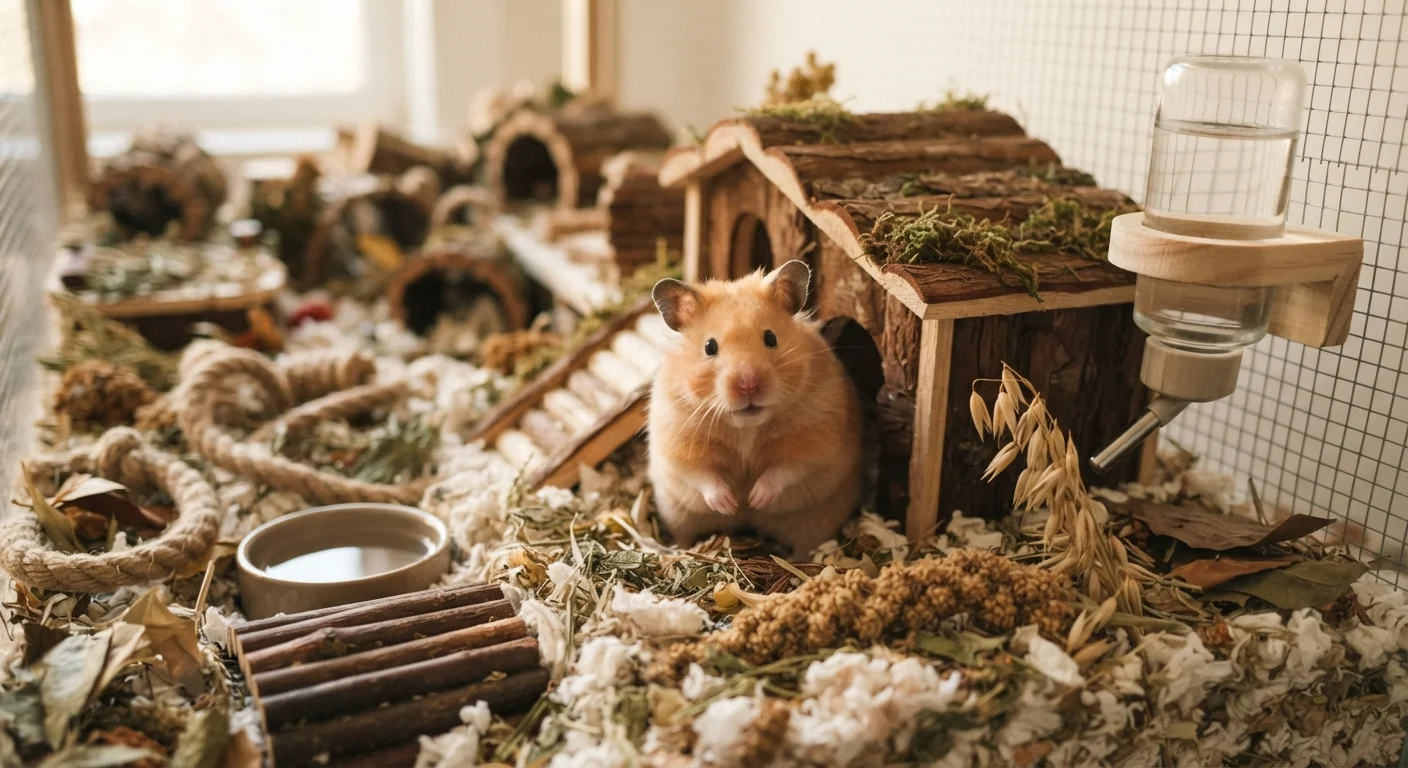
Cage size is where most new hamster owners get it wrong from the start. Many enclosures sold specifically for hamsters are far too small. Animal welfare organizations and exotic vets generally recommend a minimum of 40 inches by 20 inches of unobstructed floor space for a Syrian hamster, with at least 6-8 inches of bedding depth for burrowing.
40" × 20"
Minimum recommended floor space for a Syrian hamster
Widely cited by exotic vets and small-animal welfare groups as the baseline for adequate hamster housing.
6-8 inches
Minimum substrate depth for burrowing
Hamsters in the wild create multi-chamber burrow systems; adequate substrate depth allows this instinctive behaviour.
2-3 years
Average hamster lifespan
Syrian hamsters typically live between two and three years, with some individuals reaching closer to four under excellent care.
Large bin cages, glass tanks, or spacious wooden enclosures are popular options among experienced keepers. Wire-top cages with a solid base can work well, but bar spacing must be narrow enough that a hamster cannot squeeze through or get its head stuck - no more than half an inch for Syrians, less for dwarf varieties.
Inside the enclosure, you'll need:
- A solid-surface wheel at least 10-12 inches in diameter for Syrians (smaller for dwarf breeds) - mesh or barred wheels can injure small feet
- At least one enclosed hideout or nest box
- Plenty of burrowing substrate, such as paper-based or kiln-dried aspen bedding
- A heavy ceramic food bowl and a drip-free water bottle or shallow water dish
- Enrichment items: tunnels, platforms, and safe wooden chews
Spot-Clean Daily, Deep-Clean Monthly
Remove soiled bedding and uneaten fresh food every day to keep bacteria at bay. A full enclosure clean - replacing all substrate and washing surfaces - should happen roughly once a month. Cleaning too frequently can stress your hamster by removing its scent markings.
What Hamsters Actually Eat
In the wild, hamsters are opportunistic foragers - they eat seeds, grains, insects, and plant matter. A pet hamster's diet should reflect that variety rather than relying on colourful seed mixes alone. Many seed mixes allow hamsters to selectively eat only their favourite pieces, leaving them nutritionally unbalanced.
A solid foundation includes a quality pellet or lab block designed for hamsters, offered daily in small amounts alongside:
- Fresh leafy greens such as romaine lettuce, kale, or fresh herbs in small quantities
- Occasional protein sources like a small piece of plain cooked chicken or a dried mealworm
- Minimal amounts of fruit - the sugar content is high
Foods That Are Toxic to Hamsters
Never feed onions, garlic, citrus fruit, chocolate, almonds, or any sugary processed food. Avocado, tomato leaves, and rhubarb are also harmful. When introducing any new food, offer a tiny amount first and watch for digestive upset before making it a regular treat.
Fresh food should be removed after a few hours to prevent spoilage. Always ensure fresh water is available. Unlike rabbits (whose dietary mistakes are surprisingly common), hamsters do not require hay as a dietary staple, though some keepers offer it for enrichment and nesting.
Handling and Socialization
New hamsters need time to settle before handling begins. Expect to spend the first week simply allowing your hamster to grow accustomed to your presence - placing your hand near the enclosure, speaking quietly, and offering food from your palm without reaching in to pick the animal up.
When you do begin handling, keep sessions short - five to ten minutes at first - and always handle low to the ground or over a soft surface. Hamsters can move fast, and a fall from a significant height can cause serious injury.
“Hamsters are often underestimated as pets. They have complex behavioural needs rooted in their wild biology - the drive to burrow, forage, and run miles each night doesn't disappear just because they live in a cage.”
— Exotic Animal Veterinary Consensus, Widely held view among small mammal veterinary practitioners
It's worth noting that most hamster species are solitary. Syrian hamsters, the most commonly kept variety, must be housed alone. Housing two together will almost certainly result in fighting, sometimes fatally. Some dwarf species (such as Roborovski or Campbell's) can occasionally be kept in same-sex pairs if raised together, but this should be monitored carefully and is not guaranteed to be peaceful.
Health, Lifespan, and Vet Care
Hamsters are skilled at hiding illness - a survival instinct that makes health monitoring a daily responsibility. Learn your hamster's normal weight, coat condition, and activity patterns so that any change stands out early. Our guide on signs that a small pet may be unwell covers the subtle signals worth knowing.
Common health concerns in hamsters include:
- Wet tail - a serious bacterial condition marked by diarrhoea and lethargy, requiring urgent vet attention
- Dental issues - overgrown teeth that can prevent eating
- Respiratory infections - often presenting as wheezing or nasal discharge
- Diabetes - particularly common in Campbell's dwarf hamsters
Never Delay if You Suspect Wet Tail
Wet tail (proliferative ileitis) can be fatal within 24-48 hours of symptoms appearing. If your hamster has watery diarrhoea, a hunched posture, or is lethargic and refusing food, contact a vet immediately - this is a genuine emergency, not a wait-and-see situation.
Find an exotic or small animal vet in your area before your hamster comes home - not after a problem arises. Not all general practice vets treat rodents, and waiting until an emergency to locate specialist care can cost precious time. A yearly wellness check, even for a seemingly healthy hamster, helps catch issues early.
This article provides general educational information about hamster care and is not a substitute for advice from a qualified veterinarian. Always consult a vet experienced with small mammals for guidance on your individual pet's health and wellbeing.