

Key Takeaways
Easier to manage for first-time owners
One guinea pig is simpler to monitor, handle, and care for, making the learning curve less steep for someone new to small pet ownership.
Lower overall cost of ownership
A single animal means fewer veterinary visits, less food, and reduced bedding expenses - a real consideration for budget-conscious households.
Stronger bond with the human owner
Without a cage companion to rely on, a solo guinea pig often becomes more attentive to its owner, which can lead to a noticeably interactive relationship when handled consistently.
No risk of inter-cavy conflict
Pairing guinea pigs is not always smooth - dominance disputes can cause stress or injury. A single guinea pig eliminates that risk entirely.
Guinea pigs need near-constant social contact
Even with attentive owners, a solo guinea pig is alone for the majority of the day. This can contribute to chronic stress and behavioural signs of loneliness such as lethargy or repetitive movements.
Requires significantly more owner time
To compensate for the absence of a companion, an owner must provide substantial daily interaction - a commitment that is easy to underestimate during busy periods.
Higher upfront costs for a pair
Purchasing or adopting two guinea pigs, plus providing an appropriately sized enclosure, is a larger initial investment than starting with one animal.
Bonding process can be time-consuming
Introducing two guinea pigs requires a gradual, supervised process that can take days or weeks - and does not always succeed on the first attempt.
Surviving animal may struggle after a companion's death
When one of a bonded pair dies, the remaining guinea pig can show signs of grief and withdrawal, which may require the owner to seek a new companion or provide intensive support.
Our Verdict
For most households, a bonded pair of guinea pigs is the welfare-conscious choice. Guinea pigs are wired for companionship, and a same-species partner meets social needs that no amount of human interaction can fully replace. That said, a single guinea pig is not automatically a neglected one - with committed daily engagement and enrichment, a solo cavy can still flourish.
A bonded pair suits owners who want their guinea pigs to have consistent companionship; a single guinea pig may suit someone with the time and commitment to provide very hands-on daily interaction.
Why This Decision Matters More Than You Might Think
Choosing between one guinea pig or two isn't simply a matter of logistics - it directly affects your pet's quality of life. Guinea pigs (also called cavies) are prey animals with a deeply ingrained need for social connection. In the wild, they live in groups, relying on each other for safety, warmth, and communication. Understanding that instinct is the starting point for any responsible ownership decision.
The surprising social lives of guinea pigs reveal just how complex their interactions can be - from vocalizations like purring and wheeking to grooming rituals that reinforce bonds. Knowing this, it becomes clear why the solo-versus-pair question carries real welfare weight.
Neither option is automatically wrong. What matters is being honest about your lifestyle, budget, and the time you can genuinely commit to your pet's daily needs.
The Case for Keeping a Single Guinea Pig
Some owners - particularly those new to small pet care - start with just one guinea pig. There are real, practical advantages to this approach, and in certain circumstances, a single cavy can do well.
Easier to manage for first-time owners
One guinea pig is simpler to monitor, handle, and care for, making the learning curve less steep for someone new to small pet ownership.
Lower overall cost of ownership
A single animal means fewer veterinary visits, less food, and reduced bedding expenses - a real consideration for budget-conscious households.
Stronger bond with the human owner
Without a cage companion to rely on, a solo guinea pig often becomes more attentive to its owner, which can lead to a noticeably interactive relationship when handled consistently.
No risk of inter-cavy conflict
Pairing guinea pigs is not always smooth - dominance disputes can cause stress or injury. A single guinea pig eliminates that risk entirely.
The most important caveat: a single guinea pig's wellbeing depends almost entirely on the owner's consistent engagement. This means daily floor time, gentle handling, and active interaction - not simply placing the cage in a busy room. If your schedule makes that level of commitment difficult to sustain, a solo setup carries genuine welfare risks.
The Case for a Bonded Pair
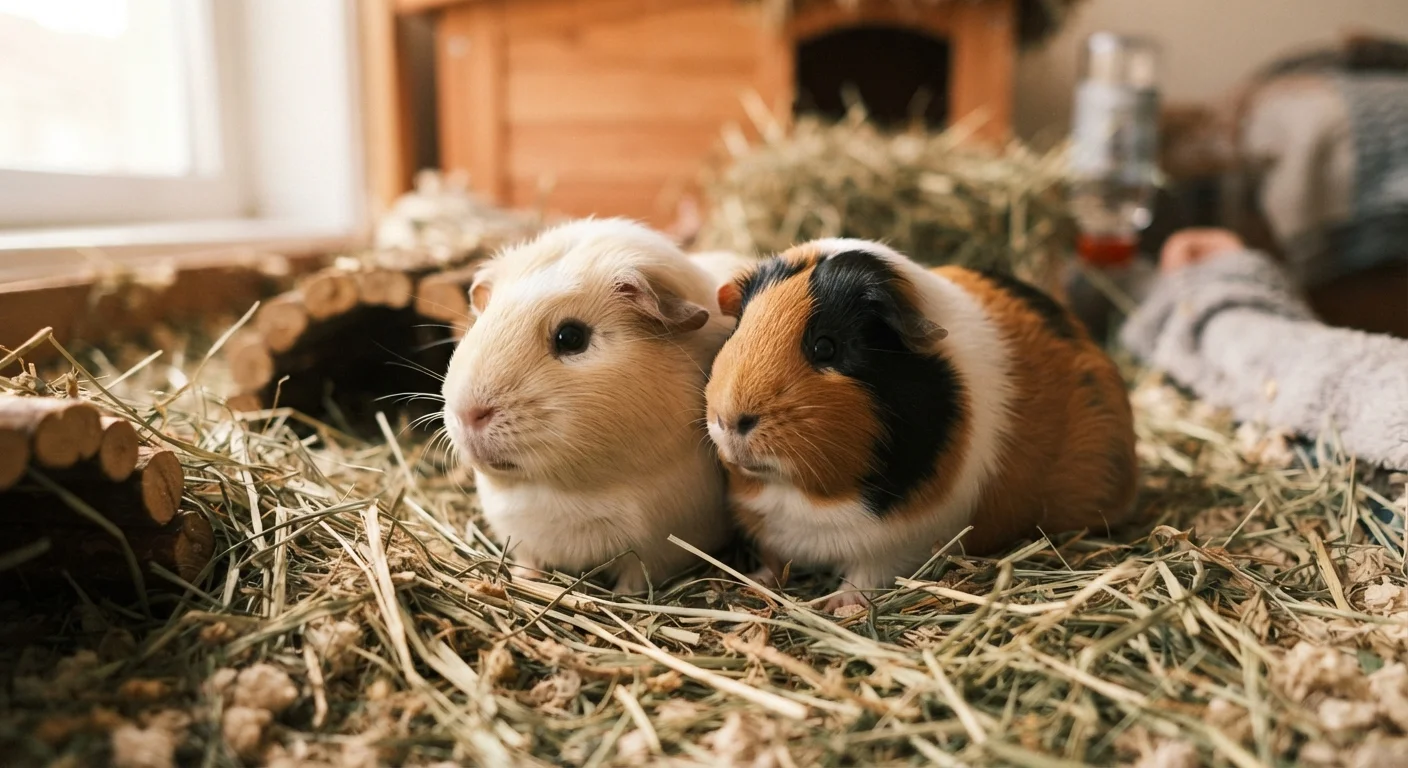
Most animal welfare organizations and veterinary bodies recommend keeping guinea pigs in pairs or small groups wherever possible. The reasoning is grounded in their biology: a companion provides social stimulation around the clock in a way a human owner simply cannot.
Guinea pigs need near-constant social contact
Even with attentive owners, a solo guinea pig is alone for the majority of the day. This can contribute to chronic stress and behavioural signs of loneliness such as lethargy or repetitive movements.
Requires significantly more owner time
To compensate for the absence of a companion, an owner must provide substantial daily interaction - a commitment that is easy to underestimate during busy periods.
Higher upfront costs for a pair
Purchasing or adopting two guinea pigs, plus providing an appropriately sized enclosure, is a larger initial investment than starting with one animal.
Bonding process can be time-consuming
Introducing two guinea pigs requires a gradual, supervised process that can take days or weeks - and does not always succeed on the first attempt.
Surviving animal may struggle after a companion's death
When one of a bonded pair dies, the remaining guinea pig can show signs of grief and withdrawal, which may require the owner to seek a new companion or provide intensive support.
5-7 years
Average guinea pig lifespan
Guinea pigs commonly live five to seven years, meaning the companionship decision affects your pet across a significant span of time.
~7.5 sq ft
Minimum recommended space for a pair
Many animal welfare guidelines suggest at least 7.5 square feet of usable floor space for two guinea pigs, with more space strongly encouraged.
Same-sex pairs - two females (sows) or two neutered males (boars) - tend to work well when introduced carefully. A proper bonding process, done gradually in a neutral space, is key to a harmonious pairing. For guidance on earning your new pet's trust during that early period, building trust with prey animals offers helpful practical principles.
What About a Guinea Pig and a Rabbit?
It may seem logical to pair a guinea pig with a rabbit for companionship, but most veterinary and welfare organizations advise against it. Rabbits can injure guinea pigs unintentionally through kicking, and the two species communicate very differently, making genuine social bonding unlikely. Guinea pigs bond most naturally and safely with other guinea pigs.
Practical Considerations Before You Decide
Beyond the social welfare question, there are several day-to-day realities to weigh carefully.
- Space: Two guinea pigs need a meaningfully larger enclosure. A commonly cited minimum for a pair is around 7.5 square feet of floor space, though more is always better.
- Cost: Two animals mean two sets of veterinary bills, more food, and more bedding. Unexpected health issues - which are more likely as animals age - can arrive in pairs too.
- Health monitoring: Guinea pigs are skilled at masking illness. With two animals, subtle behavioural changes can be easier to spot through comparison. Signs that a small pet may be unwell is essential reading regardless of how many guinea pigs you keep.
- Introductions: Not all guinea pigs get along immediately. Be prepared for a patient bonding process that may take days or weeks.
There is no universally correct answer - only the answer that honestly fits your circumstances and serves your guinea pig's needs. Whichever you choose, commit fully to meeting those needs every day.