

Key Takeaways
Why Enrichment Matters for Small Pets
Small pets - rabbits, guinea pigs, hamsters, gerbils, rats, and birds - are often underestimated. Because they live in enclosures and don't demand walks or training sessions, it's easy to assume they're content with food, water, and a clean cage. In reality, most of these animals are intelligent, curious, and highly motivated by exploration and problem-solving in the wild.
Without adequate mental stimulation, small animals can develop repetitive behaviors (sometimes called stereotypies), become lethargic, or show signs of stress such as bar-chewing or over-grooming. Enrichment addresses those needs directly - and the good news is that it doesn't need to be expensive or complicated.
If you're new to small-pet ownership, our practical pre-arrival checklist is a great place to understand the broader care picture before diving into enrichment specifics.
Start Simple and Observe
When introducing enrichment for the first time, start with one item and watch how your pet responds. Some animals are bold explorers; others are cautious and need time to investigate at their own pace. Observing your pet's reactions will tell you more about their individual preferences than any general guideline can.
8 Enrichment Ideas to Try
Foraging feeders and scatter feeding
Rather than placing food directly in a bowl, hide it. Scatter pellets or small vegetable pieces across bedding, tuck hay into cardboard rolls, or press leafy greens between the bars of a safe hanging feeder. Foraging mimics how these animals locate food in nature and can occupy a curious pet for far longer than a static bowl ever would.
This approach works particularly well for rabbits, guinea pigs, and rats. Even a muffin tin covered with tennis balls - with treats hidden in some of the cups - is a simple DIY puzzle feeder that encourages problem-solving.
Scatter feeding mimics natural foraging behavior and turns mealtime into meaningful mental exercise.
Tunnels and burrowing opportunities
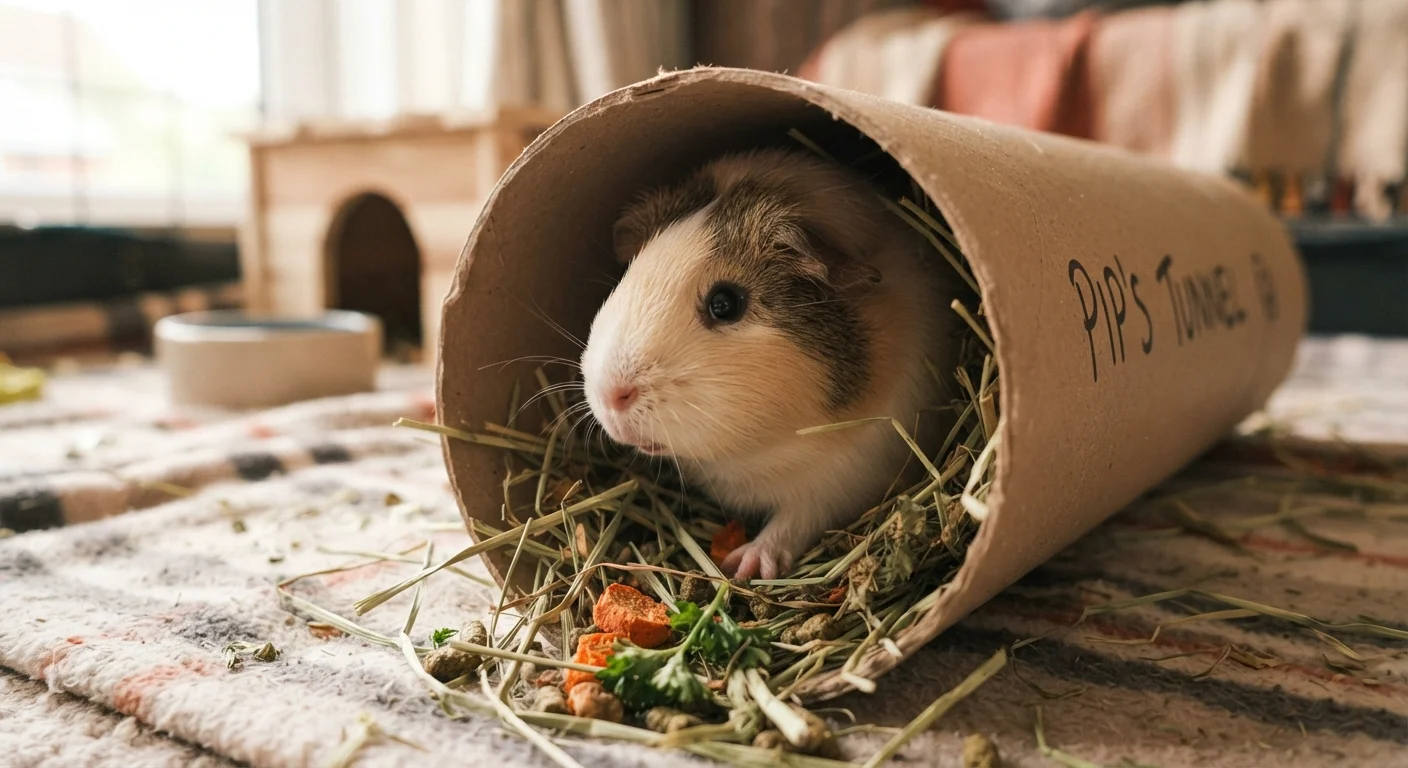
Many small mammals are instinctively drawn to enclosed, tunnel-like spaces. Paper bags (with handles removed), cardboard tubes from kitchen rolls, and flexible fabric tunnels all give animals a safe passage to explore, hide in, and dash through. Hamsters, gerbils, and rats are especially enthusiastic tunnel users.
For burrowing species like hamsters and gerbils, providing deep bedding - at least six inches - gives them the chance to dig and construct their own tunnel systems, which is a core behavioral need, not just a preference.
Deep bedding lets burrowing animals express a core natural instinct that a shallow tray simply cannot satisfy.
Hides and multi-level spaces
Every small prey animal needs a place to feel genuinely hidden. A hide isn't just a comfort item - it provides a psychological sense of safety that allows your pet to relax fully. Wooden hides, half-logs, cardboard boxes, and ceramic pots all work well, depending on the species.
For guinea pigs and rabbits, offering multiple hides in different areas of the enclosure encourages movement and exploration. Vertical space also matters: multi-level platforms for rats or chinchillas add climbing challenges that keep muscles and minds engaged simultaneously.
A proper hide gives prey animals a genuine sense of safety, not just a decorative feature.
Chew toys and gnawing materials
Rodents and rabbits have continuously growing teeth, which means gnawing isn't optional - it's a biological necessity. Providing safe chewing materials prevents dental overgrowth and simultaneously occupies the animal. Untreated willow, apple wood sticks, and compressed hay blocks are all appropriate options for most gnawing species.
Avoid anything treated with dyes, varnishes, or chemicals. Plain cardboard and unbleached paper are also safe, inexpensive chew options that most small pets readily accept.
For rodents and rabbits, chewing is a dental necessity - appropriate gnaw toys address both health and enrichment at once.
Novel scents and sensory exploration
Smell is the dominant sense for most small mammals. Introducing new scents to the enclosure - a handful of dried herbs like chamomile or rosemary, a small piece of untreated bark from a safe tree, or fresh soil in a contained digging tray - creates an immediate source of investigative interest.
Change up scent-based enrichment weekly so familiarity doesn't blunt the response. Always verify that any plant material is non-toxic for your specific species before introducing it, and introduce items one at a time to monitor for any adverse reactions.
A pinch of dried herbs in a hide can occupy a small mammal's nose - and brain - for a surprisingly long time.
Social interaction and handling
For many small pets, the most enriching thing in their environment is you. Rats are especially social and thrive with daily gentle handling, exploration outside the cage, and even simple training sessions using positive reinforcement. Guinea pigs are similarly social and generally do better in pairs, where they can communicate and groom one another.
Even short, calm interactions - sitting near the enclosure and speaking softly, offering a treat from an open hand, or letting a curious rat explore your lap - build trust and provide meaningful sensory and social stimulation that no toy can fully replicate.
For social species like rats, daily positive human interaction can be the most valuable enrichment of all.
Puzzle feeders and problem-solving activities
Puzzle feeders challenge a pet to work for a food reward, which engages executive function and reduces boredom simultaneously. Simple homemade versions - a toilet roll folded at both ends with treats inside, a small box with holes cut in the sides - are surprisingly effective for rabbits, rats, and even birds.
Introduce puzzles at a low difficulty level first, so your pet experiences success and builds confidence. Gradually increase complexity as they become more practiced. The process of figuring something out appears to be intrinsically rewarding for many species, independent of the treat itself.
Starting puzzle feeders at an easy level builds your pet's confidence before you increase the challenge.
Environmental variation and rearrangement
One of the simplest and most overlooked enrichment strategies is periodically rearranging the enclosure layout. Moving hides, tunnels, and platforms to new positions resets the animal's mental map of its space, prompting fresh exploration of a familiar environment.
This approach costs nothing and can be done during routine cleaning. Even small changes - adding a new branch for a bird to perch on, repositioning a water dish, or placing a foraging scatter in a different zone - are sufficient to reinvigorate curiosity and encourage physical movement.
Rearranging the enclosure resets your pet's mental map and costs nothing beyond a few minutes of your time.
Species Differences Matter
What works brilliantly for a rat may be ignored by a guinea pig - and vice versa. Always research the specific behavioral needs of your pet's species before introducing new enrichment items. A hamster, for instance, is primarily solitary and most active at night, which affects when and how enrichment is best offered. Tailoring your approach to the individual animal will always yield better results than a one-size-fits-all strategy.
Keep in mind that every animal has an individual personality. Some pets will investigate a new enrichment item immediately; others may take days to warm up to it. Patience and observation are key. If you notice behavioral changes that concern you, our guide on subtle signs a small pet may be unwell can help you decide when a vet visit is warranted.
Building a Richer Routine
Enrichment works best when it's part of a consistent daily routine rather than an occasional novelty. Aim to rotate items every few days so your pet encounters fresh challenges. Even small changes - moving a hide to a different corner, offering a new forage mix, or rearranging tunnel layouts - can meaningfully re-engage an animal's curiosity.
Rabbits, in particular, benefit from larger living spaces where enrichment can be spread across a room rather than confined to a cage. Our dedicated guide on indoor rabbit housing, space, and enrichment goes into more detail on setting up a genuinely rabbit-friendly environment.
For those who also share their home with a cat, the principles of mental stimulation translate across species - see enrichment ideas for solo cats for a complementary read. The core idea is the same: an engaged pet is a healthier, happier one.