

Key Takeaways
Why standard rabbit cages fall short
Walk into most pet stores and you'll see rabbit cages marketed as complete starter setups. In reality, the majority are sized for short-term transport, not long-term living. A rabbit kept in a space where it cannot complete even three full hops in a row will almost certainly develop physical muscle atrophy and signs of psychological stress such as repetitive behaviors called stereotypies.
Rabbits are not low-maintenance pets - they are intelligent, social animals with complex spatial and behavioral needs. Understanding this upfront makes the difference between a pet that merely survives and one that genuinely thrives. The steps below walk you through building an indoor setup that meets those needs without requiring an enormous budget.
What you will need
Once your space is ready, you'll also want to think carefully about your rabbit's diet - the two go hand in hand. See what new rabbit owners often get wrong about diet for a detailed look at the most frequent feeding errors.
What you'll need
Before you start building your rabbit's space, gather the following items. Most are available at hardware stores, garden centers, or general retailers - you don't need to buy specialty pet products for everything.
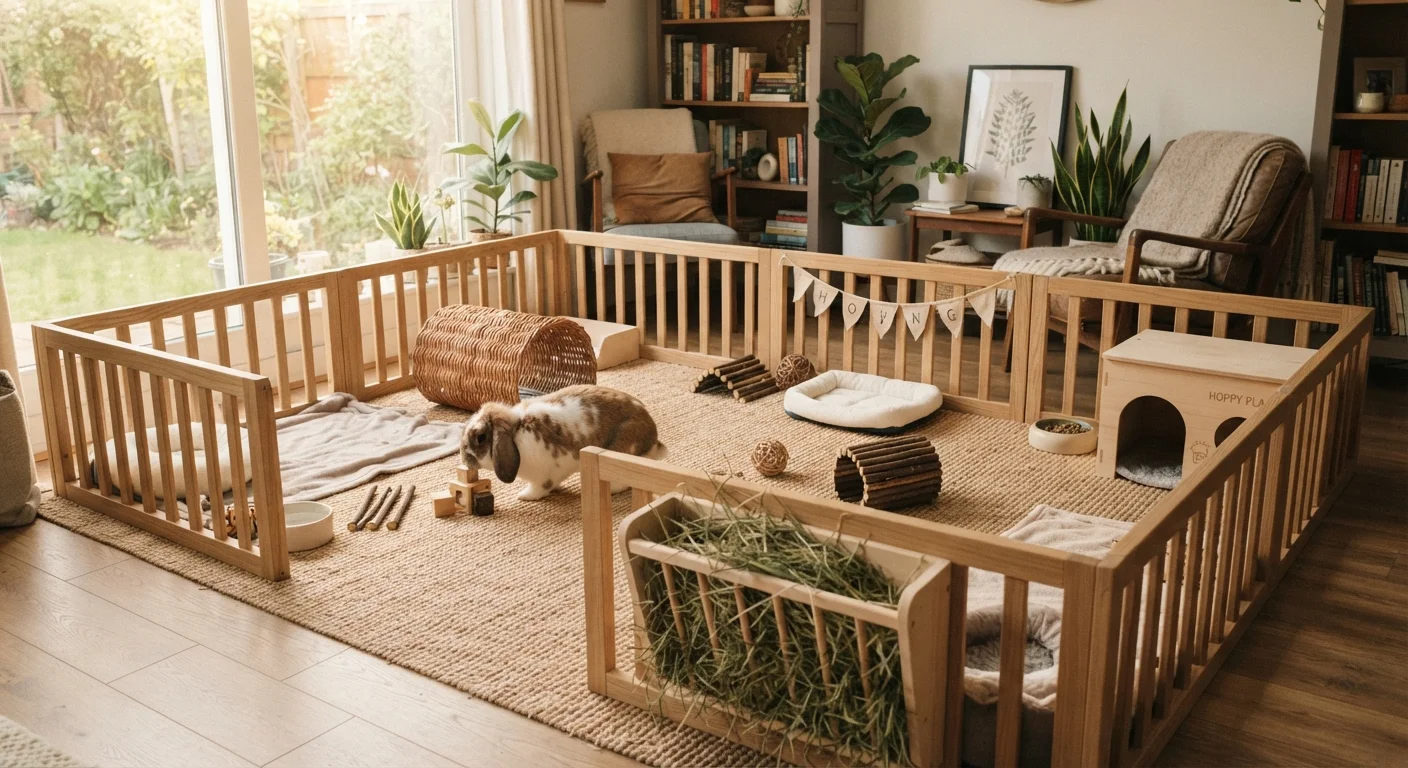
Exercise pen or large modular enclosure
Creates a spacious, open-top living area that gives a rabbit room to move without confining them to a small cage.
Solid-floored mat or fleece blanket
Protects rabbit feet from hard surfaces and provides traction and warmth inside the enclosure.
Hay rack or hanging hay feeder
Keeps unlimited timothy or orchard grass hay accessible and clean throughout the day.
Litter box
Used with paper-based litter and topped with hay to encourage litter habits and natural foraging.
Tunnel or cardboard hideaway
Gives the rabbit a secure retreat space that mimics the burrows rabbits instinctively seek out.
Cable management sleeves or cord covers
Protects electrical cords from chewing, preventing both fire hazards and harm to the rabbit.
Untreated wooden chew toys or willow balls
Supports the rabbit's need to gnaw, which keeps teeth worn down and reduces destructive chewing.
Setting up your rabbit's space step by step
Choose and size the enclosure correctly
The most common mistake new rabbit owners make is choosing an enclosure that is far too small. A general guideline used by rabbit welfare organizations is a minimum of 12 square feet of living space - but bigger is always better. A single rabbit kept in a traditional pet-store cage will likely develop stress behaviors and physical health problems over time.
Modular exercise pens (often called x-pens) are a popular choice because they are inexpensive, configurable, and easy to expand. Avoid enclosures with wire flooring, which can cause a painful condition called sore hocks on a rabbit's hind feet.
Set up solid flooring and bedding
Line the base of the enclosure with a washable fleece mat, foam-backed rug, or interlocking foam tiles. This protects your rabbit's feet and gives them traction while they move around. Avoid cedar or pine shavings, which release aromatic oils that may irritate a rabbit's respiratory tract. Paper-based bedding or compressed paper pellets in the litter corner are safer alternatives.
Install a hay station and litter box
Hay should make up roughly 80% of a rabbit's diet and must be available at all times. Mount a hay rack on the enclosure wall at a comfortable height, or place a generous pile directly in the litter box. Rabbits naturally eat and eliminate at the same time, so a litter box filled partly with paper-based litter and topped with hay strongly encourages good litter habits.
For more on what and how much to feed, see what new rabbit owners often get wrong about diet.
Add enrichment and hiding spots
Rabbits are prey animals with a hardwired need to feel hidden and safe. Every enclosure should include at least one enclosed hideaway - a cardboard box with a door cut out works perfectly. Add a tunnel for running through, a digging mat filled with shredded paper, and a few chew toys made from untreated wood or willow.
Rotate enrichment items weekly to keep the environment mentally stimulating. For a broader look at keeping small pets engaged, explore enrichment ideas that keep small pets mentally active.
Rabbit-proof the free-roam area
Rabbits should have several hours of free-roam time outside their enclosure every day. Before allowing access, systematically remove or cover hazards. Run all electrical cords through cable management sleeves or tuck them behind furniture. Block access to houseplants - many common varieties are toxic to rabbits - and to small gaps behind appliances where a rabbit can become trapped.
Baseboards and furniture legs are prime chewing targets; applying bitter apple spray or placing clear plastic guards can help protect them.
Establish a daily routine of interaction
Rabbits are social, crepuscular animals - most active at dawn and dusk. Structured free-roam sessions in the morning and evening align with their natural activity peaks. Spend time on the floor at their level rather than picking them up frequently, which many rabbits find stressful until they are well-socialized.
Consistent, calm interaction builds trust and prevents boredom-related behaviors like cage rattling, thumping, or excessive chewing.
Think like a rabbit when planning space
Rabbits feel most secure when they can see an escape route from wherever they are resting. Arrange furniture and enclosure walls so your rabbit always has a clear path to their hideaway. This small design choice can significantly reduce stress-related behaviors.
Many common houseplants are toxic to rabbits
Plants such as pothos, aloe vera, daffodils, and lilies are among the many varieties that are harmful if ingested by rabbits. Before allowing free-roam access to any room, check every plant against a reliable veterinary toxicology resource and move any questionable species well out of reach. When in doubt, keep the plant in a completely separate room.
Troubleshooting common setup problems
Even a well-planned setup can hit snags once a real rabbit moves in. Here are a few frequent issues and how to address them:
- Rabbit ignores the litter box: Move the box to whichever corner the rabbit is already using. Add more hay on top to make it more inviting.
- Rabbit chews the x-pen bars: This often signals boredom or not enough free-roam time. Increase enrichment variety and daily exercise opportunities.
- Rabbit thumps or hides constantly: Excessive hiding or alarm thumping may indicate the environment is too noisy or the rabbit feels exposed. Add more hiding spots and place the enclosure against a wall rather than in the center of a busy room.
- Rabbit refuses to use the enclosure: After the initial adjustment period, a rabbit that is truly miserable in its space may need a companion rabbit - they are often kept in bonded pairs. Consult an experienced rabbit rescue or a rabbit-savvy veterinarian for guidance on bonding.
This article provides general care information for educational purposes and is not a substitute for advice from a qualified veterinarian familiar with rabbit health and behavior.