

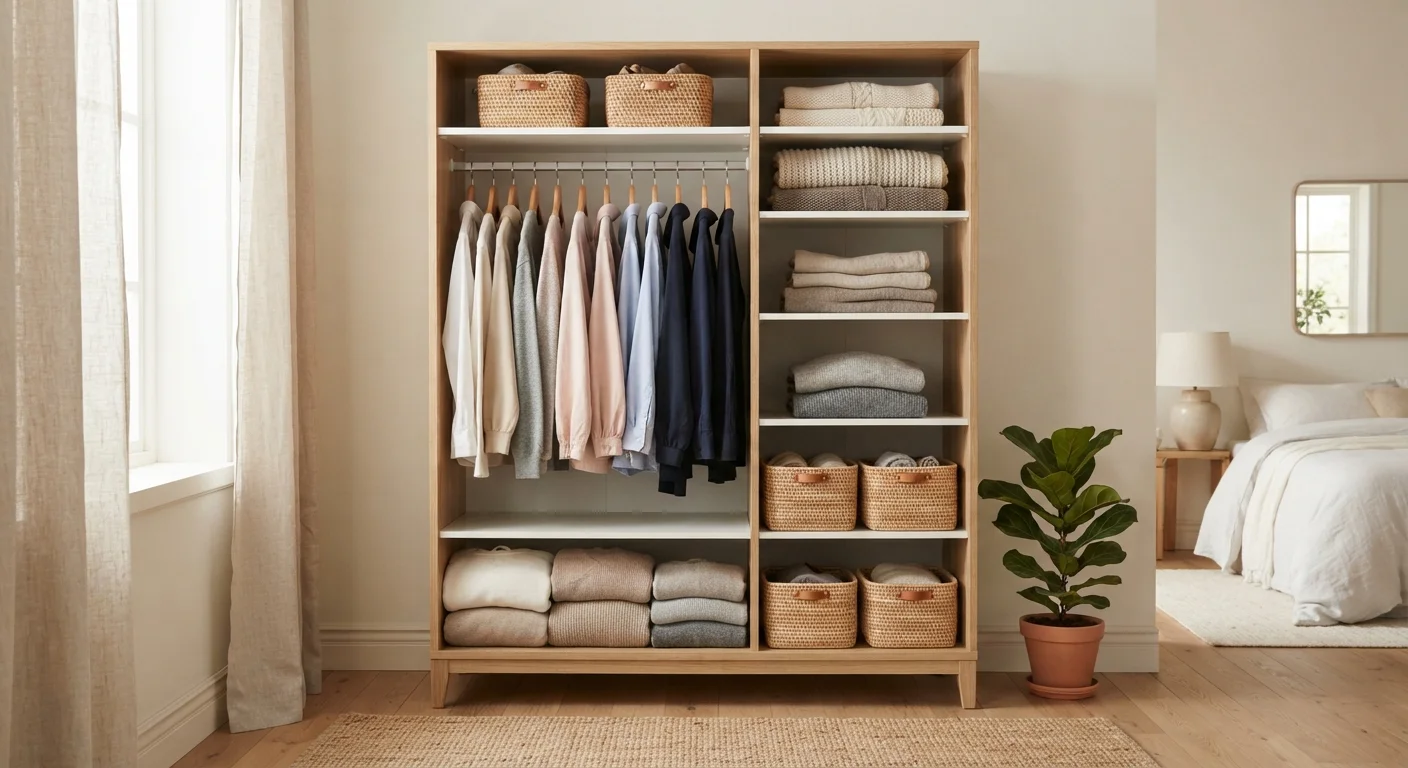
Key Takeaways
Why Most Wardrobe Systems Fall Apart
Most organized wardrobes don't fail because of the wrong products or layout - they fail because the system was built around an idealized version of daily behavior rather than actual habits. When a system requires too many decisions or too much effort to maintain, people default to the nearest flat surface instead.
The solution isn't stricter discipline; it's a simpler system. When everything has a single logical home and returning items takes fewer steps than leaving them out, tidiness becomes the path of least resistance. That's the goal this guide works toward.
This approach also applies to other areas of the home. If you find yourself fighting similar battles in the kitchen, kitchen drawer chaos is worth tackling next. And for households where different people have different standards, organising a shared home offers strategies that don't require everyone to agree.
Don't Skip the Declutter Step
Organizing a wardrobe that still contains items you don't wear will only create a tidier version of the same problem. Before sorting or arranging anything, remove what no longer fits your life. This step is the single biggest factor in whether your system actually holds over time.
What You'll Need
Good news: a functional wardrobe rarely requires a shopping trip. The most impactful changes come from removing what you don't need and repositioning what you do. That said, a few low-cost items genuinely help.
What you will need
Slim, uniform hangers
Creates visual consistency and recovers significant hanging space compared to bulky or mismatched hangers.
Small baskets or bins
Corrals loose accessories, folded items, or seasonal pieces on shelves without requiring labeling.
Sticky notes or masking tape
Temporarily labels shelf zones while you test a new layout before committing to it.
Full-length mirror
Helps you make confident keep-or-remove decisions during the declutter phase.
Avoid Buying Storage Before Sorting
Purchasing bins, dividers, or hangers before you know how much you're keeping is one of the most common wardrobe organization mistakes. Measure what you have left after decluttering, then decide what - if anything - you actually need. Most wardrobes require very little new equipment.
Step-by-Step: Organizing Your Wardrobe
Empty the wardrobe completely
Remove every item - hangers, folded clothes, shoes, accessories, and anything stored on the floor or top shelf. Place everything on a bed or cleared floor space. Starting with a fully empty wardrobe lets you see its actual capacity and prevents you from organizing around items that should have been removed months ago.
Sort everything into clear categories
Create four groups: Keep, Donate, Discard, and Relocate (for items that belong elsewhere in the home). Handle every item once and make a decision. If you haven't worn something in over a year and can't name a specific occasion you'd wear it, treat that as useful information. For guidance on common traps during this stage, see decluttering myths worth knowing about before you start.
Group your 'keep' items by category
Before anything goes back in the wardrobe, sort your kept items into logical groups: tops, bottoms, dresses, outerwear, workwear, loungewear, and so on. Within each group, arrange by color if that helps you locate items quickly. Grouping by category - rather than owner, season, or formality - is the approach most people find easiest to sustain without conscious effort.
Return items using a frequency-first layout
Place what you reach for most often at eye level and within easy arm's reach. Rarely worn items - formal wear, heavy coats, seasonal pieces - move to higher shelves, lower zones, or the back of hanging rails. This layout reduces daily friction: you're never hunting for your most-used clothes, and the wardrobe stays visually cleaner because the front-and-center zone contains fewer, more intentional items.
Fold strategically - don't just stack
Vertical folding (sometimes called file folding) stores t-shirts, jeans, and knitwear upright in drawers or on shelves rather than flat in piles. This means you can see every item at once without disturbing the stack. For shelves, keep piles to a maximum of five or six items - taller stacks tip and discourage tidying.
Build a simple daily return habit
The most common reason wardrobes revert to disorder is a missing return habit - clothes pile on chairs and floors because the act of putting them away feels like extra effort. Designate one spot (a hook on the door, a small valet stand) for items worn once but not yet ready to wash. Return laundered clothes to their group on the same day you fold them. These two micro-habits require less than five minutes daily and are more effective than any monthly reorganization session. For a broader look at building routines that stick, the daily habits hub has practical guidance.
Keeping It That Way
Maintenance is where most organization projects succeed or quietly unravel. A wardrobe you'll actually keep tidy is one designed around how you behave on a busy Tuesday evening - not how you imagine behaving on a calm Sunday morning.
Use the One-In, One-Out Rule
Each time a new item enters your wardrobe, remove one that it replaces or that you no longer need. This simple habit prevents gradual accumulation and keeps your system from drifting back toward chaos over time. It requires no reorganizing - just a moment of decision at the point of purchase.
Schedule a light seasonal review (around 20-30 minutes) to swap out cold- and warm-weather pieces, remove anything that's worn out, and reassess what you actually reached for. This is also a natural moment to apply the broader home organisation principles that keep every room - not just your wardrobe - functioning with less ongoing effort.