

Key Takeaways
Why Kitchen Drawers Descend Into Chaos
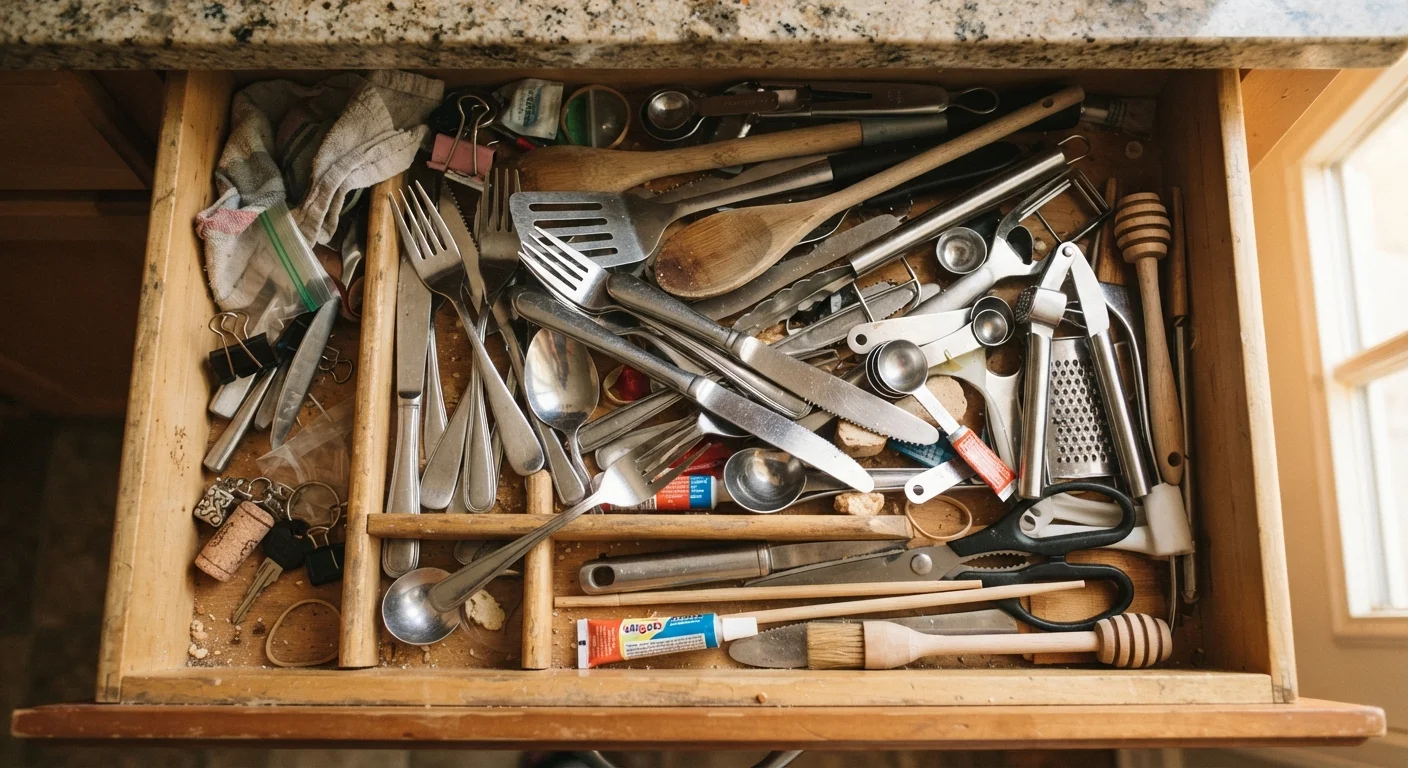
Kitchen drawers are the home's most democratic storage space - anyone can toss anything in, and nobody feels responsible for the result. Within weeks of a tidy-up, the corkscrew is buried under takeout menus, the measuring spoons are tangled with rubber bands, and nobody can find the peeler. This isn't a willpower problem; it's a systems problem.
The root cause is almost always the same: drawers are organized once, optimistically, and then never designed for the reality of daily use. Items get pulled out in a hurry, replaced approximately, and gradually drift. Without a structure that makes putting things back correctly as easy as pulling them out, entropy wins every time.
Understanding why this happens - and which specific mistakes accelerate the slide - is the fastest route to a drawer that actually stays functional. For a broader look at spaces that quietly accumulate mess in the same way, see our guide to hidden clutter zones.
Skipping the declutter and going straight to organizing what's already there.
Why it happens: Organizing feels productive, and sorting through items to discard them feels slow and uncomfortable. Most people want to skip to the satisfying part.
Treating every drawer as a general-purpose 'junk' space rather than assigning it a clear purpose.
Why it happens: Without an intentional assignment, drawers default to catching whatever's nearby. This is especially common near the kitchen entrance or beside the sink.
Buying organizers or bins before deciding what actually needs to live in the drawer.
Why it happens: Storage products look like solutions, and shopping feels like progress. It's easy to buy dividers for a drawer you haven't yet sorted.
Storing items based on category rather than how often they are used.
Why it happens: Category-based sorting feels logical - all baking tools together, all cutlery together - but it ignores the practical reality of how kitchens actually work.
Allowing the drawer to be a landing spot for 'I'll deal with this later' items.
Why it happens: Kitchen drawers are convenient and close at hand when you're in a hurry. They quietly absorb instruction manuals, loose batteries, spare keys, and mystery gadgets.
How to Finally Fix Your Drawers (and Keep Them That Way)
Once you understand the mistakes above, the fix is more straightforward than most people expect. Start with a full empty-out: pull everything from the drawer and place it on the counter. This single step forces you to see exactly what you're working with - and often reveals duplicates, broken items, and things that belong somewhere else entirely.
Don't Skip the Full Empty-Out
It's tempting to reorganize a drawer by shuffling items around rather than removing everything first. This almost always results in the same problems resurfacing within weeks. Taking everything out and starting with a blank drawer - even if it takes an extra ten minutes - is what separates a lasting fix from a temporary tidy.
Next, sort what remains by frequency of use, not by category. Items you reach for daily - a chef's knife, a spatula, a wooden spoon - deserve prime real estate in your most-used drawer, within easy reach. Things used weekly or monthly can live further back or in a secondary drawer. This principle alone eliminates the frustrating rummage most people experience every morning.
Finally, add structure. Simple dividers (even repurposed cardboard boxes work initially) create zones that make it obvious where each item lives. The goal is that anyone in the household - including children - can return an item to the right spot without thinking. For ideas on building systems that hold up around kids, this guide on organizing with children is worth a read.
Maintain the system with one rule: if something new comes in, something old goes out. This prevents gradual accumulation without requiring regular overhauls. These same principles apply well beyond the kitchen - the complete home organisation guide walks through how to roll them out room by room.