

Key Takeaways
Why Household Organisation Disagreements Are So Common
Clutter tolerance is deeply personal. One person's "lived-in" is another person's "chaotic" - and neither perception is objectively wrong. These differences often stem from upbringing, personality, and simply how much mental energy someone has at the end of the day. When two or more people share a home, those differences collide in very practical ways: where the mail lands, whether shoes stay by the door, how quickly dishes get washed.
The mistake most households make is treating organisation as a problem one person needs to fix in the other. In reality, sustainable shared-space organisation is a negotiation, not a correction. The goal isn't to convert your housemate or partner into a tidier version of themselves - it's to design systems that work well enough for everyone, even imperfectly.
If you're starting from scratch or feel overwhelmed by where to begin, our room-by-room decluttering guide offers a low-pressure starting point before you tackle the shared-standards conversation.
Best Practices for Organising Shared Spaces
The following practices are drawn from common-sense principles that work across a wide range of living situations - from couples to housemates to multigenerational households. None require expensive products or a complete weekend overhaul.
Separate personal zones from shared zones and apply different standards to each.
Shared spaces need compromise; private spaces don't. When each person has at least one area - a bedroom, a shelf, a drawer - where their own standards apply without negotiation, they're more willing to meet in the middle on communal areas. This reduces resentment and makes shared-space rules feel fair rather than imposed.
Agree on a 'floor standard' rather than an ideal state.
An ideal tidy state is often only achievable right after a clean. A floor standard - the minimum acceptable condition before either person feels genuinely uncomfortable - is far more durable. It sets a shared baseline without demanding constant perfection, which reduces the frequency of friction.
Make the right place for things obvious and easy to use.
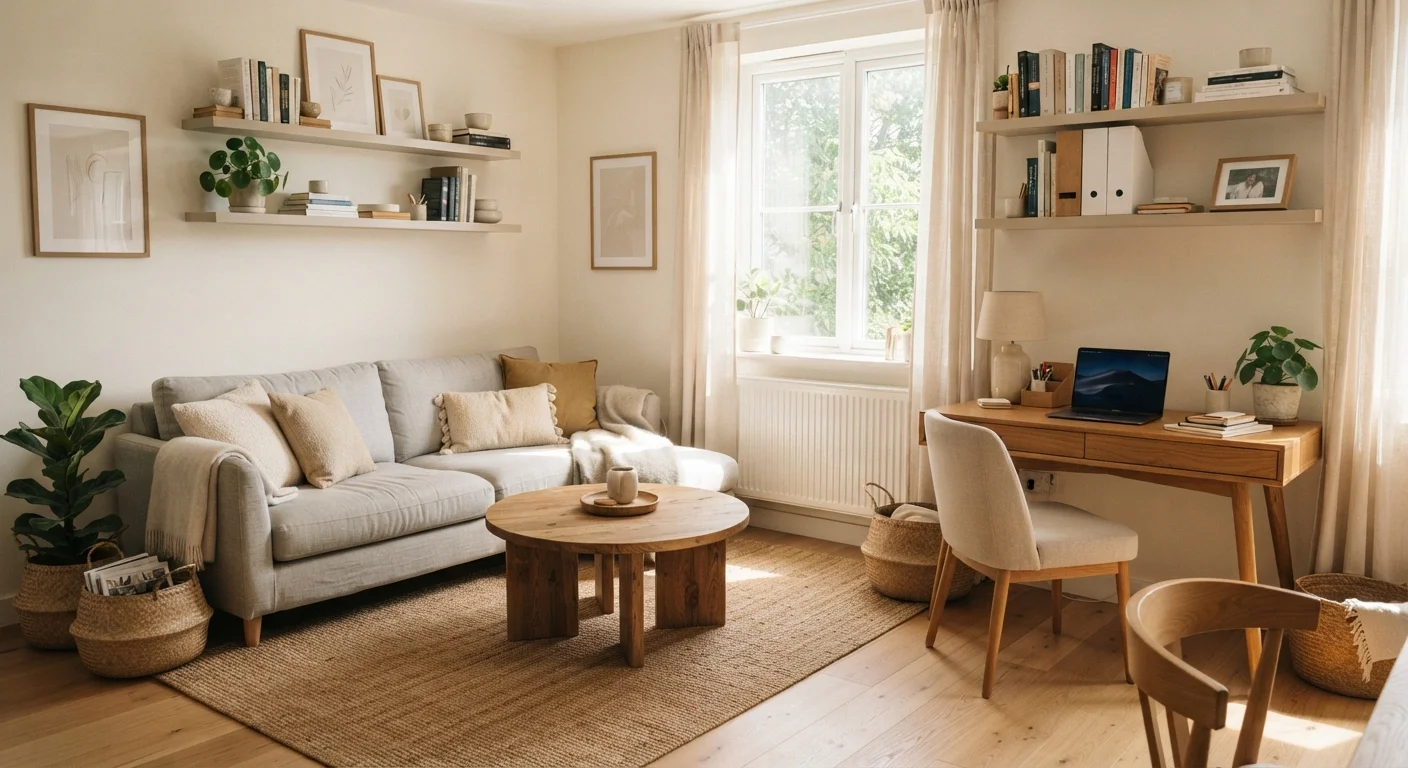
If putting something away requires more effort than leaving it out, it will be left out. Labelled baskets, open shelving, and logical placement (keys near the door, chargers near where people sit) remove decision fatigue and make tidying the path of least resistance - for everyone.
Have the organisation conversation outside of a moment of frustration.
Raising tidiness during or after a specific incident almost always triggers defensiveness. Scheduling a calm, neutral conversation about shared standards - framed around systems rather than behaviour - leads to much more constructive outcomes and decisions that both parties actually buy into.
Start with one room, not the whole house.
Attempting a whole-home reorganisation at once is exhausting and often fails partway through, leaving things worse than before. Choosing one high-impact shared space - often the kitchen or living room - allows both people to experience success before tackling anywhere else.
Build in a regular but brief reset routine.
A daily or weekly ten-minute tidy prevents the gradual accumulation that makes shared spaces feel chaotic. When reset routines are shared and predictable - rather than reactively triggered by one person's frustration - they become a household habit rather than a source of conflict.
Start With Quick Wins to Build Momentum
Before overhauling every shared room, it helps to create a few small but visible improvements that demonstrate the value of the system to everyone in the household. When people see that a change makes daily life easier - not harder - they're far more likely to maintain it.
For ideas on how to think about storage placement in shared rooms, our guide to vertical versus floor space storage can help you make smarter decisions without buying more furniture.
Keeping the System Alive Over Time
Even the cleverest organisation system will drift without a little upkeep. The key is making maintenance as frictionless as possible - so it doesn't feel like a chore that only one person ends up doing.
Organisation Is a System, Not a Personality Trait
It can be tempting to frame tidiness differences as one person being 'naturally organised' and the other not. In practice, most people maintain tidy spaces when systems make it easy and expectations are clear. If a shared system keeps failing, the system usually needs adjusting - not the person. Consider whether the storage solution is genuinely accessible, the expectations are realistic, and both people had input into the arrangement.
It also helps to revisit your approach periodically. Household circumstances change: someone starts working from home, a child gets older, a new person moves in. What worked six months ago may need adjusting. A short monthly check-in - even five minutes - can catch small drifts before they become entrenched habits. If you're weighing up how rigid or flexible your storage approach should be, dedicated zones versus flexible catch-all areas is worth reading before you commit to any one system.
And if children are part of your household, the challenges compound - see our guide to organising with children in the house for realistic, age-appropriate strategies.