

Key Takeaways
The Spots You've Stopped Seeing
There's a particular kind of clutter that's almost invisible - not because it isn't there, but because we've looked past it so many times that our brains have simply edited it out. The top of the refrigerator. The ledge above the washer. The dark corner under the stairs. These spaces don't demand attention the way a cluttered countertop does, so they quietly fill up, year after year, until the mess feels permanent.
The good news: hidden clutter zones are usually the easiest to fix. Because they've been ignored, they often hold things you genuinely no longer need - and clearing them rarely requires a complete overhaul, just a deliberate look. If you're already working through your home systematically, our room-by-room decluttering guide can help you fold these forgotten spots into a broader plan. Below are the most commonly overlooked zones and straightforward ways to bring them back under control.
The Top of the Refrigerator
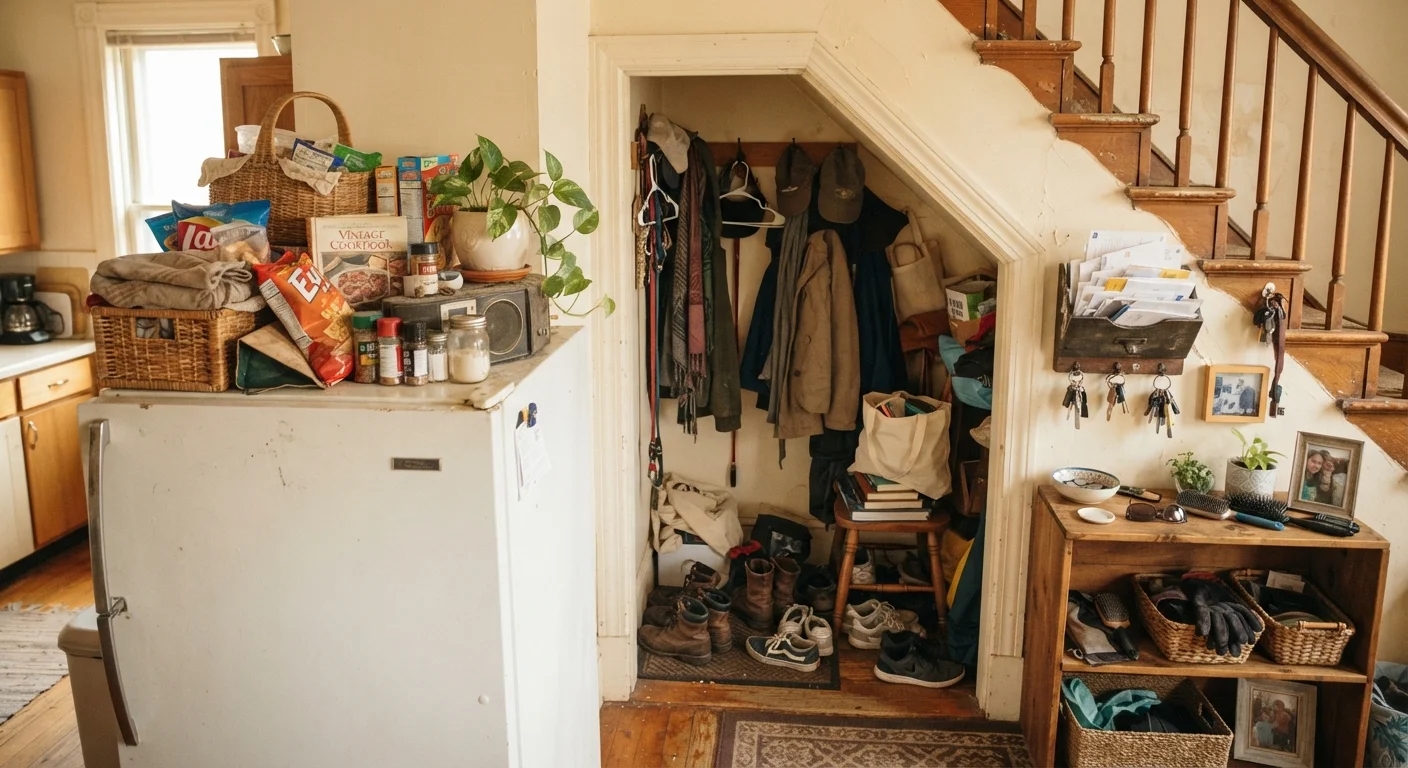
This flat, elevated surface seems purpose-built for storage, but it almost never holds anything useful. Cereal boxes migrate up there. Random appliances that don't fit in cupboards. Takeout menus from restaurants that closed years ago. Because it's just above eye level, most people don't see what's up there without actively looking.
Start by removing everything and wiping the surface down - grease and dust collect there at a surprising rate. Then ask honestly: does anything on that pile belong in your kitchen at all? Items you keep up there out of convenience usually belong in a designated cupboard or drawer. Once cleared, resist the temptation to refill it. If you do need the space, limit it to one category of item with a clear purpose.
Out of sight doesn't mean under control - the fridge top is one of the most silently cluttered spots in any kitchen.
Under the Stairs
Under-stair storage has real potential, but it's frequently used as a dumping ground for things that don't fit anywhere else - sports equipment, luggage, holiday decorations, and boxes that haven't been opened since the last move. The irregular shape of the space makes it feel difficult to organize, so most people don't bother.
The key is to treat it like any other room: group items by category, keep things you use regularly near the front, and store rarely-used items deeper in. Freestanding shelving or stackable bins can help structure the space without expensive built-ins. If the area is truly a catch-all, do a ruthless pass first - many items stored under stairs haven't been touched in years and can be donated or discarded.
Irregular shapes feel hard to organize, but simple grouping by category transforms under-stair chaos into usable storage.
The Entryway Surface
Whether it's a small shelf, a console table, or just the top of a shoe rack, the entryway landing zone tends to collect mail, keys, sunglasses, chargers, receipts, and anything else that lands there when you walk in the door. It's one of the most-used surfaces in the home, which is exactly why it clutter so fast.
The solution is to be deliberate about what this surface is for. Keys and a small dish for essentials - fine. Everything else needs a designated place elsewhere. Paper clutter in particular tends to pile up here; if that's an ongoing problem, our guide on setting up a simple paper filing system offers a quick fix that takes under an hour.
The entryway surface is used dozens of times a day - give it one clear purpose and clutter has nowhere to settle.
Inside Deep Kitchen Cabinets
The back half of a deep kitchen cabinet is essentially dead storage for most households. Appliances go in, and then nothing comes out again. Duplicate gadgets accumulate. Pans with missing lids and lids with missing pans share space indefinitely. Because the back of the cabinet is difficult to access, people stop looking at what's there.
Pull everything out and lay it on the counter. You'll almost certainly find duplicates, broken items, and things you forgot you owned. For what remains, store the items you use daily at the front, and consider whether the deeper recesses should hold anything at all or serve as true long-term storage for seasonal items. Kitchen drawer chaos follows the same logic - visible and accessible beats hidden and crammed every time.
If you can't see it or reach it easily, it's not really storage - it's just hidden mess.
The Laundry Area Ledges and Tops
The space above or beside a washing machine and dryer collects detergent bottles, fabric softener, random cleaning supplies, and an assortment of items that were placed there temporarily and never moved. In smaller laundry rooms, the lack of proper shelving means everything stacks up informally on whatever flat surface exists.
Adding a simple wall shelf above the machines - if the layout allows - creates designated spots for each product and makes the space dramatically easier to use. Keep only what you actively use in the laundry area; bulky cleaning supplies for other rooms belong elsewhere. Vertical thinking applies here: using wall and vertical space is especially effective in compact utility areas where floor space is at a premium.
A basic wall shelf above the washer can turn a cluttered laundry ledge into a properly functional workspace.
The Area Beside and Behind Furniture
The gap between the sofa and the wall, the space beside a wardrobe, the narrow strip next to the bed - these zones collect dust, lost items, and the things we shove out of sight when tidying in a hurry. Because they're literally out of the main sightline, they're easy to ignore during regular cleaning.
A periodic pull-everything-away-from-the-wall approach to each room reveals what's actually hiding there. Beyond the expected dust and lost remotes, you'll often find items that belong elsewhere and others that can simply go. If clutter keeps appearing in these gaps, it's worth reading about dedicated storage zones versus flexible catch-all areas - the concept applies just as much to these small overlooked strips as it does to larger rooms.
Behind the sofa and beside the wardrobe are where 'temporary' items go to become permanent fixtures.
Keeping Hidden Zones Clear for Good
The reason hidden zones fill up again so quickly is that they lack a clear identity. When a space doesn't have a defined purpose, it becomes a default landing pad for anything that doesn't have an obvious home elsewhere. The fix isn't complicated: decide what each zone is for, and make it slightly inconvenient to put anything else there.
Make a Simple Hidden-Zone Checklist
Walk through your home once and photograph each forgotten zone before you start organizing. The photos make it easier to see accumulation objectively - the same way a visitor to your home would. Review the images every month as a quick check-in. You don't need to act immediately, but seeing the space fresh each time makes it much harder to look past the clutter.
It also helps to do a brief visual sweep of your home's forgotten spots every couple of weeks - not a full tidy, just a look. That's usually enough to catch accumulation before it becomes overwhelming. For households where different people have different standards around tidiness, strategies for shared spaces can make it easier to maintain agreement on what goes where. And if clutter keeps returning despite your best efforts, pairing these zone-specific habits with the one-in-one-out rule can stop new items from filling the gaps you just cleared.