

| Full Sun Minimum | 6+ hours of direct sun per day |
| Partial Sun / Partial Shade | 3-6 hours of direct sun per day |
| Full Shade Maximum | Fewer than 3 hours of direct sun per day |
| Best Time to Assess Light | A clear day during your main growing season |
| Afternoon vs. Morning Sun | Afternoon sun is hotter and more intense in summer |
| Seasonal Light Shift | Sun angle changes significantly between spring and summer |
Why Sunlight Categories Matter
Walk through any garden center and you'll see plant labels stamped with terms like "full sun," "partial shade," or "deep shade." These aren't marketing language - they're practical shorthand for how much direct sunlight a plant needs each day to grow, flower, and stay healthy. Match a plant to the wrong light level and it may struggle to thrive even with perfect soil and regular watering.
The good news: assessing your garden's light is a beginner-friendly task that requires nothing more than observation. Before you buy a single plant, spend a day noting where the sun falls - and for how long. This reference will help you interpret what you see.
If you're starting entirely from scratch, our beginner's complete garden guide pairs well with this article as a broader overview.
| Full Sun Minimum | 6+ hours of direct sun per day |
| Partial Sun / Partial Shade | 3-6 hours of direct sun per day |
| Full Shade Maximum | Fewer than 3 hours of direct sun per day |
| Best Time to Assess Light | A clear day during your main growing season |
| Afternoon vs. Morning Sun | Afternoon sun is hotter and more intense in summer |
| Seasonal Light Shift | Sun angle changes significantly between spring and summer |
The Standard Light Categories - Defined
Most plant labels and seed packets use four core terms. Here's exactly what each one means in practical terms:
Full Sun
A location that receives 6 or more hours of direct, unobstructed sunlight per day. Most vegetables, many herbs, and sun-loving flowers like lavender and coneflower thrive in full sun.
Partial Sun / Partial Shade
A location that receives 3 to 6 hours of direct sun per day. The two terms are often used interchangeably, though 'partial sun' tends to describe plants that prefer the higher end of that range, while 'partial shade' describes those that do better with less.
Full Shade
A location that receives fewer than 3 hours of direct sun per day. This doesn't mean total darkness - reflected or ambient light is still present. Hostas, ferns, and astilbe are classic full-shade plants.
Dappled Shade
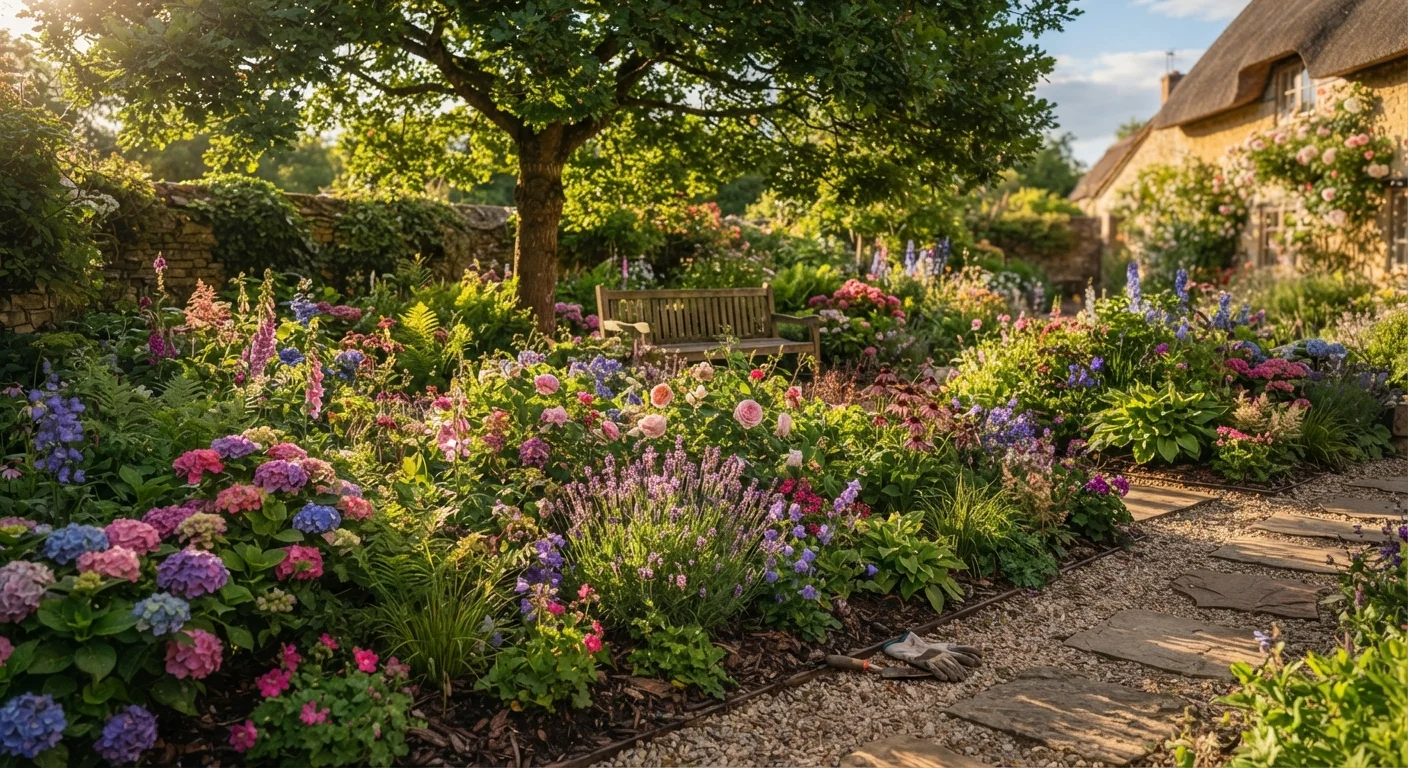
Intermittent, moving light filtered through a tree canopy. It produces shifting patches of sun and shadow throughout the day, typically behaving similarly to partial shade in terms of plant suitability.
Direct Sun
Sunlight that reaches a plant without obstruction - no trees, structures, or coverings in the way. It's measured in continuous hours, not scattered minutes.
Reflected Light
Light bounced off walls, fences, pavement, or other surfaces. It can increase ambient brightness but generally doesn't substitute for direct sunlight when matching plants to their requirements.
A few things to keep in mind: light levels shift with the seasons. A spot that receives full sun in July may drop to partial shade by October as the sun's angle changes. Trees that are bare in spring may cast significant shade once they leaf out in summer - a particularly common surprise for first-time gardeners planting early in the season.
For a plain-language breakdown of how these terms appear on seed packaging, see our guide on reading a seed packet.
How to Assess Your Garden's Light
You don't need any special equipment - just a few hours and a notebook (or phone). Here's a simple method:
- Choose a clear, sunny day. Overcast days will underrepresent available light.
- Check each area of your garden every hour or two, from morning through late afternoon. Note whether each spot is in direct sun, dappled shade, or full shade at each observation.
- Tally the total hours of direct sun each area receives. That total is your light category: 6+ hours is full sun, 3-6 hours is partial sun or partial shade, under 3 hours is full shade.
- Repeat at a different time of season if possible, especially if you have deciduous trees nearby.
Pay attention to what's casting the shade - a fence creates hard-edged, constant shade, while a canopy tree creates shifting, dappled shade that changes throughout the day. Dappled light often behaves more like partial shade than deep shade, even if the area is rarely in full direct sun.
Morning vs. Afternoon: It's Not Equal
When you're tracking hours, note the time of day the sun hits each spot. East-facing areas get gentler morning light; west-facing spots get stronger afternoon sun, which can stress heat-sensitive plants. A location with 4 hours of afternoon sun behaves very differently from one with 4 hours of morning sun - even though both technically qualify as 'partial shade.'
If you're working with containers or raised beds, you have an advantage: you can reposition plants as you learn your light patterns. See our articles on container gardening and raised bed versus in-ground setups for setup ideas suited to different light conditions.
Common Light Mismatches - and How to Avoid Them
Even experienced gardeners occasionally misjudge their light. These are the most common mistakes beginners make:
- Planting sun-lovers in reflected light. Light bouncing off a white wall or fence can look bright but doesn't count as direct sun for most plants. Tomatoes and peppers, for example, need genuine overhead sun - not just brightness.
- Ignoring seasonal change. A south-facing spot may be perfect in spring but heavily shaded by a neighboring tree's summer canopy. Check during the season you plan to grow.
- Confusing "morning sun" and "afternoon sun." These aren't equal. Afternoon sun in summer is hotter and more intense. Plants labeled as preferring partial shade often tolerate morning sun but struggle in sustained afternoon heat.
- Assuming shade means no light. Very few gardens have true deep shade. Most "shady" spots receive more light than expected - enough for a wider range of plants than you might think.
Before anything goes in the ground, our garden readiness checklist walks through light assessment alongside other key prep steps.
6 hrs
Minimum daily sun for most vegetables
Standard horticultural guidance consistently places 6 hours of direct sun as the threshold for productive vegetable growing.
3-6 hrs
The partial shade window
Partial shade covers a wide range of plants, from woodland perennials to cool-season crops like lettuce and spinach.