

Key Takeaways
Summary
18 items · 10-20 minutes
Why the DIY Line Exists
Home repair confidence is worth building - and most cosmetic or minor maintenance tasks are genuinely within reach for motivated beginners. But not every repair is created equal. Some jobs involve systems where a mistake doesn't just mean a crooked tile: it can mean a house fire, a gas leak, a collapsed ceiling, or a failed home sale inspection years later.
The distinction between DIY-appropriate and licence-required work isn't arbitrary. Building codes and licensing requirements exist because certain trades - electrical, gas, structural - carry risks that compound invisibly. A wiring error hidden behind drywall may not reveal itself until years later, and by then it may already have caused damage or danger.
If you're just getting started, our beginner's guide to toolbox essentials is a good first step. And for a broader picture of what routine upkeep looks like, see our room-by-room home maintenance checklist. This article focuses specifically on knowing where the DIY line ends - before you pick up a tool.
Unpermitted Work Can Have Serious Consequences
Completing regulated repairs without a permit can result in fines, mandatory removal of completed work, and complications when selling your home. In some cases, homeowners insurance may deny claims related to damage caused by unpermitted work. Always check with your local building department before starting any project that may require a permit.
Gas Work Is Never a DIY Task
Any repair, modification, or installation involving natural gas or propane lines must be performed by a licensed professional. Gas leaks are invisible, odorless in their natural state, and can cause fires, explosions, or carbon monoxide exposure. If you smell gas, leave the home immediately and call your gas utility from outside.
What You'll Need Before Checking the List
Before working through this checklist, gather a few key resources. You don't need specialist knowledge - just the right starting points.
Local building department website
Look up which repairs require permits and licensed trades in your specific municipality.
Licensed contractor directory (e.g., state licensing board)
Verify that any professional you hire holds a current, valid licence for the work type.
Home inspection report
Identify existing issues that may need professional assessment before you plan any DIY work nearby.
Basic multimeter
Safely check whether an outlet or switch has power before attempting minor permitted electrical tasks like replacing a cover plate.
It's also worth reading our guide to common home repair myths, which covers several widespread misconceptions that lead beginners into projects they shouldn't tackle alone.
The Checklist: Where to Draw the Line
Use this checklist to categorise any repair you're considering. Work through it before you purchase materials, watch tutorials, or start pulling anything apart. The groups are organised from highest-risk (always hire a pro) to genuinely beginner-friendly tasks you can tackle with basic tools.
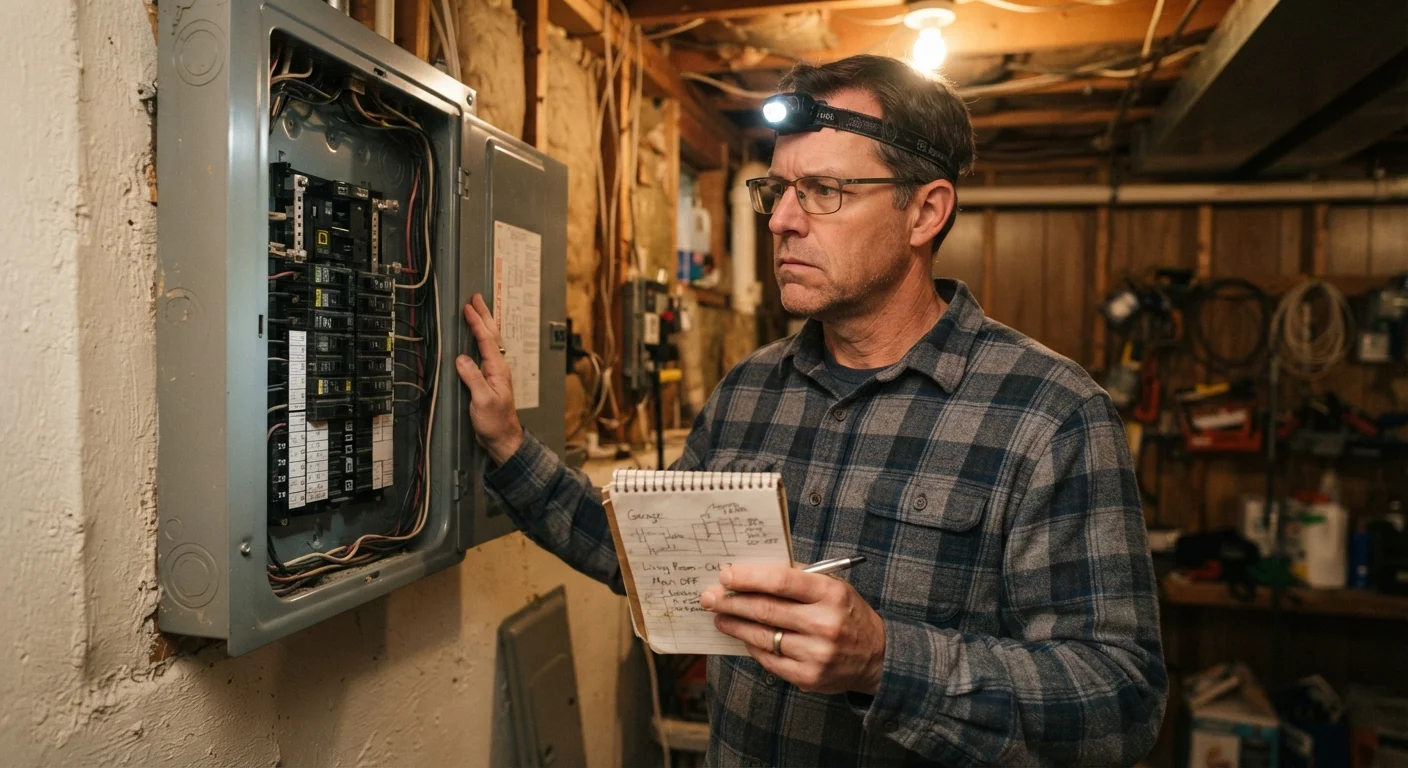
Electrical Panel Work Carries Lethal Risk
Work inside an electrical panel - including replacing breakers, adding circuits, or rewiring - involves live voltage even when the main breaker is off. This type of work is regulated in most U.S. states and should only be handled by a licensed electrician. Do not attempt it under any circumstances without the proper licence and training.
Structural Changes Affect the Whole Home
Removing or modifying walls, beams, or load-bearing elements without engineering approval can compromise the structural integrity of your entire home. Always consult a licensed structural engineer or contractor before removing any wall, especially if you are unsure whether it is load-bearing.
Always Hire a Licensed Professional
Permit and Code Verification
Common DIY-Friendly Tasks (No Licence Needed)
Before You Start Any Repair
For a parallel example in another context, our article on DIY car maintenance vs. taking it to a mechanic uses the same logic - some things are straightforward, others genuinely need expert hands.
Tasks like patching drywall fall firmly on the DIY side of this checklist, and are a great place to build real hands-on confidence.