

Key Takeaways
Start here
Why a Small Toolbox Beats a Big One
Core knowledge
The Essential Tools Every Home Needs
Next step
How to Store and Organise Your Tools
When you're ready
When to Add More Tools (and When Not To)
Why a Small Toolbox Beats a Big One
Many beginners assume a well-equipped home requires a garage full of equipment. In reality, research into common household repair patterns consistently shows that a compact set of hand tools handles the vast majority of everyday fixes - from hanging artwork to tightening a wobbly chair leg.
Starting small has practical advantages beyond cost. A lean toolbox is easier to organise, faster to search through, and less likely to intimidate you into avoiding tasks altogether. There's also a common misconception that more tools equal more capability - but home repair myths like this regularly cost beginners time and money. Confidence comes from understanding the tools you have, not from owning tools you don't understand.
Pilot hole
A small hole drilled before inserting a screw, which prevents wood from splitting and makes driving screws much easier.
Stud
A vertical framing timber hidden inside a wall. Anchoring shelves or heavy items into studs (rather than just drywall) keeps them securely mounted.
Spirit level
A tool with a sealed tube of liquid and a bubble used to check whether a surface is perfectly horizontal or vertical.
Phillips-head
A screw head with a cross-shaped slot, requiring a matching Phillips screwdriver. It's the most common screw type found in furniture and fixtures.
Cordless drill/driver
A battery-powered tool that can both drill holes and drive screws, making it far more versatile than a standard manual screwdriver for frequent use.
The Essential Tools Every Home Needs
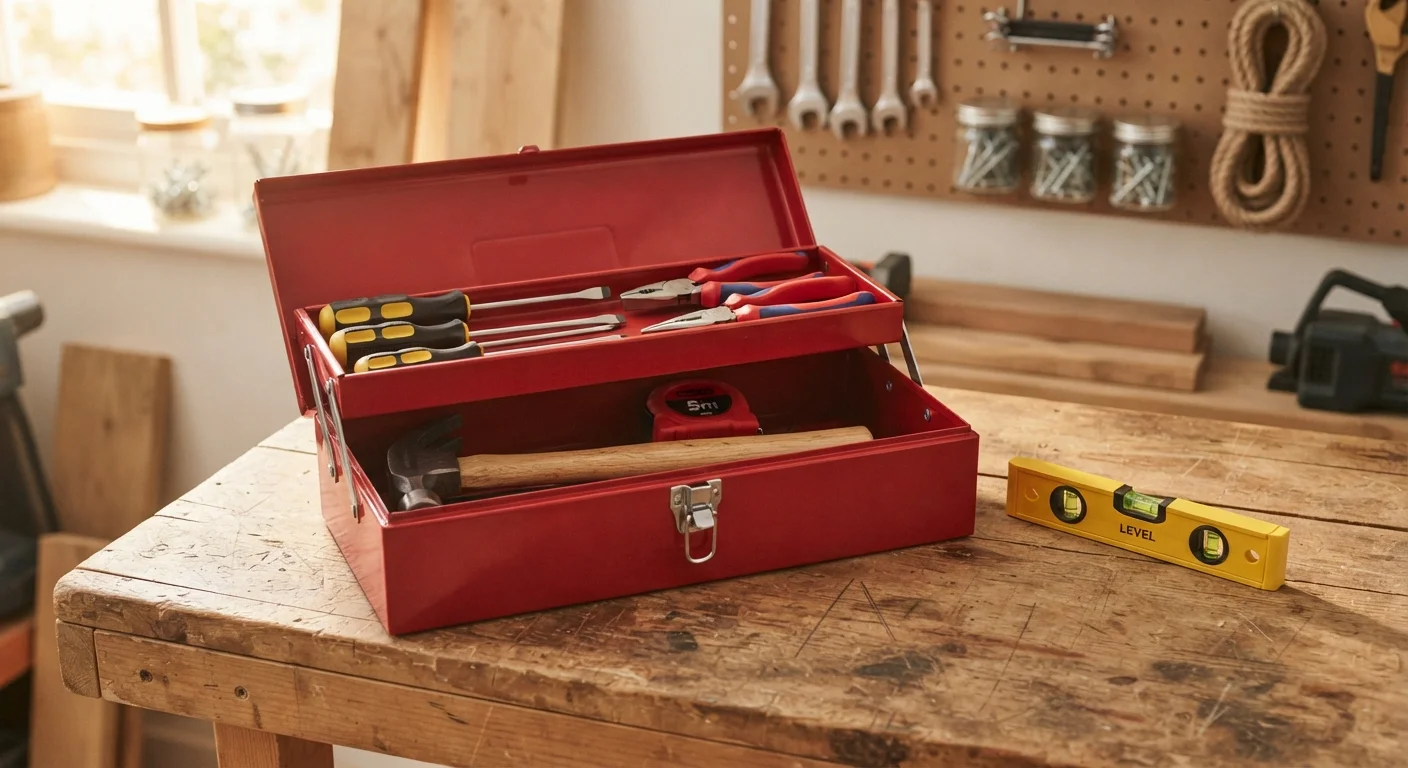
The following tools cover a broad range of common repairs and are worth owning from day one:
- Claw hammer: For driving and removing nails, and light demolition tasks. A 16-oz head is a practical all-around weight.
- Screwdriver set: Include both flathead and Phillips-head in at least two sizes each. These handle the majority of assembly and fastening tasks without any power source.
- Tape measure: A 25-foot retractable tape measure covers furniture placement, shelf spacing, and most home measurement needs.
- Adjustable wrench: One medium-sized adjustable wrench replaces several fixed-size wrenches and tightens or loosens bolts on plumbing fixtures, furniture, and appliances.
- Needle-nose pliers: Excellent for gripping small objects, bending wire, and reaching into tight spaces.
- Utility knife: For scoring drywall, opening packages, trimming materials, and a dozen other cutting tasks. Always use with a fresh blade for safety.
- Spirit level: Even a short 24-inch level ensures shelves and frames go up straight - saving you from having to redo work.
- Cordless drill/driver: Not essential on day one, but once you're assembling flat-pack furniture or drilling pilot holes regularly, it becomes invaluable. See our guide on when to use a drill versus a screwdriver before choosing.
Test Before You Buy
If possible, hold a tool before purchasing - grip, weight, and handle size affect how comfortably you can use it, especially for extended tasks. A hammer that feels balanced in your hand is far less tiring than one that's too heavy or too light. Many hardware stores allow you to handle display models.
Two additional items round out a beginner kit: a stud finder (for safely anchoring shelves to walls) and a small flashlight or headlamp for working in dimly lit spaces like cabinets or utility closets.
How to Store and Organise Your Tools
How you store tools is just as important as which tools you own. A disorganised pile means tools get damaged, go missing, and become a reason to avoid DIY altogether. A basic approach works well for most households:
- Use a dedicated container. A simple plastic toolbox with a tray insert keeps hand tools separated and portable. You don't need a wall-mounted tool board until your collection justifies one.
- Keep tools dry. Moisture causes rust. Store your toolbox away from damp areas like garages with poor ventilation or under-sink cabinets.
- Return tools immediately after use. This single habit prevents the frustration of searching for a misplaced hammer at the worst possible moment.
- Label if needed. If you share a home with others, a quick label on the toolbox shelf makes it clear where things live.
For broader organisation strategies throughout your home, the complete guide to home organisation is a useful companion resource.
Safety Comes First With Every Tool
Even hand tools carry real risk if used incorrectly. Always read the manufacturer's instructions for any new tool, wear appropriate eye protection when cutting or hammering, and keep sharp tools capped or sheathed when not in use. If a task feels beyond your skill level, consulting a professional is always the right call.
When to Add More Tools (and When Not To)
Expand your toolbox based on tasks you actually encounter - not based on what looks useful in a store. A good rule: if you've needed to borrow or improvise a specific tool three or more times, it's worth owning.
Common second-stage additions include a handsaw (for cutting wood trim or small lumber), a rubber mallet (for furniture assembly without damage), and a set of Allen keys (also called hex keys, used in most flat-pack furniture). A pair of channel-lock pliers is worth adding once plumbing tasks arise.
Leave Electrical and Gas Work to Professionals
No matter how confident you feel with basic tools, electrical wiring, gas lines, and structural work require licensed professionals in most regions. Attempting these without proper training and permits creates serious safety hazards and may void your home insurance. Always verify local regulations before starting any repair that touches these systems.
Once you have a solid toolkit in place, pairing it with a room-by-room maintenance checklist gives you a practical roadmap for putting those tools to work before small problems grow into costly ones.