
Key Takeaways
Why Busy Schedules and Good Nutrition Feel Incompatible
Most nutrition advice assumes you have time to plan, shop deliberately, and cook from scratch nightly. When life gets chaotic, that advice stops feeling relevant fast. The result? People either skip meals, default to whatever's convenient, or feel guilty about both.
The good news is that eating reasonably well on a hectic schedule isn't about discipline - it's about removing the number of decisions you have to make in real time. A handful of structural habits can carry you through even your most overloaded weeks. This article covers the core principles that hold up under pressure, with no elaborate tracking or meal plans required.
For a broader look at how nutrition connects to your energy and daily rhythm, see our guide to sleep, nutrition, and movement.
The Core Practices That Make the Biggest Difference
These aren't rigid rules - they're flexible principles that create a foundation you can return to even after a difficult stretch.
Anchor your day with a protein-containing breakfast, however simple.
Protein at the start of the day helps moderate blood sugar fluctuations and tends to reduce the intensity of mid-morning hunger, making impulsive food choices less likely. It doesn't need to be elaborate - even a small amount goes a long way.
Keep three or four reliable 'fallback meals' in permanent rotation.
Decision fatigue is real, and having to invent dinner ideas when you're tired and hungry is where eating habits most often break down. A short list of meals you can make almost on autopilot removes that friction entirely.
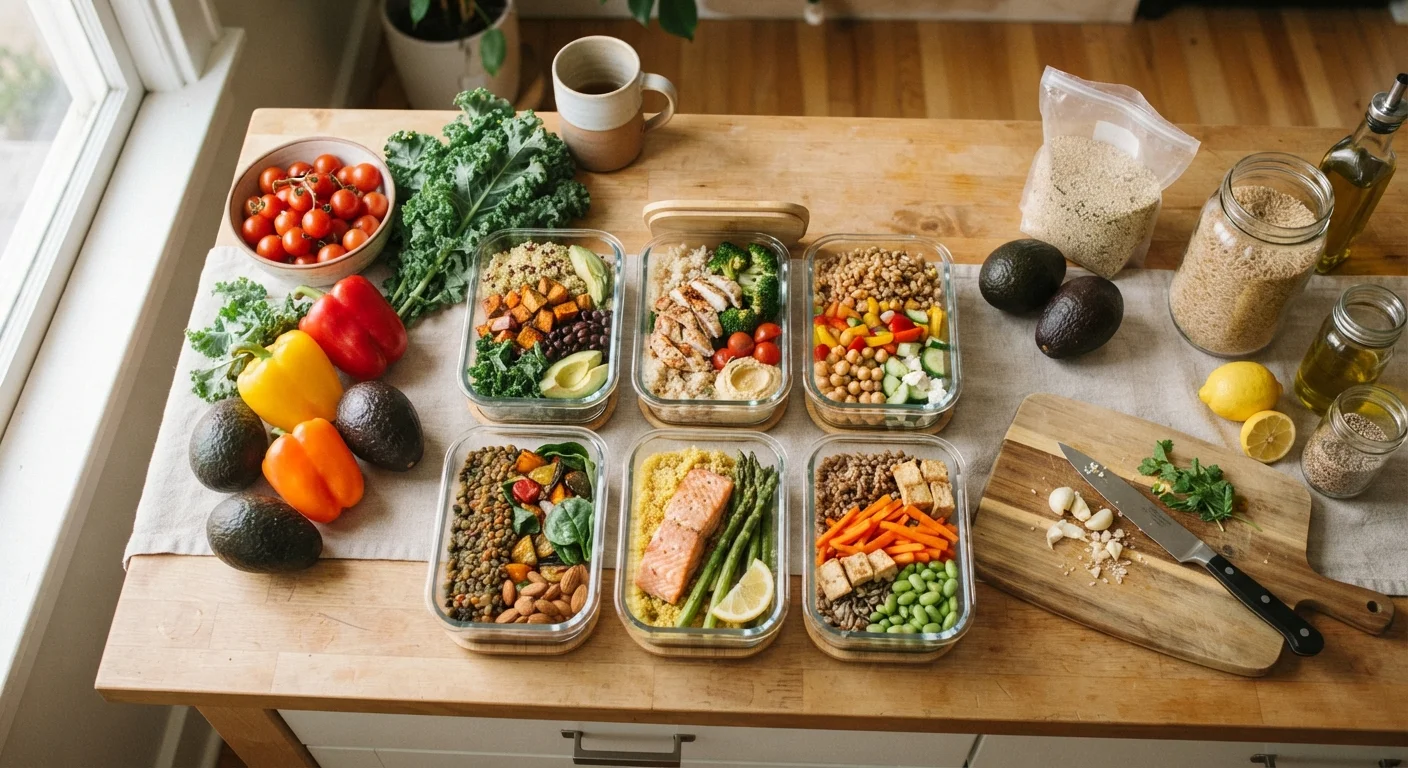
Batch-cook one or two versatile ingredients each week, not full meals.
Cooking complete meals in advance can feel daunting and doesn't suit everyone's taste for fresh food. Preparing just a base ingredient - cooked grains, roasted vegetables, or hard-boiled eggs - gives you building blocks that reduce cooking time across several days.
Aim for some fiber with most meals, not just in salads.
Dietary fiber - found in vegetables, legumes, whole grains, and fruit - supports digestive health and contributes to a feeling of fullness that helps prevent constant snacking. Most Americans consume less than the generally recommended intake, and small, consistent additions add up.
Stock your kitchen so that the easiest option is also a reasonable one.
What's most convenient to grab is what you'll eat when you're rushed or tired. Engineering your environment - having fruit visible, keeping nuts accessible, and not relying on willpower - is a far more reliable system than motivation alone.
If you'd like a visual, no-numbers approach to portioning meals, building a balanced plate without counting anything walks you through it simply.
Start Here: Quick Wins You Can Act on Today
You don't have to overhaul everything at once. Picking even one of the following actions can meaningfully shift your week.
You Don't Need to Eat Perfectly Every Meal
Nutrition researchers generally agree that overall dietary patterns over time matter far more than any single meal or day. If lunch was rushed and unsatisfying, that's one data point - not a failure that needs to be compensated for or punished. Simply returning to your usual approach at the next opportunity is the most useful thing you can do.
Keeping the Momentum Going
Even the best habits slip during stressful stretches - that's normal, not failure. The key is lowering the barrier to getting back on track rather than expecting perfection.
Less than 10%
U.S. adults meeting daily vegetable intake recommendations
According to CDC data, the vast majority of American adults fall short of federally recommended vegetable consumption - a gap that small, consistent additions can meaningfully address over time.
~15g
Average daily fiber gap for American adults
Research published in nutrition journals suggests most U.S. adults consume roughly half the generally recommended daily fiber intake, highlighting how common - and closeable - this gap is.
One practical re-entry point: your grocery shop. Reviewing what you're actually buying each week is a surprisingly useful nutrition check-in. Our weekly grocery shop as a nutrition audit gives you a simple checklist to make that easier.
It's also worth knowing that energy crashes after meals are often linked to eating patterns rather than willpower - understanding the cause makes the fix much simpler. See why energy crashes after meals happen for a plain-language explanation.
A Note on Supplements and 'Superfood' Shortcuts
When time is tight, it can be tempting to reach for supplements or heavily marketed 'functional' foods as a nutritional shortcut. While some supplements serve a genuine role under specific circumstances, they aren't a replacement for varied whole foods, and their necessity and appropriateness varies by individual. If you're curious about vitamins and minerals specifically, our plain-language vitamins and minerals reference is a useful starting point - and a conversation with your healthcare provider is the right next step for personal decisions.
This article provides general nutrition information for educational purposes and is not a substitute for personalized advice from a qualified healthcare professional or registered dietitian. If you have specific health conditions or dietary concerns, please consult a professional.