

Key Takeaways
Why Food Costs Can Quietly Derail a Travel Budget
Most first-time travellers plan carefully for flights and accommodation, then let food spending run on autopilot. The result is a series of easy, convenient restaurant meals that look affordable individually but add up fast. Food is one of the most flexible expenses in any travel budget - and one of the most rewarding to optimize, because eating well on a budget almost always means eating more authentically.
If you're working through the bigger financial picture, building a realistic travel budget from the ground up is a great place to start. This article focuses specifically on what happens once you arrive and the food decisions begin.
Best Practices for Eating Affordably on the Road
These habits are used consistently by experienced travellers across a wide range of destinations and trip styles. None of them require deprivation - they simply redirect spending toward better value and richer experiences.
Eat where locals eat, not where tourists gather.
Restaurants near major tourist attractions often charge a premium for the same quality food available a few streets away. Following locals to their preferred spots signals authenticity and almost always means lower prices.
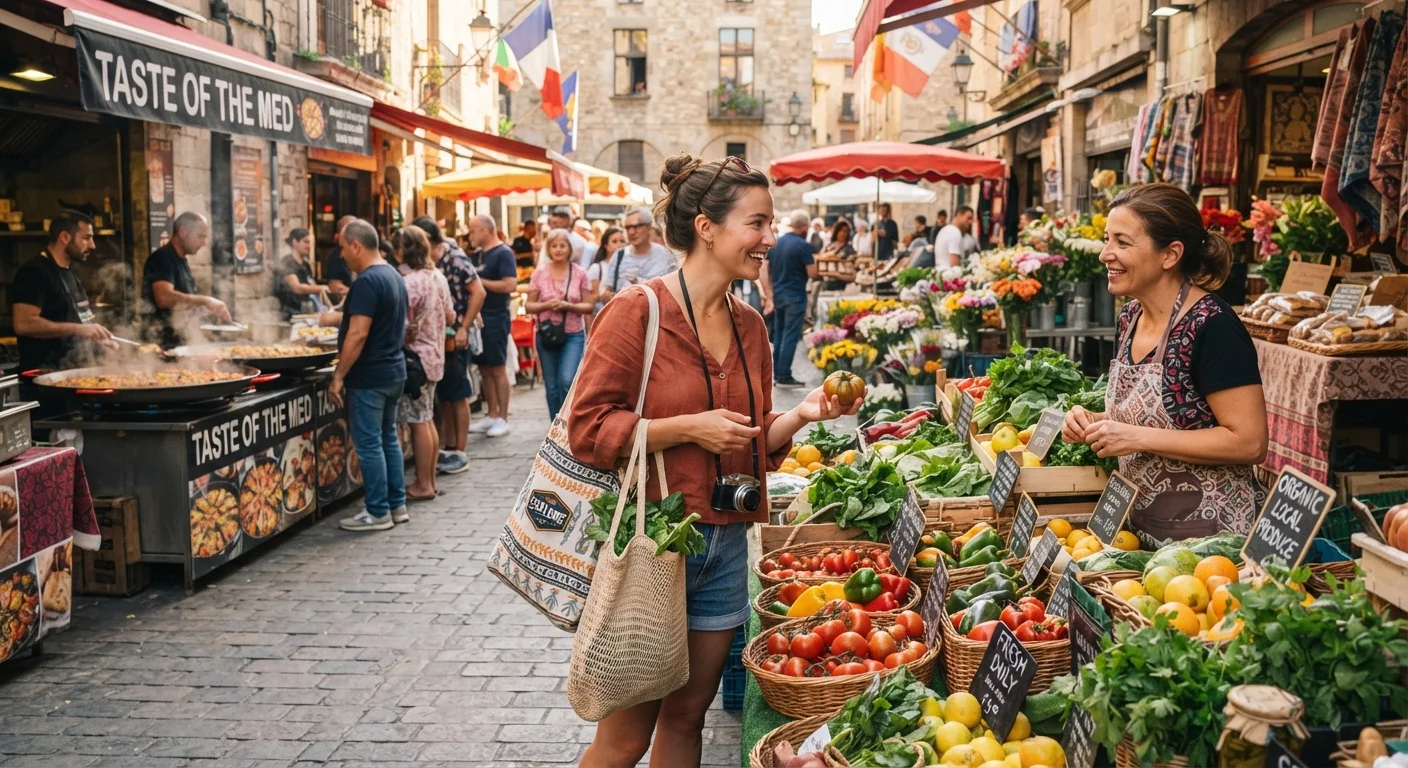
Make markets and street food your primary meal source.
Street food and local markets offer fresh, flavorful meals at a fraction of sit-down restaurant prices. They also give you direct contact with a destination's food culture in a way no menu ever could. Street food tells the story of a place better than almost any other experience.
Choose accommodation with kitchen or kitchenette access.
Self-catering even one or two meals a day - typically breakfast and lunch - can cut your daily food spend substantially. Many affordable accommodation types including hostels, guesthouses, and home-share rentals offer shared kitchen facilities.
Shift your main meal to lunchtime.
Many restaurants in Europe, Latin America, and parts of Asia offer a set lunch menu - called a 'prix fixe,' 'menu del día,' or similar - that includes multiple courses at a fixed low price. The same table charges significantly more for identical dishes at dinner.
Pack portable snacks and carry a reusable water bottle.
Hunger and thirst between meals lead to expensive impulse buys at tourist shops, airport kiosks, or convenience stores. Simple snacks sourced from a local supermarket keep you fueled without the markup.
Set a realistic daily food budget and track it simply.
Without any target, food spending tends to drift upward - especially on indulgent travel days. A rough daily food budget keeps you grounded without eliminating enjoyment. For help building the bigger financial picture, see how to build a travel budget you can realistically stick to.
Food Safety Abroad: A Quick Note
Street food is generally safe when stalls are busy, food is freshly cooked to order, and produce looks handled with care. When in doubt, observe locals - high turnover is a good sign. Always check official government travel advisories for destination-specific health guidance, and consult a travel health professional before your trip if you have dietary sensitivities or medical concerns.
Quick Actions to Take on Any Trip
You don't need to overhaul your entire approach at once. Even applying one or two of these actions on your next trip will noticeably reduce daily food costs without cutting into the joy of eating well abroad. For a fuller look at keeping costs down across all areas of travel, travelling affordably without sacrificing the experiences that matter covers the complete picture.
Making It Part of the Adventure
“The people who eat best on the road are rarely the ones with the biggest budgets. They're the ones who are curious enough to follow their noses down a side street.”
— Anthony Bourdain, Chef, author, and travel storyteller
Budget eating while travelling isn't a consolation prize - it's often the richer experience. Markets, street stalls, and neighborhood spots connect you to a place's daily life in ways that tourist-district restaurants simply can't. Low-cost experiences are frequently the most memorable, and food is no exception.
If you're still in the planning stage and looking at where your money goes furthest overall, exploring destinations where your money genuinely stretches further can make an enormous difference before you even book a flight.