

Key Takeaways
Why Rabbit Nutrition Trips Up So Many New Owners
Rabbits are often seen as low-maintenance starter pets, but their dietary needs are surprisingly specific - and the gap between common assumption and veterinary reality is wide. Most early mistakes aren't careless; they come from misinformation that's been repeated so often it's become accepted wisdom.
Understanding what rabbits actually need - and why - makes it much easier to avoid the habits that quietly undermine their health. If you're also setting up your rabbit's living space, our guide on indoor rabbit housing covers what a genuinely rabbit-friendly environment looks like.
Treating carrots as a dietary staple rather than an occasional treat.
Why it happens: Pop culture - cartoons especially - has cemented the image of rabbits happily munching carrots. Many new owners assume this reflects real nutritional needs.
Skipping hay or offering it only as bedding rather than food.
Why it happens: Pellets look like 'proper' pet food, so owners assume hay is optional filler. Hay is often sold alongside bedding products, which reinforces the confusion.
Overloading the bowl with pellets every day.
Why it happens: Pellets are convenient and measurable, so owners lean on them heavily, assuming more is better.
Switching foods abruptly when trying to improve the diet.
Why it happens: Owners discover their rabbit's diet has been wrong and want to fix it immediately. The intention is good, but the execution is harmful.
Offering unsafe vegetables or plants because they seem 'natural'.
Why it happens: It's easy to assume that all plant-based foods are safe for a plant-eating animal. Many owners share kitchen scraps without checking first.
Building a Diet That Actually Works
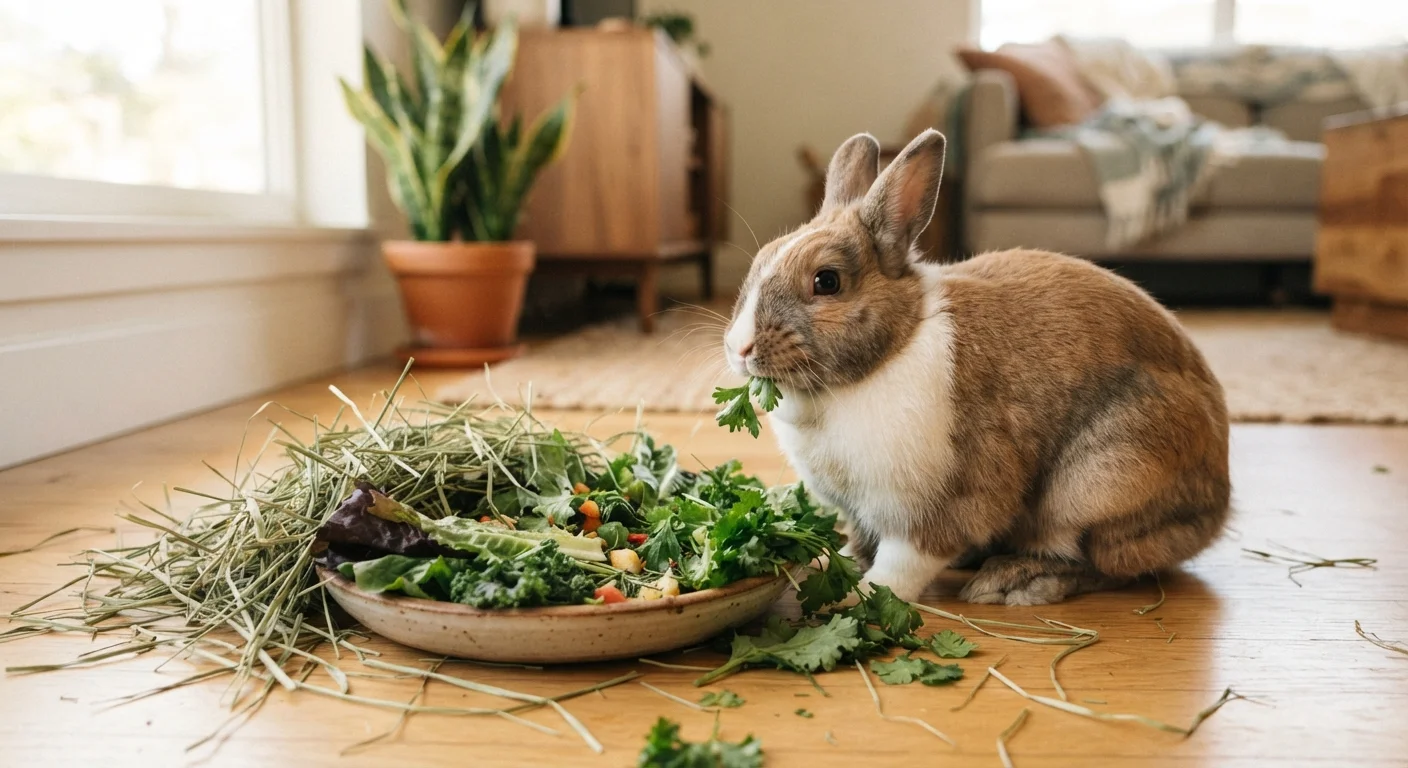
Once the common mistakes are on your radar, building a healthy routine becomes much more straightforward. The framework is simple: unlimited hay, a daily handful of appropriate leafy greens, a small measured portion of plain pellets, and constant access to fresh water.
80%
Proportion of diet that should be hay
Veterinary organizations including the House Rabbit Society recommend that grass hay make up approximately 80% of an adult rabbit's daily food intake.
~¼ cup
Daily pellet guideline per 5 lbs body weight
Many rabbit care resources suggest limiting pellets to roughly a quarter cup per five pounds of body weight for adult rabbits, though individual needs vary.
Safe leafy greens to rotate include romaine lettuce, cilantro, flat-leaf parsley, and basil. Introduce one new green at a time and watch for loose droppings for a day or two before adding another. Avoid mixes that include dried fruit, seeds, or brightly coloured pieces - these are marketing choices, not nutritional ones.
GI Stasis Can Be Life-Threatening
Gastrointestinal stasis - when a rabbit's digestive system slows or stops - is a veterinary emergency. A low-fiber diet is one of the leading contributors. If your rabbit stops eating, stops producing droppings, or seems lethargic, contact a rabbit-savvy vet immediately. Do not wait to see if it resolves on its own.
If you notice your rabbit's droppings changing in size, shape, or frequency - or if they stop eating - those are signals worth taking seriously. Our article on signs that a small pet may be unwell explains what to watch for and when to call a vet.
Not All 'Small Pet' Advice Applies to Rabbits
Rabbits have a uniquely sensitive digestive system that sets them apart from hamsters, guinea pigs, and other small pets. Diet advice written for one species can be actively harmful for another. Always verify feeding guidance specifically for rabbits, ideally with a vet who has rabbit experience.
Rabbit care is genuinely rewarding once the fundamentals click. If you're curious how rabbit feeding compares to caring for other small pets, see our complete guide to hamster care - the differences highlight just how species-specific good nutrition really is.
This article is for general informational purposes only and is not a substitute for professional veterinary advice. Always consult a qualified vet for guidance specific to your rabbit's health and needs.