

Key Takeaways
Dog Shedding
Shedding is the natural process by which dogs lose old or damaged hair to make way for new growth. It happens continuously in most breeds, though the rate speeds up significantly during seasonal transitions. The amount a dog sheds depends largely on breed, coat type, health, and time of year.
Shedding is regulated by photoperiod - the amount of daylight a dog is exposed to - which triggers hormonal changes that control the hair growth cycle, including the anagen (growth), catagen (transition), and telogen (resting/shedding) phases.
Why Dogs Shed in the First Place
Shedding is not a problem to be solved - it's a biological function. Like human hair, a dog's fur goes through a growth cycle: it grows, rests, and eventually falls out so new hair can replace it. This cycle runs continuously, which is why you'll find fur on your couch year-round, not just in spring.
What changes between seasons is the rate of shedding. Dogs are sensitive to shifts in daylight hours, and as days grow longer or shorter, their bodies respond by releasing or retaining their coat. The two heaviest shedding periods for most dogs are spring - when the thick winter coat is shed - and fall, when the lighter summer coat makes way for denser growth ahead of winter.
Breed and coat type are the biggest predictors of how much a dog sheds. Dogs with double coats - an outer layer of guard hairs and a dense undercoat beneath - shed significantly more than single-coated breeds. Breeds like German Shepherds, Siberian Huskies, and Golden Retrievers are classic heavy shedders. Short-haired dogs like Beagles shed consistently but in smaller volumes. Breeds often called "hypoallergenic," such as Poodles, shed minimally but still require regular coat care.
"Hypoallergenic" Doesn't Mean Shed-Free
No dog breed is completely allergen-free. The term "hypoallergenic" refers to breeds that produce less of the protein (Can f 1) found in dog saliva, skin, and urine - not to shedding levels specifically. People with dog allergies should spend time with a specific dog before bringing one home, regardless of breed claims.
What Grooming Actually Does (and Doesn't Do)
It's worth being clear about what grooming can realistically accomplish. Brushing, bathing, and de-shedding treatments do not change how much hair your dog's body produces or releases - that's driven by biology. What grooming does is determine where that loose hair ends up.
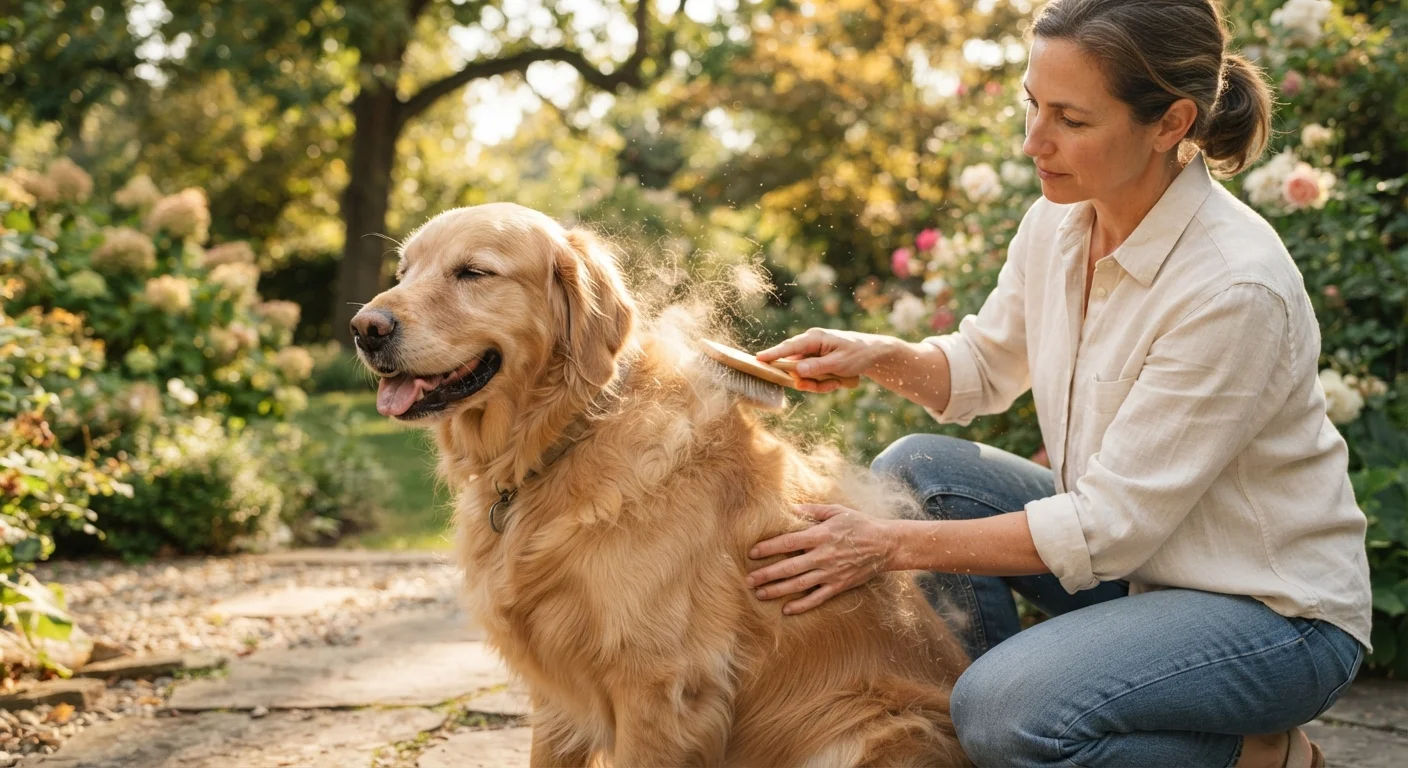
When you brush your dog regularly, you collect the dead, loose hair in the brush rather than letting it drift onto your sofa, carpet, or clothing. For heavy shedders, this is a meaningful difference. An undercoat rake or slicker brush used a few times a week can remove enormous volumes of fur that would otherwise accumulate around your home.
Bathing can also help. Warm water loosens dead hair and a thorough blow-dry with a brush-out can accelerate the shedding process in a controlled way. Some owners find that a grooming session during peak shedding season - sometimes called a "deshedding treatment" - dramatically reduces the volume of fur they find around the house in the weeks that follow.
For a practical walkthrough on technique, see our step-by-step home grooming guide covering brushing, bathing, and more.
Brush Before You Bathe
Always brush your dog's coat before a bath, not just after. Bathing a coat full of loose or tangled hair can cause mats to tighten and become harder to remove. A thorough pre-bath brush-out also makes the bathing process easier and more effective.
When Shedding Signals Something More
While shedding is normal, certain patterns can indicate an underlying issue. Patchy hair loss, bald spots, skin redness or flaking, or a sudden dramatic increase in shedding outside of the typical seasonal windows are all worth noting. These can be associated with conditions such as allergies, hormonal imbalances, parasites, or nutritional deficiencies.
A dog's coat is often a good reflection of their overall health. Just as drinking habits can reveal health changes, a coat that looks dull, brittle, or is coming out in unusual amounts can be an early signal that something needs attention. If you're concerned, a vet visit is the right next step - don't try to diagnose or treat coat issues at home without professional guidance.
Incorporating grooming into a broader daily care routine also helps you stay familiar with your dog's baseline. When you're brushing regularly, you're more likely to notice changes early. See how grooming fits into a consistent daily routine that supports your dog's overall wellbeing.
This article is for general informational purposes only and is not a substitute for professional veterinary advice. If you have concerns about your dog's health or coat condition, consult a licensed veterinarian.