

Key Takeaways
Why At-Home Grooming Is Worth Learning
Grooming isn't just about appearances. Regular brushing removes dead hair and debris, helps you spot skin issues early, and keeps your dog comfortable. Nail trims prevent painful overgrowth that can alter a dog's gait. Baths remove allergens and odour. Done consistently and calmly, grooming also strengthens the bond between you and your dog.
If you've just brought a dog home, grooming might feel like one task too many. But starting simple and building gradually is entirely manageable. For more on settling in, see our guide to the first week with a new dog.
It also helps to understand what's driving shedding in the first place - our article on why dogs shed and what grooming controls explains the mechanics behind coat management.
What you will need
What You'll Need Before You Start
Having the right tools within reach before you begin prevents interruptions that can unsettle your dog mid-session. You don't need a professional kit - a handful of purpose-designed basics will cover most breeds and coat types.
Slicker brush or bristle brush
Removes loose hair, tangles, and surface debris; the right choice depends on your dog's coat length and texture.
Undercoat rake or deshedding comb
Reaches the dense undercoat of double-coated breeds to remove trapped dead fur before it mats.
Dog-specific nail clippers
Trims nails safely; guillotine or scissor-style clippers designed for dogs are safer than human nail tools.
Styptic powder
Stops minor bleeding quickly if the nail quick is accidentally nicked during trimming.
Dog-formulated shampoo
Cleanses without stripping natural oils; human shampoo can disrupt a dog's skin pH and cause irritation.
Non-slip bath mat
Gives the dog secure footing in the tub, reducing anxiety and the risk of slipping.
Step-by-Step: Brushing, Nail Trimming, and Bathing
Work through each task in its own session at first, especially with a new or anxious dog. Don't try to do everything in one sitting until your dog is relaxed with the process.
Introduce the tools before you use them
Let your dog sniff each tool before the session begins. Place the brush or clippers near your dog and reward calm behaviour with a treat. This step takes only a minute or two but significantly reduces wariness during the actual grooming.
Brush the coat from tip to root
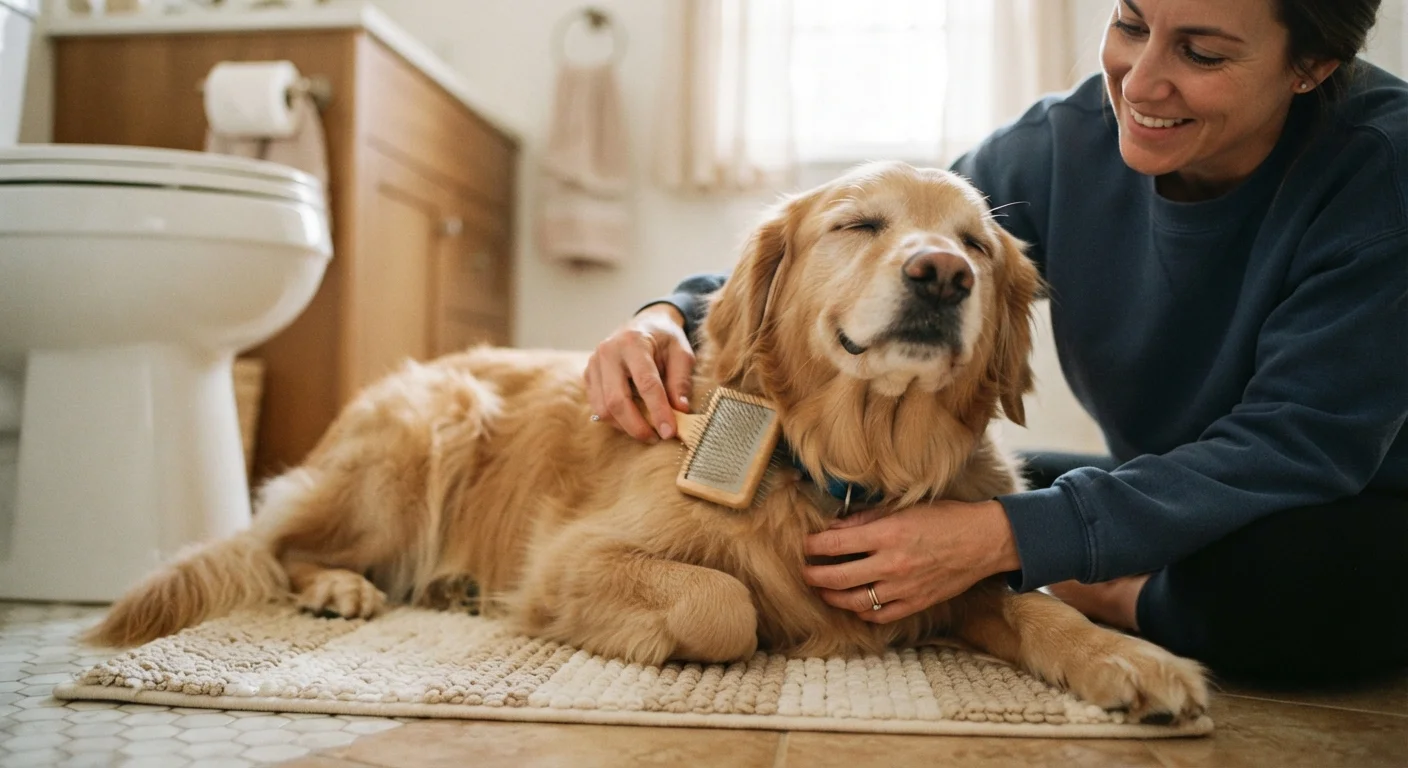
Start at the neck and work toward the tail, brushing in the direction of hair growth. Lift the top coat and brush through to the skin in small sections. Pay extra attention behind the ears, under the collar, and at the armpits - common matting spots. For double-coated breeds, follow up with an undercoat rake.
Trim nails one paw at a time
Hold the paw gently but firmly. Identify the quick - the pink blood vessel visible in light-coloured nails. On dark nails, trim only the very tip (about 1-2 mm) to stay safe. Clip at a slight angle, parallel to the ground when the paw is flat. Release and reward after each nail, not just each paw.
Bathe with lukewarm water and dog shampoo
Wet the coat thoroughly, then apply a dog-formulated shampoo starting at the neck and working backward. Lather gently, avoiding the eyes and ear canals. Rinse completely - residual shampoo can cause skin irritation. Dry with a towel or a low-heat dryer held at a safe distance, keeping the nozzle moving at all times.
Do a quick post-groom check
While your dog is calm and accessible, take a moment to check the ears for unusual odour or discharge, inspect the skin for redness or lumps, and look at the paw pads for cracks or debris. Note anything that seems unusual and mention it at your next vet visit.
Keep Sessions Short and Positive
Five minutes of calm, rewarded grooming is far more valuable than a long, stressful session. End each session on a positive note - even if you only completed one task. Over time, your dog will learn that grooming predicts good things, and resistance typically decreases.
Don't Use Human Products on Dogs
Human shampoos, conditioners, and nail tools aren't formulated for canine skin or nail structure. A dog's skin has a different pH balance than human skin, and the wrong products can cause dryness, irritation, or allergic reactions. Always use products designed specifically for dogs.
Troubleshooting Common Grooming Challenges
Even with the best preparation, some dogs resist grooming. Here's how to handle the most common hurdles:
- Dog won't stand still: Try grooming after a walk when energy is lower. A tired dog is often a more cooperative dog - a point worth building into your daily routine.
- Matted coat: Work from the tip of the mat inward with a detangling spray and a slicker brush. Never pull through a tight mat - this causes pain and erodes trust. Severe matting may need professional attention.
- Fear of the nail clipper: Spend a few days simply touching the clippers to your dog's paw without clipping. Reward generously. Desensitisation takes time but pays off.
- Wriggly during baths: Use a non-slip mat in the tub and keep one hand on the dog at all times. A lick mat with a small amount of dog-safe spread pressed to the tub wall can keep some dogs occupied.
If anxiety during grooming is severe or persistent, consult your veterinarian. In some cases, a referral to a certified veterinary behaviourist or a professional groomer experienced with anxious dogs may be the most humane path forward.
Know When to See a Professional
Some grooming tasks are beyond the scope of home care - especially for dogs with severe anxiety, significant matting, or very dark nails where the quick is hard to locate. A professional groomer or your veterinarian can help with these situations safely. If your dog shows signs of pain, extreme stress, or aggression during grooming, stop the session and seek professional guidance rather than pushing through.