

Key Takeaways
Enrichment Walk
An enrichment walk is any outing that engages a dog's senses, curiosity, and social instincts - not just their muscles. While physical exercise is a clear benefit, the mental stimulation, scent exploration, and environmental exposure that happen on a walk are equally important for a dog's overall wellbeing. For many dogs, what they smell and observe during a walk matters just as much as how far they travel.
Veterinary behaviourists often distinguish between physical exercise (cardiovascular exertion) and mental enrichment (cognitive and sensory engagement), both of which are necessary for a behaviourally balanced dog.
The Walk as a Sensory Experience
Most new dog owners think of walks as a way to tire their dog out. That's partly true - but it's only half the picture. For dogs, a walk is fundamentally a sensory event. The outdoor world delivers a constant stream of smells, sounds, and visual information that a home environment simply cannot replicate.
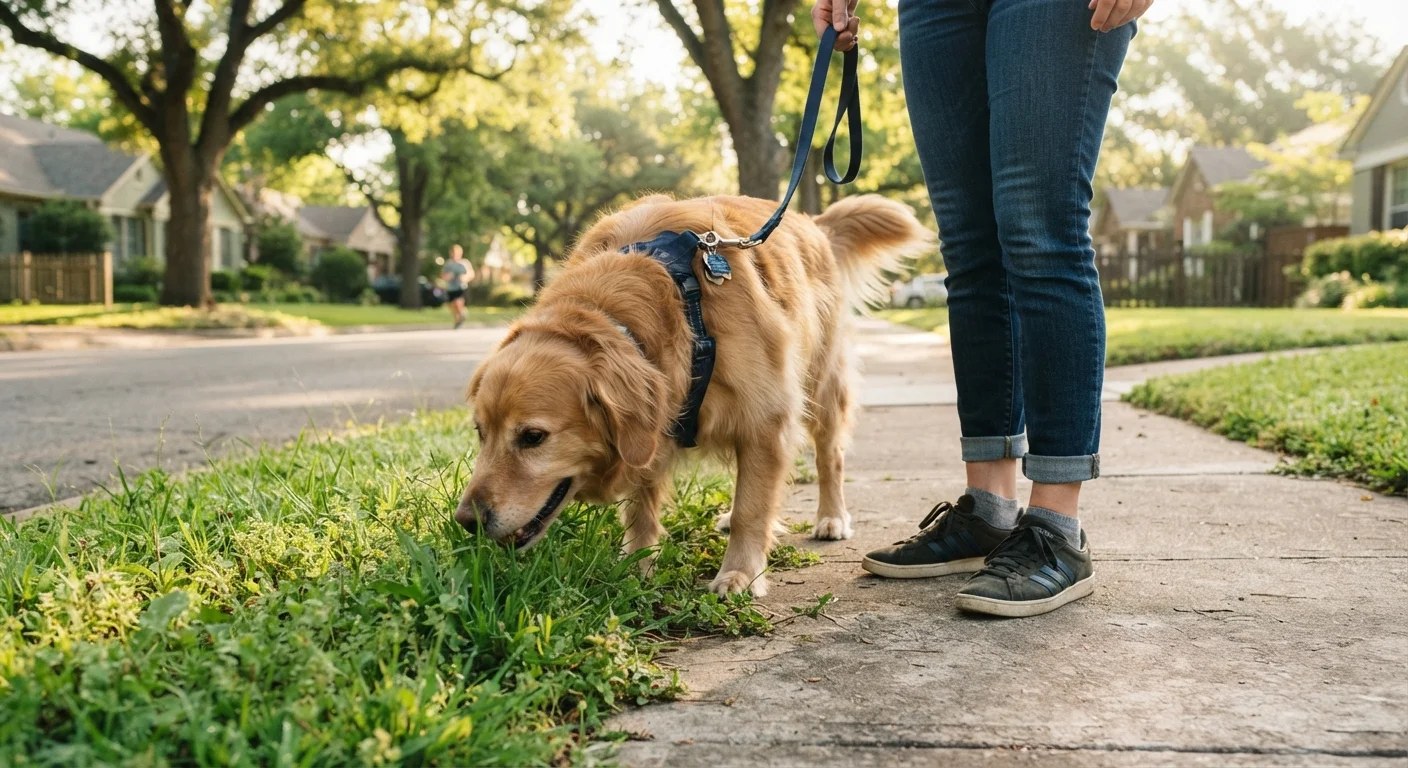
Dogs have up to 300 million olfactory receptors in their noses, compared to roughly 6 million in humans. This means a single fire hydrant, a patch of grass, or a fence post can contain layers of social information: which animals have passed by, when, and even something about their health and stress state. When your dog slows down to sniff, they're not being difficult - they're reading a detailed, constantly updated message board.
Allowing your dog adequate sniff time during walks is one of the simplest ways to provide mental enrichment. Research in animal behaviour suggests that scent-based activities can leave dogs calmer and more settled than equivalent amounts of physical exercise alone. So slowing down and letting your dog lead their nose is genuinely good for them.
Let Your Dog Lead the Sniff
Try dedicating at least part of each walk to letting your dog choose where to stop and smell, rather than keeping a steady pace. This simple shift can make walks significantly more satisfying and mentally tiring for your dog. Think of it as giving them a few minutes to 'read the news' of the neighbourhood.
Behavioural Benefits You Might Not Expect
Regular walks do more than burn energy. They play a meaningful role in shaping how your dog behaves at home and around others. A dog that gets out consistently tends to be less anxious, less destructive, and easier to live with - not because they're tired, but because their need for stimulation and novelty is being met.
Boredom is a significant but often overlooked driver of problem behaviours. Chewing furniture, excessive barking, and restlessness are frequently signs that a dog's environment isn't meeting their needs. Walks introduce variety into an otherwise repetitive daily pattern, which matters greatly for animals that are naturally wired to explore and roam.
Walks also serve as informal socialization sessions. Encountering other dogs, unfamiliar people, cyclists, and traffic in a calm, managed setting helps dogs build confidence and reduces the likelihood of fearful or reactive behaviour. This is especially important during a dog's first year, but it remains valuable throughout their life. For guidance on structuring the rest of your dog's day, see how to build a daily routine your dog will thrive on.
300M+
Olfactory receptors in a dog's nose
Compared to approximately 6 million in humans, giving dogs an extraordinarily rich sensory experience on every walk.
2x
Walks recommended per day for most adult dogs
Most veterinary and animal welfare guidance recommends at least two outings daily, though duration and intensity should match the individual dog's breed and health.
The Bond Between Walking and Your Relationship
Walks are one of the most consistent, positive shared experiences you and your dog have. That regularity matters. Dogs are highly attuned to routine and to the cues associated with it - the sight of a leash, your shoes going on, a certain time of day. These cues become signals of something good, and that reliability builds trust.
Time spent on a walk is time spent together without distractions. You're communicating through pace, direction, and attention in ways that quietly reinforce your role as someone worth following and checking in with. Many trainers note that dogs who walk regularly with their owners tend to be more responsive to commands, not because of the walking itself, but because of the accumulated positive shared experiences.
If your dog shows subtle changes in behaviour or energy during walks, it's worth paying attention - shifts in enthusiasm, gait, or interest can sometimes signal that something needs a vet's attention.
Making Walks Work for Your Dog's Needs
Not all walks need to look the same. A brisk 20-minute outing and a slow, exploratory 30-minute ramble can both be valuable, but for different reasons. Varying your routes introduces new smells and environments, which keeps walks cognitively engaging. Letting your dog set the pace - at least some of the time - gives them agency, which itself is a form of enrichment.
Consider the conditions too. Hot pavement can burn paw pads; extreme cold affects smaller or short-coated breeds more severely. Early morning and evening walks are often more comfortable in summer. Staying aware of your dog's physical signals - slowing down, panting heavily, reluctance to move - helps you adjust outings to suit them.
Caring for your dog well means paying attention across all their daily needs. Regular grooming at home is another practical habit that, combined with consistent walks, contributes to a calmer, healthier dog overall.
This article is for general informational purposes only and is not a substitute for professional veterinary advice. Always consult a qualified veterinarian for guidance specific to your dog's health and care needs.