

Key Takeaways
Feline Object Displacement
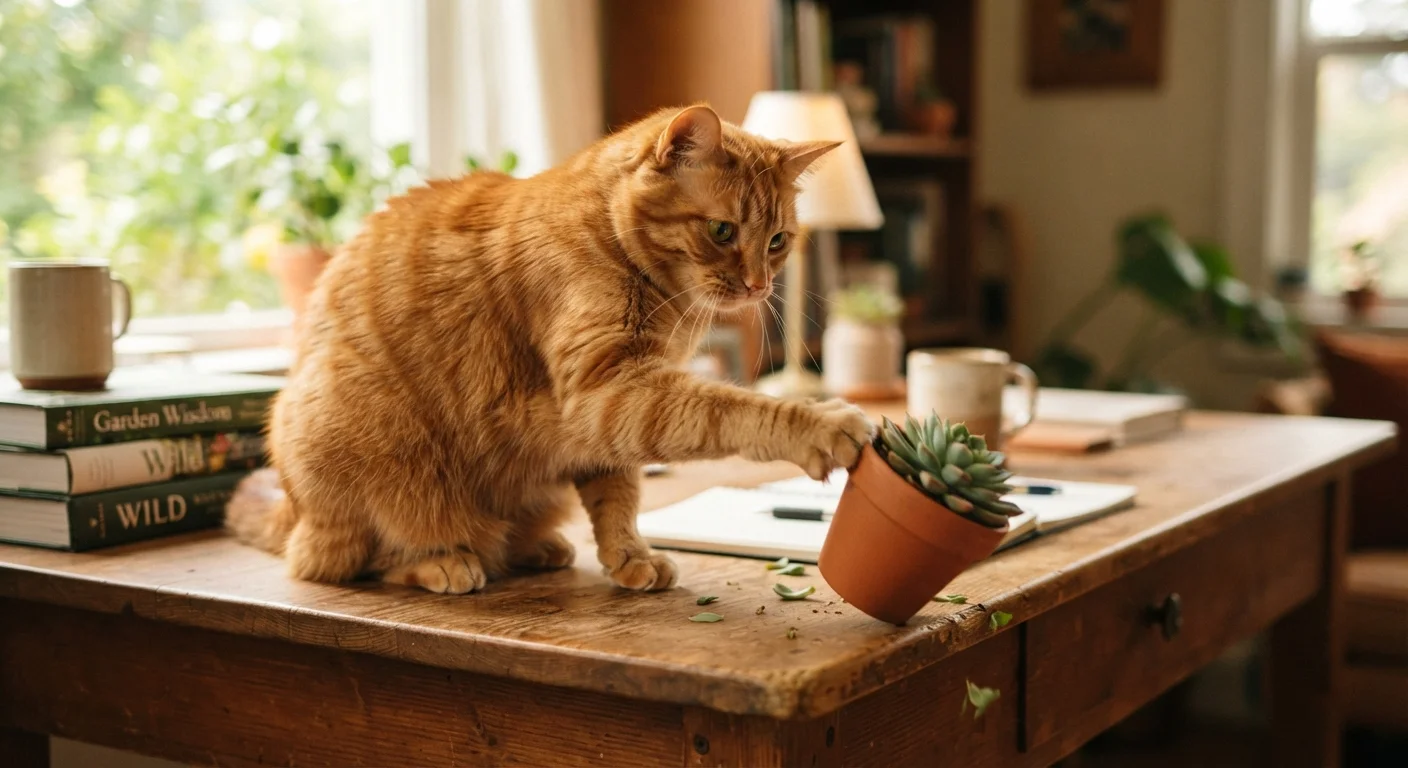
Feline object displacement is the common cat behavior of deliberately pushing, batting, or nudging items off surfaces like tables and shelves. Despite looking like random mischief, it is a purposeful action driven by instinct, curiosity, and social signaling. Cats are not being destructive for the sake of it - they are doing what their biology and environment are prompting them to do.
Behaviorists classify this under exploratory and attention-soliciting behaviors, noting it often overlaps with predatory motor patterns activated by the movement of objects.
The Instinct Behind the Swipe
Watch closely the next time your cat nudges something off the counter. You'll likely notice a deliberate, focused quality to it - a careful paw extended, a test tap, and then a decisive push. This is not clumsiness. It is a behavior rooted in your cat's predatory wiring.
Cats are hardwired hunters. Even well-fed indoor cats retain the sensory reflexes and motor patterns of their wild ancestors. When a cat bats at a pen or a hair tie, it is running the same neural program it would use to test whether a small animal is alive, dead, or likely to flee. Moving objects are especially compelling - they mimic prey behavior. Objects perched at the edge of a surface are even better, because a nudge produces an immediate, dramatic result.
This instinct is one reason the behavior tends to happen on elevated surfaces. Cats naturally seek high vantage points to observe and hunt, so tables and shelves are already prime territory. Objects sitting there become convenient targets. To understand more about the full range of signals your cat sends through behavior, explore our guide to feline body language.
Satisfy the Hunt Before the Mischief Starts
A structured play session before your workday begins can dramatically reduce mid-morning shelf-clearing. Use a wand or feather toy to mimic prey movement, let your cat 'catch' it a few times, and end the session with a small food reward to complete the hunt cycle. This mirrors natural predatory behavior and leaves cats calmer and more settled afterward.
When It's About You, Not the Object
Here's where it gets interesting: many cats learn very quickly that knocking things over gets a reaction. You look up, you say something, you move toward them. From your cat's perspective, this is a success. They generated a response from you, which is exactly what they wanted.
Attention-seeking behavior like this tends to escalate when cats are under-stimulated or feel their social needs aren't being met. Indoor cats in particular can struggle if their environment doesn't offer enough enrichment. If your cat tends to clear the shelf right when you sit down to work, the pattern is likely less about the objects and more about you. Solo cats especially benefit from intentional enrichment strategies that reduce the need to demand attention through mischief.
What You Can Do About It
The most effective response is redirection, not punishment. Scolding or shouting teaches your cat to associate you with stress, not to stop the behavior. Instead, focus on two things: meeting needs before the behavior starts, and removing the opportunity when you can't.
- Schedule daily play sessions. Two short play sessions a day - roughly 10 to 15 minutes each - can significantly reduce attention-seeking and restless behavior. Use a wand toy that mimics prey movement to satisfy the hunting instinct properly.
- Clear high-value surfaces. If a particular shelf becomes a favorite target, remove the most tempting lightweight objects. This isn't defeat - it's smart environmental management.
- Provide sanctioned outlets. Puzzle feeders, window perches, and cat trees give your cat legal ways to explore and interact with their environment. A well-stimulated cat has less reason to improvise entertainment.
- Ignore the behavior when possible. If your cat knocks something over and you respond every time, you are reinforcing the loop. When safe to do so, not reacting at all removes the reward.
Building a home that actually meets your cat's needs reduces most of these friction points. Our overview of what indoor cats need to thrive walks through the core physical and emotional requirements worth addressing first.
~63%
U.S. households with at least one cat
According to the American Pet Products Association's National Pet Owners Survey, cats are among the most common household pets in the United States.
2×
Increase in attention-seeking when play is insufficient
Veterinary behaviorists generally note that cats with fewer than two play sessions per day show notably higher rates of attention-demanding behaviors, including object displacement.
Reading the Bigger Picture
A cat who occasionally bats objects off a surface is almost certainly fine. A cat who is doing it constantly, especially with other signs like excessive vocalization, restlessness, or changes in appetite, may be signaling something worth looking at more closely - including whether their environment is genuinely meeting their needs.
Think of the behavior as a piece of communication. Cats are not subtle creatures when they want something, but they are not verbal either. Knocking things over is one of the more theatrical ways they have of saying: pay attention to me, or I have energy to burn, or simply this is interesting. Treating it as information rather than misbehavior makes you a more responsive, confident owner. Setting up your home thoughtfully goes a long way toward reducing the conditions that make these behaviors necessary in the first place.
When Behavior Changes Warrant a Vet Visit
A sudden increase in restless or disruptive behavior - especially paired with changes in appetite, litter box habits, or social withdrawal - can occasionally signal an underlying health issue rather than a behavioral one. If enrichment strategies don't seem to make a dent, or if the change in behavior was abrupt, it's worth a conversation with your veterinarian to rule out medical causes.