

Key Takeaways
Start here
Why the First Month Is the Hardest - and the Most Important
Next
Set One Clear, Small Goal
Then
Find the Money You Already Have
Apply it
Make Saving a Habit, Not a Chore
Stay on track
Track Your Progress and Build Momentum
Why the First Month Is the Hardest - and the Most Important
Most people don't struggle to save because they lack willpower - they struggle because they've never built a system. The first 30 days of saving aren't really about money. They're about creating a new pattern of behavior that will carry you far beyond month one.
Research on habit formation consistently suggests that early consistency matters more than early size. A transfer of $20 into a savings account done reliably every payday is more valuable at this stage than a one-time $200 deposit you never repeat. The goal of your first month is to prove to yourself that saving is something you do - regularly, even if imperfectly.
This Is General Information, Not Advice
Everyone's financial situation is different. What works well for one person may not suit another's income, expenses, or obligations. The strategies here are widely used starting points, not personalized recommendations. A licensed financial adviser can help you make decisions that fit your specific circumstances.
This article provides general financial information for educational purposes only. It is not personalized financial advice. For guidance tailored to your specific circumstances, consider speaking with a licensed financial adviser.
Set One Clear, Small Goal
Vague intentions like "I want to save more" rarely produce results. A concrete goal does. Before you move a single dollar, answer three questions:
- What am I saving for? An emergency fund, a vacation, a car repair cushion - any real target works.
- How much do I need? Keep month-one goals modest. Aim for something between $50 and $200 for your first 30 days.
- By when? Tie your goal to a specific date, such as the last day of the month.
A goal like "I want to save $100 for an emergency fund by the end of the month" gives you a destination. Once you hit it, you can aim higher. For deeper goal-planning, see how to work backwards from a savings target.
Name Your Savings Account After Your Goal
Many banks let you label or nickname a savings account. Calling it "Emergency Fund" or "Trip to Denver" makes your goal feel real every time you log in. It also creates a small psychological barrier against dipping into it for unrelated spending.
Find the Money You Already Have
Before looking for ways to earn more, look for spending you can trim - even temporarily. Go through last month's bank or credit card statement line by line and flag anything non-essential. Common places people find quick savings:
- Subscriptions: Streaming services, apps, or gym memberships you rarely use. Pause one for 30 days.
- Food spending: Frequent takeout or café visits add up fast. Cooking two extra meals at home each week can free up $20-$40 or more, depending on your habits.
- Impulse purchases: Try the 30-day rule - when you're tempted by a non-essential item, wait a month before buying it.
You don't need to cut everything enjoyable. The goal is to identify a small gap between what you earn and what you spend - and redirect that gap intentionally. The everyday habits that quietly grow savings article offers more practical ideas for doing this without drastic changes.
Make Saving a Habit, Not a Chore
The single most effective thing you can do in your first month is to move money into savings before you spend it - not from whatever's left over at the end of the month. That leftover rarely exists.
On payday, transfer your target amount first. Even manually moving $25 the moment your paycheck lands builds the right sequence: income arrives, savings happen, then you spend what remains. Once this feels natural, you can set up automatic transfers to do the heavy lifting for you. See how to automate your savings without overthinking it for a straightforward setup guide.
Keep your savings in a separate account - even at the same bank. Out of sight genuinely helps it stay out of reach.
Don't Save So Aggressively You Struggle
Setting your savings amount too high for your income can leave you short for genuine necessities, which often leads to raiding the savings account and feeling defeated. Start with an amount that feels almost too easy, then build from there. Sustainability beats ambition in month one.
Track Your Progress and Build Momentum
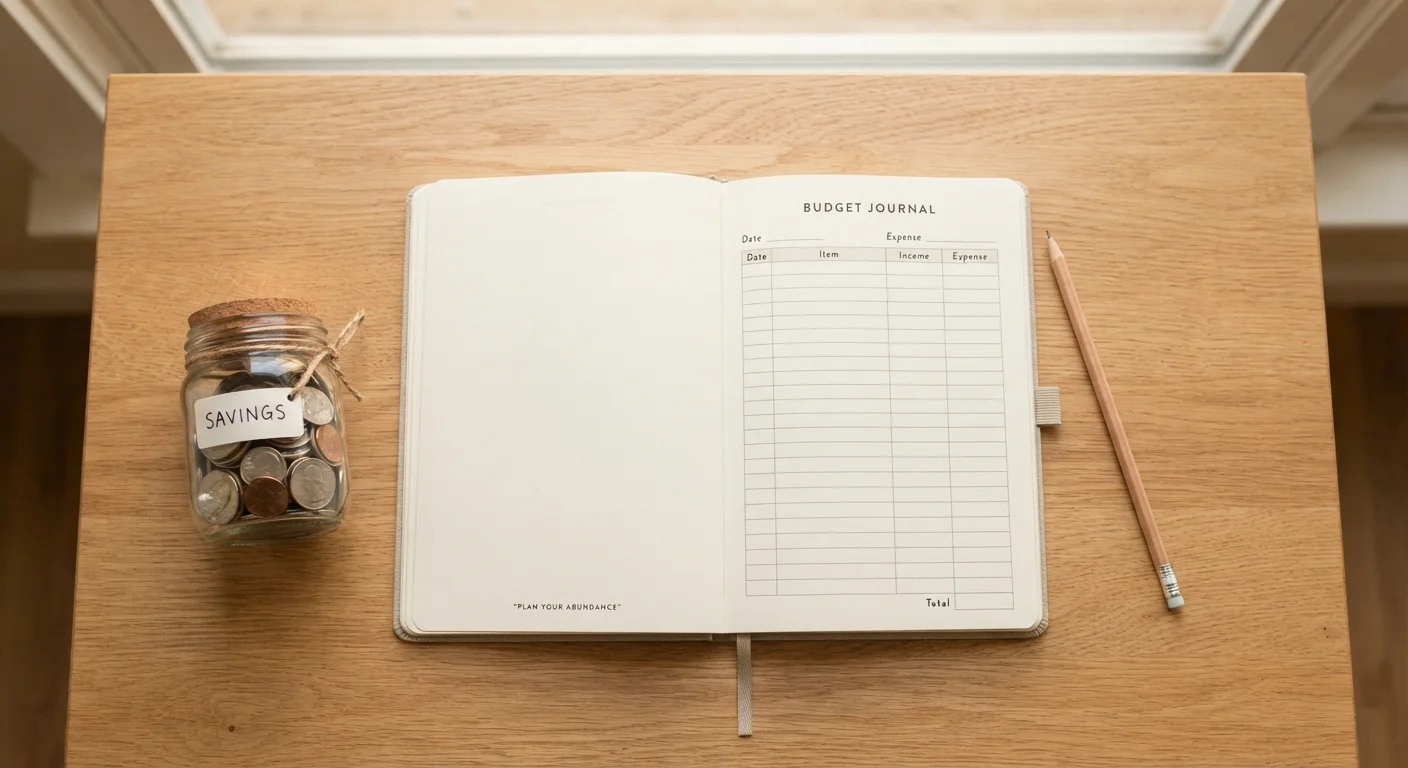
At the end of each week, take two minutes to check your savings balance and note the change. You can use a free budgeting app, a spreadsheet, or a handwritten tally - whatever you'll actually look at. Seeing numbers move upward, even slowly, reinforces the behavior.
At the end of month one, acknowledge what you've done. If you saved $80 of a $100 goal, that's not a failure - that's $80 more than you had before, and a habit now started. Adjust your goal for month two and keep going.
For a more complete picture of how saving fits into your overall financial life, building a savings plan from scratch walks through budgeting methods, account choices, and long-term motivation. And if budgeting still feels overwhelming, budgeting basics is a gentle place to start.
This article is for general informational and educational purposes only and does not constitute personalized financial, tax, or legal advice. Please consult a qualified financial professional for guidance specific to your situation.