

Key Takeaways
Why Small Habits Are a Powerful Starting Point
Most people picture saving money as a dramatic overhaul - slashing a major expense or living on rice and beans for months. In reality, the most durable savings progress tends to come from the opposite direction: small, repeatable choices that barely register day-to-day but compound steadily over time.
Think of it like interest. Just as money earns interest on interest when left in a savings account, small behavioural changes earn compounding returns in the form of reduced spending month after month. If you want to understand why tiny actions carry so much weight, the concept of marginal gains - explored in our guide to incremental change - offers a useful framework.
The habits below are deliberately modest. None require a major lifestyle sacrifice. Start with one or two that feel natural, and build from there.
Plan meals before you shop
Unplanned grocery trips are one of the most reliable ways to overspend. When you walk into a store without a list, you buy ingredients that don't connect - and many go unused. The USDA has estimated that American households waste a significant share of the food they buy, which translates directly into wasted money.
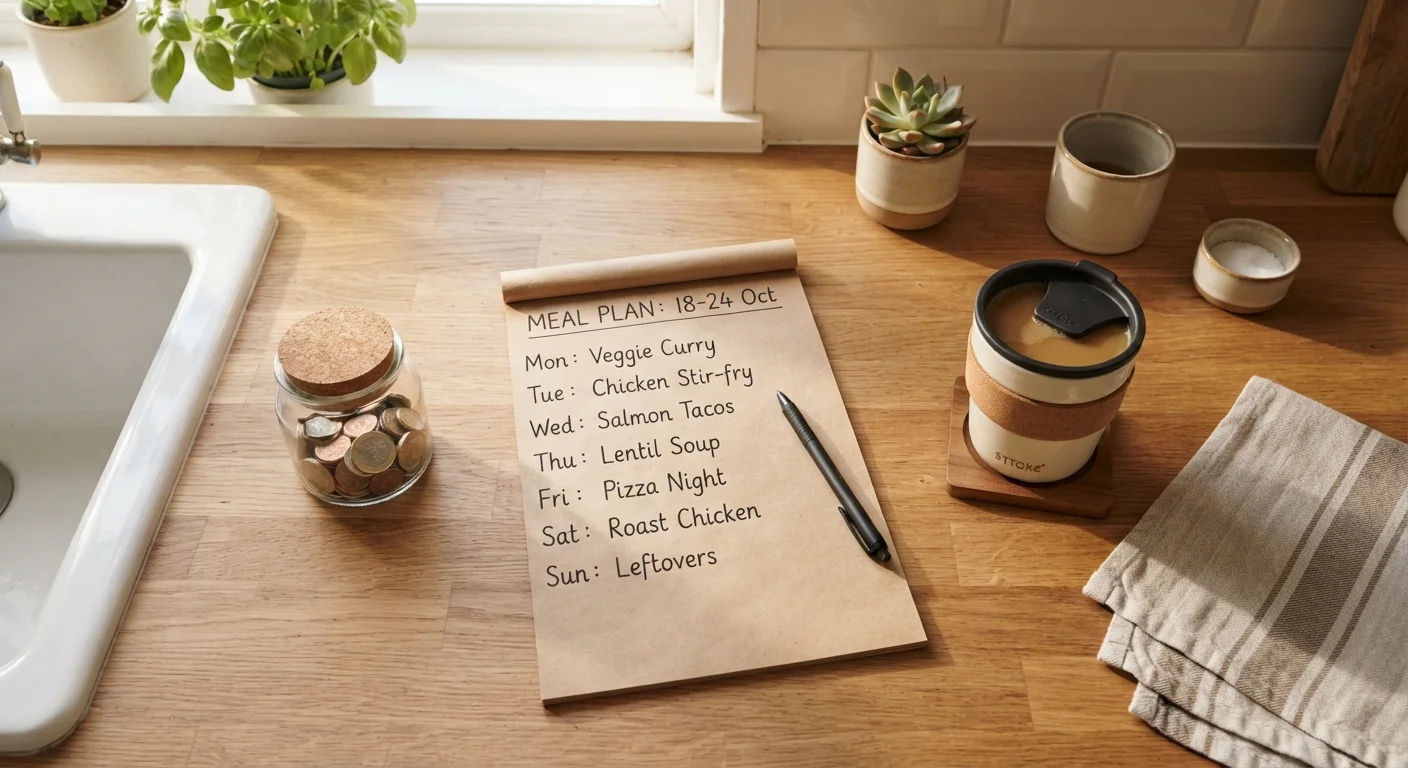
A simple fix: spend 10 minutes on Sunday sketching out five or six dinners for the week. Write a shopping list based only on what those meals require. Stick to the list. Over time, you'll notice your grocery bill shrinking and your fridge clearing out before the next shop. For a closer look at recurring spending patterns that quietly drain budgets, see Where Your Spending Leaks.
Ten minutes of meal planning each week can meaningfully reduce both food waste and grocery spending.
Audit your subscriptions every quarter
Streaming services, fitness apps, cloud storage, news sites - subscriptions are designed to be forgettable. That's the problem. Many people are paying for three or four services they rarely open, often because the charges are small enough to slip under the radar individually.
Set a recurring reminder every three months to review your bank or credit card statements for recurring charges. For each one, ask: Did I use this in the past month? If the answer is no, cancel it. A few cancellations can free up $20-$60 a month without you missing anything meaningful. This habit pairs well with a broader spending self-audit.
Most households pay for at least one subscription they've forgotten about - a quarterly audit fixes that.
Brew coffee at home most days
This is one of the most cited examples in personal finance - for good reason. A daily $5-$6 coffee shop purchase adds up to roughly $1,500-$2,000 a year. Brewing at home costs a fraction of that per cup. The point isn't to never enjoy a café - it's to make home brewing the default and treat café visits as occasional choices rather than daily defaults.
If the ritual matters to you, invest a little in quality beans or a method you enjoy. Making it pleasant increases the odds you'll stick with it. This kind of small, consistent swap is exactly what compound micro-habits look like in practice.
Shifting from daily café purchases to home brewing can save over a thousand dollars annually.
Use a 24-hour pause before non-essential purchases
Impulse spending is largely an emotional response - boredom, stress, or the friction-free design of online checkouts. A simple rule: before any non-essential purchase above a threshold you set (say, $20 or $30), wait 24 hours before buying.
Many purchases simply lose their appeal overnight. Others you'll still want and choose to make - and that's fine. The habit isn't about deprivation; it's about ensuring your spending reflects actual preferences rather than momentary impulses. Over a month, this one pause can prevent several unnecessary purchases and redirect that money to savings.
A 24-hour waiting rule turns impulse purchases into deliberate choices - and many simply don't survive the wait.
Save windfalls and bonuses before spending them
Tax refunds, work bonuses, birthday cash, and side-gig payments are easy to absorb into everyday spending without noticing. A habit that consistent savers often practice: decide in advance what percentage of any windfall goes directly to savings - before you have a plan for the rest.
Even directing half of an unexpected payment to savings while spending the other half freely preserves more than doing nothing. If irregular costs like annual insurance or car maintenance catch you off guard, a sinking fund - a dedicated pot of money built gradually - can absorb those shocks. Our guide to sinking funds explains how to set one up simply.
Deciding in advance how to handle windfalls stops unexpected money from disappearing into day-to-day spending.
Track spending for just five minutes each evening
You don't need a complicated budget spreadsheet to build financial awareness. A five-minute daily check - glancing at what you spent and noting anything surprising - keeps you connected to your money without feeling like a chore.
Over weeks, patterns emerge. You'll notice which categories tend to run over and where you're naturally frugal. That awareness alone tends to shift behaviour. For those working with a tighter budget, Saving on a Tight Budget covers how to make thoughtful trade-offs when every dollar counts. And if you're building the budgeting habit from scratch, Habits That Make Budgeting Stick offers evidence-informed guidance on making it routine.
Five minutes of daily spending awareness builds the financial clarity that occasional budget reviews never quite achieve.
Making It Last: Turning Habits Into a System
Individual habits create savings; a simple system locks them in. Once you have two or three habits running consistently, consider pairing them with automation. Scheduling a small automatic transfer to a separate savings account each payday means the money moves before you can spend it - our guide to automating your savings walks through how to set that up without any financial expertise.
Start With Just One Habit
Trying to adopt all six habits at once is a common reason people give up quickly. Pick the single habit that feels most manageable given your current routine, and practice it for two to three weeks before adding another. Momentum built gradually tends to last far longer than ambitious overhauls. If you're just getting started, Your First Month of Saving offers a practical 30-day framework to build early momentum.
For a broader roadmap - from setting your first savings goal to choosing the right account - see Building a Savings Plan from Scratch. And if you want to understand what consistent savers actually do differently, The Habits Behind Consistent Savers breaks down the research in plain language.
This article is for general informational and educational purposes only and does not constitute personalised financial advice. Consider consulting a qualified financial professional for guidance specific to your situation.