

| Best container for daily-access items | Open-top bin or basket |
| Best material for damp environments | Moisture-resistant plastic or coated metal |
| Best for seasonal or long-term storage | Lidded, stackable plastic bins |
| First step before buying any container | Measure the target space (height, width, depth) |
| Recommended buying strategy | Purchase one bin first, test it for a week before buying a set |
| Vacuum bags work best for | Compressible soft goods: bedding, off-season clothes |
Why Container Type Matters Before Anything Else
Most people buy storage containers backwards - they see an appealing bin at the store, bring it home, and then try to fit their belongings into it. The result is a shelf full of containers that don't quite work, holding things that don't quite fit. A smarter approach starts with understanding what you actually need to store, where it will live, and how often you'll need to access it.
This reference guide walks you through the core container categories, key material differences, and sizing logic so you can make confident, purposeful choices. For a broader look at how containers fit into a whole-home system, see our complete guide to home organisation.
| Best container for daily-access items | Open-top bin or basket |
| Best material for damp environments | Moisture-resistant plastic or coated metal |
| Best for seasonal or long-term storage | Lidded, stackable plastic bins |
| First step before buying any container | Measure the target space (height, width, depth) |
| Recommended buying strategy | Purchase one bin first, test it for a week before buying a set |
| Vacuum bags work best for | Compressible soft goods: bedding, off-season clothes |
Container Types and Their Best Use Cases
Not every bin serves every purpose. Here is a breakdown of the most common container types and where each performs best:
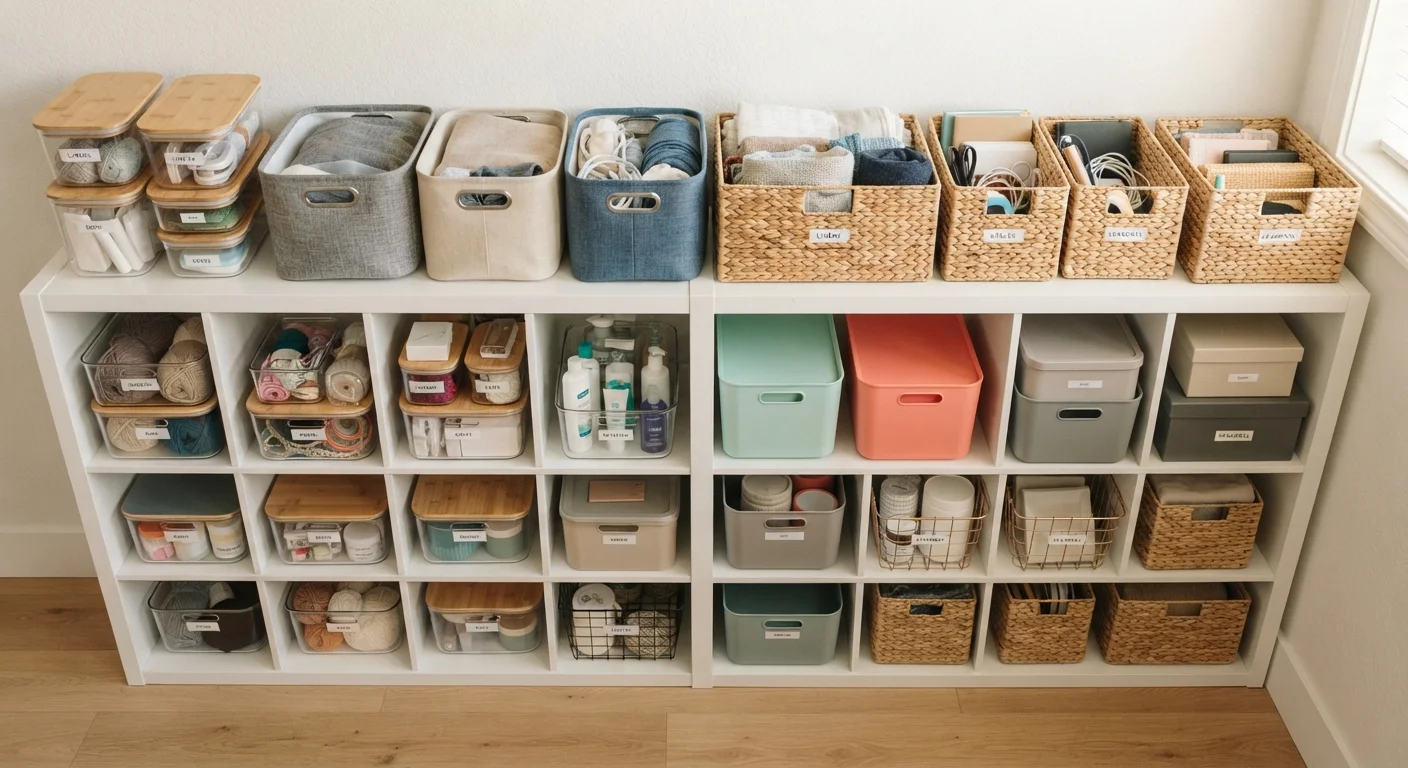
- Open-top bins and baskets: Best for items you grab daily - toiletries, mail, pet supplies, produce. Low friction access makes them practical for high-traffic areas. Woven or fabric baskets soften the look in living spaces.
- Lidded plastic bins: Ideal for seasonal storage, garage items, or anything that needs protection from dust or moisture. Stackable designs save vertical space. Clear or semi-transparent versions let you see contents without opening.
- Drawer organisers and dividers: Suited for small, loose items - utensils, office supplies, bathroom accessories. They impose structure inside existing drawers rather than adding new footprint.
- Vacuum storage bags: Useful specifically for compressible soft goods like spare bedding, off-season clothing, or pillows. They reduce bulk dramatically but require careful labeling since contents become unrecognisable once compressed.
- Stackable canisters and jars: Best in pantries and kitchens for dry goods, grains, and baking supplies. Airtight seals help preserve freshness.
Stackable containers
Bins or boxes designed with lids and bases that interlock or sit flush, allowing them to be piled vertically without toppling. They maximise vertical space but require uniform sizing across the set.
Airtight seal
A closure mechanism - typically a rubber gasket or snap-lock lid - that prevents air and moisture from entering the container. Important for food storage and protecting items from humidity.
Open-top bin
A container with no lid, designed for easy, frequent access. Best suited to items retrieved daily; not suitable for dusty or damp environments.
Drawer organiser
A shallow tray or set of dividers placed inside an existing drawer to separate and contain small items. Adds structure without taking up additional shelf or floor space.
Vacuum storage bag
A sealable plastic bag with a valve that allows air to be removed using a vacuum cleaner, compressing soft contents to a fraction of their original volume. Useful for off-season textiles.
Before committing to a container style, consider how it will interact with the storage zone it lives in. Dedicated zones versus flexible catch-all areas is worth thinking through before you purchase a single bin.
Material Guide: Plastic, Fabric, Wood, and Wire
The material of a container affects durability, visibility, aesthetics, and how well it holds up in specific environments.
1 week
Recommended trial period before buying a full set
Testing a single container in its intended space for one week helps identify sizing or accessibility problems before a larger purchase.
3 questions
To ask before buying any bin
What am I storing? Where will it live? How often do I need to access it? Answering these three questions eliminates most purchasing mistakes.
- Plastic: Durable, moisture-resistant, and widely available in standard sizes. Works in garages, basements, and under sinks. Look for containers rated for the environment - some plastics become brittle in cold or heat.
- Fabric (canvas, felt, jute): Lightweight and visually warm, making them popular for living rooms, nurseries, and closets. Not suitable for damp areas or heavy items. Collapsible designs are easy to store when not in use.
- Wood and bamboo: Aesthetically versatile and sturdy for drawer inserts, desktop organizers, and open shelving. Avoid unfinished wood in areas prone to moisture, such as under-sink cabinets.
- Wire and metal: Good ventilation makes wire bins well-suited for produce, linens, or anything that benefits from airflow. Rust-resistant coatings are important for bathroom and laundry use.
It is also worth remembering that containers alone don't create organisation. As our article on decluttering myths explains, buying more bins without first reducing what you own often adds clutter rather than curing it.
Sizing: Measure Twice, Buy Once
Sizing mismatches are the single most common storage mistake. A container that is too large wastes space and encourages overfilling; one that is too small frustrates use. Follow these steps before purchasing:
- Measure the space first. Note the height, width, and depth of the shelf, drawer, or cabinet where the container will live. Account for any lips, rails, or obstructions.
- Estimate the volume of what you're storing. A rough grouping - small (fits in two hands), medium (fits in a laundry basket), large (bulky or seasonal) - is enough to guide bin size selection.
- Check stackability. If you plan to stack bins, confirm the lid design supports weight and that the combined height fits your space.
- Buy one first. Before purchasing a matching set, test a single container in the real space for a week. It is much easier to return or repurpose one bin than a dozen.
If your storage challenge extends to outdoor plants and growing supplies, the same sizing logic applies - our guide to container gardening covers pot and planter sizing in detail.