

Key Takeaways
Why Pests Show Up and What That Tells You
Pest pressure is often a symptom before it's a problem. When aphids swarm a tomato plant or fungus gnats cloud your herbs, something in the growing environment has gone slightly out of balance - and understanding that is more useful than immediately spraying something. If you're just getting started with growing, our first-time garden guide walks through the foundational conditions that keep plants resilient from the start.
Common culprits you're likely to encounter include:
- Aphids - tiny, soft-bodied insects clustered on new growth; they weaken plants by feeding on sap.
- Whiteflies - small white winged insects that scatter when disturbed; common on tomatoes and squash.
- Spider mites - nearly invisible; look for fine webbing on leaf undersides and stippled, pale leaves.
- Caterpillars and slugs - leave ragged holes in leaves, often feeding at night.
- Fungus gnats - more nuisance than threat; larvae can damage roots in overly wet soil.
Correct identification matters because the right response depends entirely on which pest you're dealing with. A control method that works on aphids won't help with spider mites.
Best Practices for Low-Intervention Pest Management
The following practices form a reliable, beginner-friendly approach to pest control that minimizes disruption to the wider garden ecosystem.
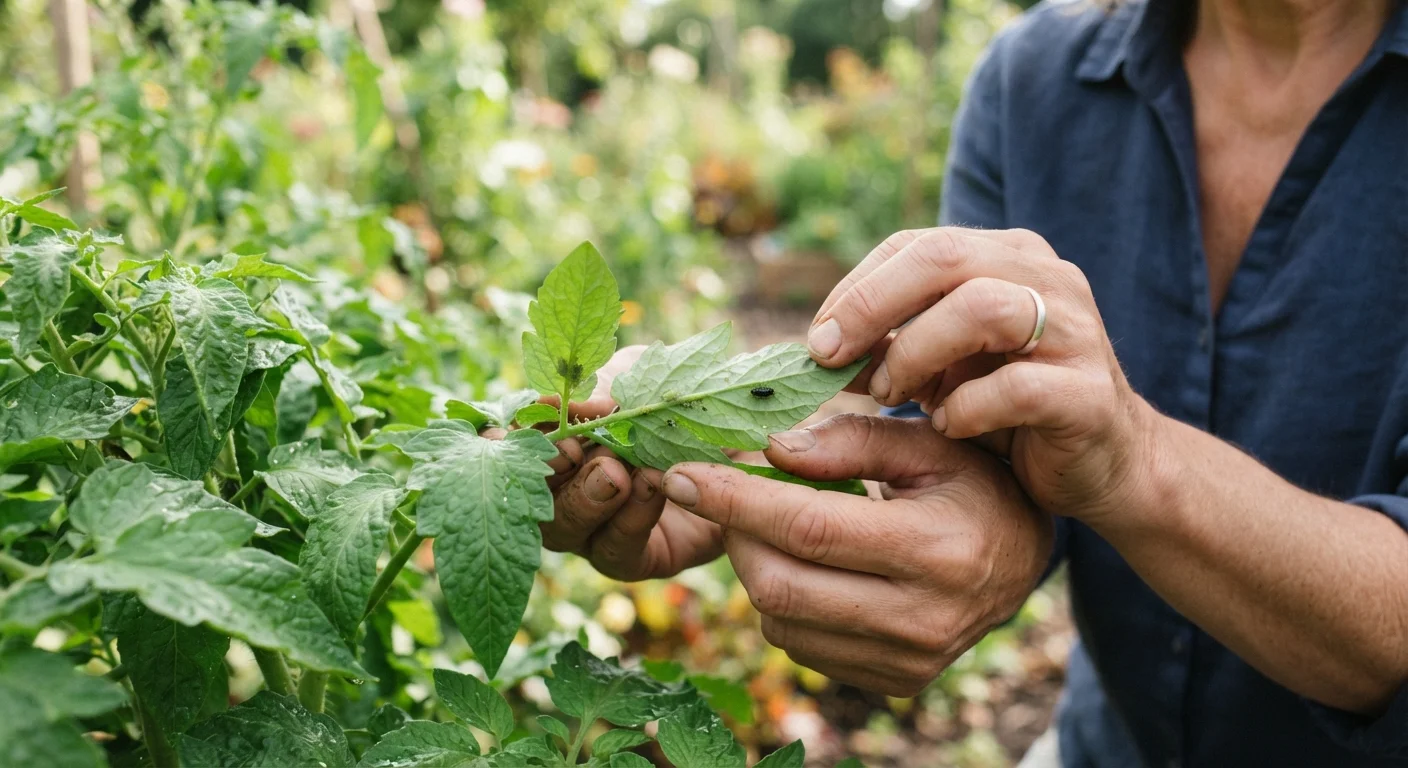
Inspect your plants at least once a week, checking leaf undersides and stem joints.
Most infestations are far easier to manage when caught early. A small cluster of aphids can be removed by hand in minutes; the same colony left unchecked for two weeks may require much more effort. Regular observation also helps you distinguish pest damage from disease or nutrient issues.
Use a strong jet of water to dislodge soft-bodied insects like aphids and whiteflies.
Water pressure physically removes insects without harming plants, beneficial bugs, or soil organisms. It's particularly effective on aphids, which cannot easily climb back once knocked off. This approach works best in the morning so plants have time to dry before cooler evening temperatures.
Encourage beneficial insects by planting flowering herbs near your vegetables.
Ladybugs, lacewings, parasitic wasps, and hoverflies are natural predators of common garden pests. They need nectar and pollen to sustain themselves. Planting dill, fennel, cilantro allowed to flower, or alyssum near your edibles creates habitat that attracts these allies.
Remove heavily infested leaves or stems promptly and dispose of them away from the garden.
Leaving badly damaged foliage on or near the plant gives pests a base to spread from. Pruning and removing the affected material interrupts their life cycle. Composting this material is not recommended, as pest eggs or larvae may survive.
Avoid overwatering and improve soil drainage to reduce conditions that favor pests.
Persistently wet soil encourages fungus gnat larvae, root rot, and weakened plants that attract more pest pressure. Healthy, well-drained soil supports stronger root systems and a plant's natural ability to tolerate minor pest activity.
Use physical barriers such as row cover fabric or copper tape for specific pest problems.
Row cover fabric - a lightweight, breathable material placed over plants - physically excludes flying insects like cabbage moths and whiteflies without blocking light or airflow. Copper tape around pot rims is a traditional method sometimes used against slugs, though its effectiveness can vary.
Quick Actions You Can Take Today
You don't need a full garden overhaul to start reducing pest pressure. Several of the most effective interventions take less than ten minutes and cost nothing.
For container growers, the same principles apply - and consistent monitoring is even more important since pots can dry out or waterlog quickly, creating stress that attracts pests. Our container gardening guide covers the drainage and spacing basics that keep potted plants healthy.
Start a Simple Pest Log
Keep a small notebook or a note on your phone recording what you spot during each weekly inspection - which plants, which pests, and roughly how many. After a few weeks, patterns emerge: you may notice certain plants are consistently affected, or that problems spike after a stretch of humid weather. That information helps you respond earlier and more precisely next season.
When to Reconsider and What to Check First
If you've tried physical and environmental controls and a pest population is still growing, pause before reaching for a chemical solution. First, revisit growing conditions: poor drainage, compacted soil, or overcrowding are frequently the root cause. Our garden readiness checklist is a useful reference for auditing those basics.
Not Every Insect in Your Garden Is a Pest
A common beginner mistake is treating all insects as threats. Ground beetles, spiders, centipedes, and many small wasps are predators that actively help control pest populations. Before taking any action, try to identify the insect you're looking at - a basic garden insect identification guide (available at most public libraries or through cooperative extension resources) is a worthwhile investment for any new gardener.
Some garden lore around pest control isn't well supported by evidence - such as the idea that certain companion plants reliably repel all insects. For a grounded look at what actually holds up, our article on common garden myths can help you separate fact from habit.
If you do reach the point where a targeted treatment feels necessary, look for options approved for use around edibles and beneficial insects, and always follow label instructions carefully. Treat it as a reset, not a routine - the goal is to return to conditions where your plants can resist pressure naturally.