
Key Takeaways
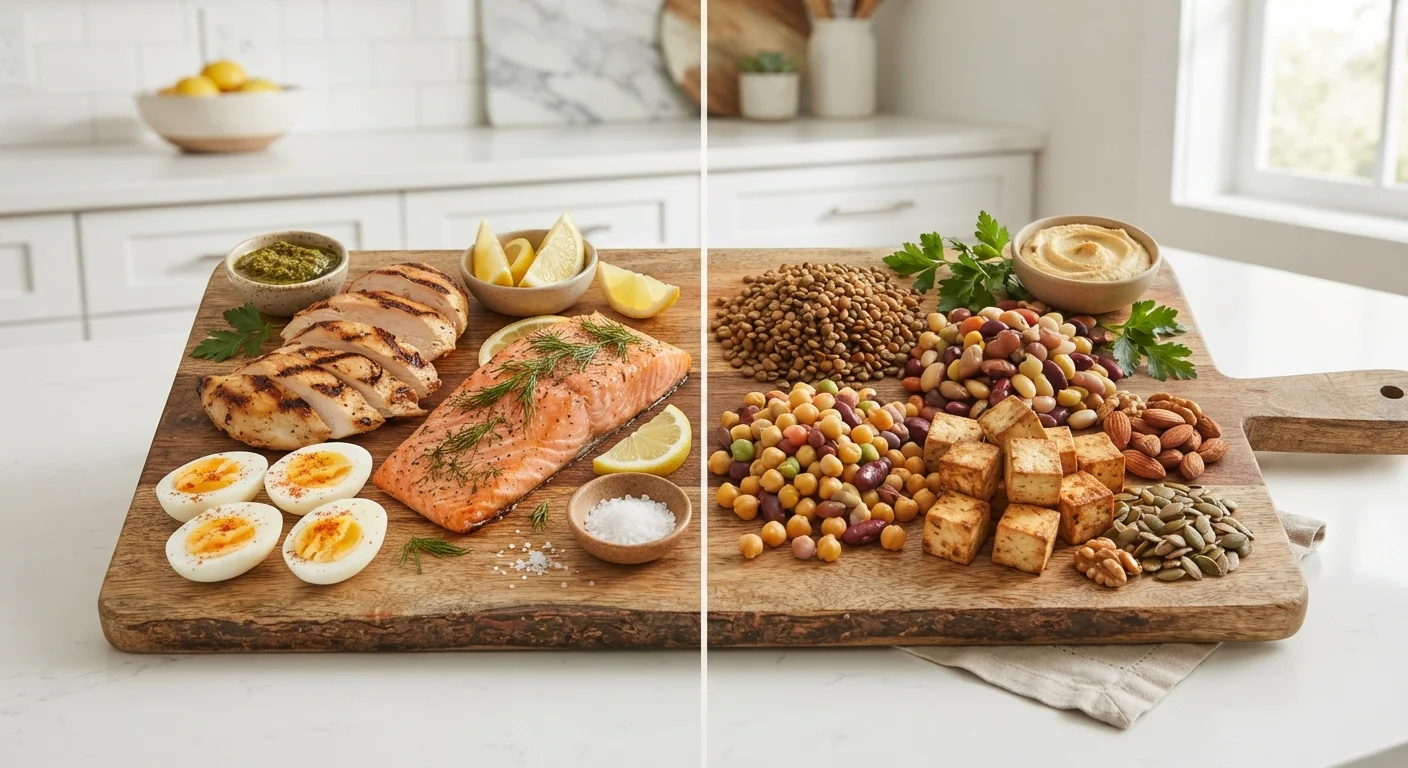
Option A
Animal Protein
The complete, highly bioavailable classic.
Best for: People looking for a straightforward way to meet all essential amino acid needs in fewer food sources.
Option B
Plant-Based Protein
The fiber-rich, heart-friendly alternative.
Best for: People who want to diversify their diet, reduce saturated fat, or follow a vegetarian or vegan lifestyle.
If you want the simplest route to complete amino acid intake
Animal Protein
Animal proteins like eggs, poultry, and fish deliver all essential amino acids in a single source, making it easy to meet daily needs without complex meal planning.
If you want to lower saturated fat and boost fiber intake
Plant-Based Protein
Legumes, lentils, and tofu provide protein alongside dietary fiber and phytonutrients, with little to no saturated fat - a combination animal proteins generally cannot offer.
If you follow a vegetarian or vegan diet
Plant-Based Protein
A thoughtfully varied plant-based diet using complementary foods like rice and beans can supply all essential amino acids over the course of a day.
If you're an older adult focused on muscle maintenance
Animal Protein
Research suggests that animal proteins - particularly those high in leucine, such as dairy and lean meats - may support muscle protein synthesis more efficiently, though a healthcare provider should guide individual needs.
What Makes a Protein 'Complete' or 'Incomplete'?
Protein is made up of building blocks called amino acids. There are 20 amino acids in total, and nine of them are considered essential - meaning your body cannot produce them on its own, so you must get them through food.
Animal proteins - including meat, poultry, fish, eggs, and dairy - naturally contain all nine essential amino acids in proportions that match what the human body needs. That is why they are called complete proteins.
Most plant proteins - including beans, lentils, nuts, and grains - are considered incomplete proteins because they tend to be low in one or more essential amino acids. Soy and quinoa are notable exceptions: both are plant-based yet provide a complete amino acid profile.
The practical takeaway for beginners: if you rely mainly on plant proteins, eating a variety of sources throughout the day - such as grains paired with legumes - allows your body to receive all the amino acids it needs. You do not need to combine them in a single meal; variety over the course of the day is what counts.
Soy and Quinoa: The Plant-Based Exceptions
While most plant proteins are considered incomplete, soy products (such as tofu, tempeh, and edamame) and quinoa are recognized as complete proteins, containing all nine essential amino acids. This makes them especially valuable anchors in a plant-based diet. If you're building a vegan or vegetarian eating pattern, including these foods regularly can help cover your amino acid bases alongside a varied mix of other plant foods.
Absorption and Bioavailability: How Much Actually Gets Used?
Having protein in your food is only half the story - your body also needs to digest and absorb it efficiently. Scientists measure this using a score called PDCAAS (Protein Digestibility-Corrected Amino Acid Score), which rates protein quality on a scale from 0 to 1.
| Criterion | Animal Protein | Plant-Based Protein |
|---|---|---|
| Amino acid profile | Complete (all 9 essential amino acids) | Often incomplete (soy & quinoa are exceptions) |
| Digestibility (PDCAAS) | Generally high (0.9-1.0) | Moderate to high (0.5-1.0, varies by source) |
| Saturated fat | Varies; can be higher (esp. red meat) | Generally low |
| Dietary fiber | None | Present in most sources |
| Vitamin B12 | Naturally present | Absent (supplementation often needed) |
| Heme iron | Present and highly absorbable | Non-heme iron only (less easily absorbed) |
| Common food examples | Eggs, chicken, fish, dairy | Lentils, tofu, beans, edamame, nuts |
Animal proteins like whey, egg white, and casein score near the top (close to 1.0). Most plant proteins score lower - not because they are poor foods, but because plant cell walls and compounds like phytates and tannins can slightly reduce how much protein your gut absorbs. Cooking, soaking, and fermenting plant foods can meaningfully improve their digestibility.
In practical terms, if you eat a varied, adequate diet - animal-based, plant-based, or mixed - most healthy adults can meet their protein needs. The gap in bioavailability becomes a larger concern mainly when total protein intake is quite low or in certain clinical situations. For personalized guidance on your own needs, speak with a registered dietitian or healthcare provider.
Beyond Protein: What Else Comes Along for the Ride?
Foods are never just protein delivery systems. What surrounds the protein in a given food matters enormously for your overall health.
Animal protein sources often come with nutrients like vitamin B12, heme iron (a highly absorbable form of iron), zinc, and omega-3 fatty acids (especially in fatty fish). Some animal foods - particularly red and processed meats - are also higher in saturated fat, which most dietary guidelines suggest limiting. Lean options like skinless poultry, fish, and low-fat dairy can provide animal protein with relatively little saturated fat.
Plant protein sources tend to arrive with dietary fiber, folate, magnesium, potassium, and a range of antioxidants and phytonutrients. They contain no dietary cholesterol and are generally lower in saturated fat. However, plant-based eaters may need to pay closer attention to nutrients like vitamin B12, heme iron, zinc, and calcium, as these are less abundant or less easily absorbed from plant foods alone.
Understanding these nutrient packages helps you see why whole food choices matter alongside the protein source. A highly processed plant-based burger patty, for example, may not deliver the same fiber and micronutrient benefits as a bowl of lentils.
~0.8g
Protein per kg of body weight (general adult RDA)
The U.S. Dietary Reference Intakes set a general Recommended Dietary Allowance of approximately 0.8 grams of protein per kilogram of body weight per day for most healthy adults.
32%
Of U.S. adults identifying as flexitarian or reducing meat
A 2023 Gallup poll found roughly one-third of U.S. adults report actively trying to include more plant-based foods in their diet while not eliminating animal products entirely.
1.0
Maximum PDCAAS score (egg white and whey)
The PDCAAS scale tops out at 1.0; egg white and whey protein are among the few foods that achieve this ceiling, indicating near-complete digestibility and amino acid balance.
Practical Ways to Use Both in Everyday Eating
For most people, the goal is not to pick a winner but to build a diet that works for their health, preferences, budget, and lifestyle. Here are some grounded starting points:
- Mix your sources. Incorporating both animal and plant proteins is one of the easiest ways to benefit from the strengths of each.
- Prioritize whole food forms. Chicken breast, canned tuna, lentil soup, and edamame are nutritionally richer contexts for protein than highly processed alternatives.
- Pair complementary plant foods. Rice and beans, hummus on whole-grain pita, or oatmeal with nut butter are all classic combinations that together supply a fuller amino acid profile.
- Read food labels. Grams of protein per serving vary widely between products. Our guide to reading a nutrition label can help you evaluate what you're actually getting.
- Watch the whole nutrient picture. For a deeper dive into the vitamins and minerals that travel alongside protein in food, our plain-language vitamins and minerals guide is a useful companion.
This article is for general informational and educational purposes only and is not a substitute for professional medical or nutritional advice. Consult a qualified healthcare provider or registered dietitian before making significant changes to your diet.