Key Takeaways
Why 'Healthy' on the Label Isn't the Whole Story
Walking the supermarket aisle, it's easy to feel reassured by words like natural, low-fat, or wholesome on the front of a package. Food marketing is sophisticated, and those terms are often chosen to appeal to health-conscious shoppers rather than to reflect the full nutritional picture.
This isn't about alarm - it's about awareness. Most of the foods on this list can absolutely fit into a balanced diet. The goal here is simply to help you know what you're actually getting, so you can make choices that line up with your real health goals. As a starting point, understanding what 'processed' really means can put a lot of these labels in useful context.
Flip any package over and look at the nutrition facts panel and the ingredients list - that's where the honest information lives. Ingredients listed first appear in the largest amounts, so if sugar, corn syrup, or refined flour are near the top, take note.
Fruit Juice
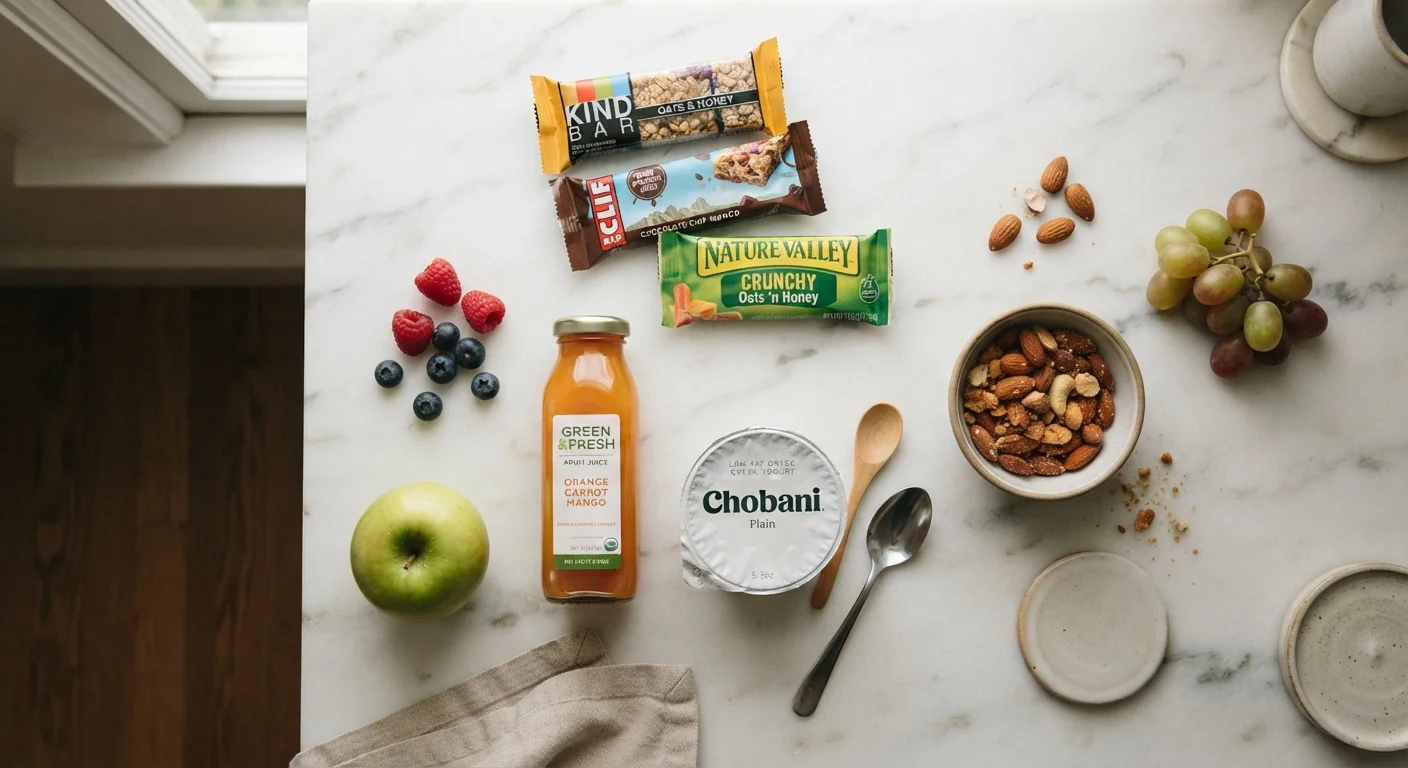
Fruit juice is widely thought of as a nutritious choice - and it does contain vitamins. However, most commercial fruit juices, even those labelled 100% juice, are high in naturally occurring sugars and have had most of the dietary fibre removed during processing. Fibre is what helps slow sugar absorption in whole fruit, so without it, juice can cause a more rapid rise in blood sugar than eating the fruit itself.
A standard glass of orange juice can contain a similar amount of sugar to a soft drink. Whole fruit - or water infused with slices of citrus or berries - delivers the same fresh flavour with meaningfully more nutritional value.
Even 100% fruit juice loses most of its fibre - and fibre is what makes whole fruit so valuable.
Flavoured Low-Fat Yoghurt
Low-fat yoghurt sounds like an obvious healthy choice, and plain varieties genuinely are - they're a good source of protein, calcium, and beneficial bacteria. The issue arises with flavoured low-fat versions. When fat is removed, flavour often goes with it, and manufacturers frequently compensate by adding substantial amounts of sugar or sweeteners.
Some individual-serving flavoured yoghurts contain as much as 20-25 grams of added sugar. Plain Greek yoghurt with fresh fruit stirred in is a straightforward alternative that gives you more protein, less sugar, and full control over what goes in.
Removing fat from yoghurt often means adding sugar - check the label before assuming it's the lighter option.
Granola and Granola Bars
Granola has a well-earned reputation as a wholesome breakfast food, and homemade or minimally processed versions can live up to it. Commercially packaged granola and granola bars, however, are often held together with oils, honey, syrups, or added sugars, and the serving sizes printed on the label can be surprisingly small - making it easy to consume more than you realise.
Some granola bars marketed as meal replacements or energy bars contain as much sugar as a candy bar. Look for options with a short ingredients list, whole oats near the top, and minimal added sweeteners. Or compare brands side-by-side - the difference in sugar content can be striking.
Many granola bars contain as much sugar as a candy bar - the serving size on the label is often the clue.
Multigrain Bread and Crackers
Multigrain simply means more than one type of grain was used - it says nothing about whether those grains are whole or refined. A multigrain loaf can be made primarily from refined white flour with small quantities of other grains added for texture or appearance, delivering far less fibre and fewer nutrients than a genuinely whole-grain product.
When choosing bread or crackers, look for whole wheat or whole grain listed as the first ingredient. If the first ingredient is enriched flour, wheat flour, or unbleached flour without the word 'whole,' the product is primarily made from refined grain regardless of what the front label says.
'Multigrain' doesn't mean whole grain - check that 'whole' appears first in the ingredients list.
Store-Bought Smoothies
Pre-made and bottled smoothies occupy a tricky middle ground. They often contain real fruit and vegetables, which is genuinely positive, but commercial versions are also frequently very high in total sugar - sometimes exceeding 40-50 grams per bottle - and may be larger than a single serving while being marketed as one.
The sugar in smoothies is largely from fruit (and sometimes added juice concentrates or syrups), so it's not the same as eating confectionery, but volume matters. Blending your own at home gives you full control over ingredients and portion size, and you can include protein sources like plain yoghurt or nut butter to slow sugar absorption.
A bottled smoothie can contain more sugar than most people expect - portion size is often the overlooked factor.
Rice Cakes and 'Light' Snacks
Rice cakes became a diet staple partly because of their very low calorie count. They are indeed low in calories and fat, but plain versions offer very little fibre, protein, or lasting satiety. On their own, they digest quickly and may leave you hungry again soon after - potentially leading to more snacking overall.
Flavoured varieties can also add sodium and artificial flavourings. Pairing rice cakes with a protein or healthy fat - like nut butter, cottage cheese, or avocado - improves their nutritional staying power considerably and makes them a more genuinely satisfying snack.
Rice cakes are low in calories but also low in nutrients - pairing them with protein makes them far more satisfying.
Building a Clearer Picture at the Grocery Store
None of this means you need to overhaul your entire pantry overnight. Small shifts in awareness - checking the sugar content on your yoghurt, comparing sodium levels across granola options - can add up meaningfully over time. These are exactly the kinds of daily habits that support long-term wellbeing without requiring dramatic change.
A Simple Label-Reading Habit
Before buying any packaged food with a health claim on the front, turn it over and check three things: the serving size, the added sugars, and the first three ingredients. This takes under a minute and quickly becomes second nature. You don't need to memorise nutrition science - just knowing what to look for puts you well ahead of the marketing.
If you want to make label-reading a regular practice, using your weekly shop as a nutrition audit is a practical and approachable place to start. And if you've ever wondered how similar labelling issues play out in other aisles, the same scrutiny applies when reading a dog food label - packaging language works the same way regardless of who's eating.
This article is for general informational purposes only and is not medical or dietary advice. For personalised nutrition guidance, please consult a registered dietitian or qualified healthcare professional.