

| Typical urban posted limit | 25-35 mph (Varies by state and municipality) |
| Typical suburban/residential default | 25 mph (many states) (Check your state's vehicle code) |
| Typical rural highway limit | 55-65 mph (Varies by state) |
| Typical interstate/freeway limit | 65-80 mph (Highest limits found in Western states) |
| School zone limit (when in effect) | 15-25 mph (Varies; check posted signs) |
| Approximate stopping distance at 60 mph | 300+ feet (General estimate; varies by vehicle and conditions) |
Speed Limits at a Glance
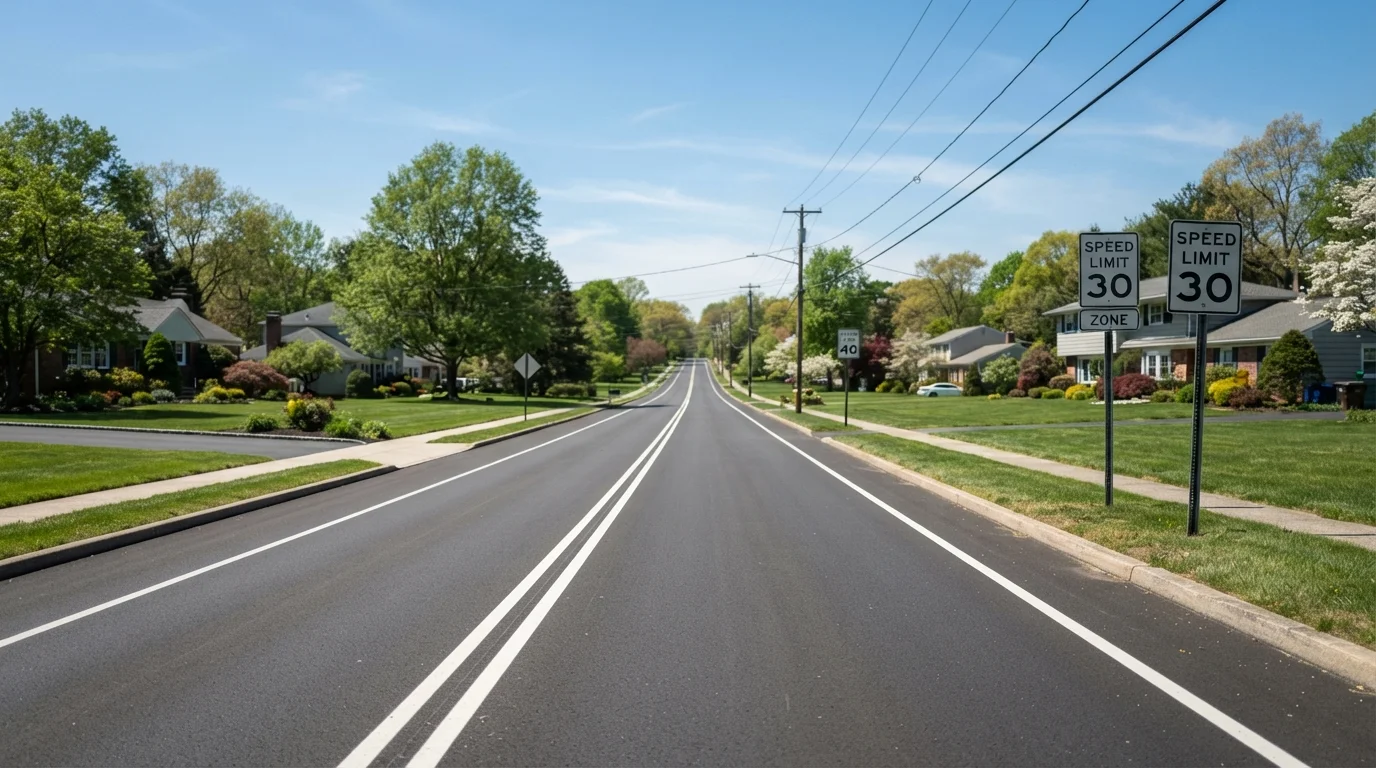
Speed limits in the U.S. are set by individual states and localities, so exact numbers vary. However, some general patterns apply across most jurisdictions and are worth keeping as quick reference points.
| Typical urban posted limit | 25-35 mph (Varies by state and municipality) |
| Typical suburban/residential default | 25 mph (many states) (Check your state's vehicle code) |
| Typical rural highway limit | 55-65 mph (Varies by state) |
| Typical interstate/freeway limit | 65-80 mph (Highest limits found in Western states) |
| School zone limit (when in effect) | 15-25 mph (Varies; check posted signs) |
| Approximate stopping distance at 60 mph | 300+ feet (General estimate; varies by vehicle and conditions) |
Always check posted signs - they are the legal standard. When no sign is visible, default speed limits (sometimes called prima facie limits) apply. These are statutory baseline speeds set by state law, commonly used where no sign is posted. For example, many states default to 25 mph in residential areas and 55 mph on undivided rural highways, though this varies significantly by state.
Speed limits are also maximum values under ideal conditions - not targets. Driving at the posted limit in poor weather, heavy traffic, or reduced visibility may still be unsafe. See our guide on adjusting your speed in adverse weather for practical condition-specific advice.
Stopping Sight Distance Explained
Stopping sight distance (SSD) is the minimum length of road a driver must be able to see ahead to safely bring a vehicle to a complete stop before reaching a hazard. Road engineers use SSD to design curves, hills, and intersections. As a driver, understanding it helps you appreciate why slowing down on crests or blind curves is so important.
300+ ft
Estimated stopping distance at 60 mph
This is a general estimate for a typical passenger vehicle under normal dry conditions; actual distance varies with tire quality, road surface, and reaction time.
2x or more
Increase in braking distance on wet pavement
Wet roads significantly reduce tire grip, meaning a car traveling at the same speed can take roughly twice as long to stop compared to dry asphalt.
~1.5 sec
Average driver reaction time
General estimates suggest drivers take approximately 1.5 seconds from perceiving a hazard to pressing the brake, though fatigue and distraction can extend this considerably.
SSD has two components: reaction distance (how far your car travels while you perceive a hazard and begin braking) and braking distance (how far it takes the car to fully stop once you apply the brakes). Together they determine the total space you need.
At 60 mph, a typical passenger vehicle may require well over 300 feet to stop completely under normal conditions - roughly the length of a football field. At 30 mph, that figure drops to around 100-120 feet, but conditions such as worn tires, wet pavement, or distraction can stretch it further. For a deeper look at the physics involved, see the science behind stopping distances.
The Two-Second Rule: How to Use It
The two-second rule is the most widely taught method for maintaining a safe following distance. It works at any speed because the gap it creates scales automatically with how fast you're traveling.
How to apply it
- Pick a fixed object ahead - a sign, overpass, or road marking.
- When the vehicle in front passes that object, start counting: "one-thousand-one, one-thousand-two."
- If your front bumper reaches the same object before you finish counting, you're following too closely. Ease back.
Two seconds is a minimum under dry, clear, daytime conditions. Safety experts and many state driving manuals recommend extending to three or four seconds in rain, fog, or when following large trucks. At highway speeds, even more buffer is advisable. Learn more about why closing the gap dramatically increases crash risk in our article on why tailgating is more dangerous than most drivers realise.
New drivers especially benefit from building this habit early. It takes conscious effort at first but becomes automatic with practice. For a full foundation of safe driving habits, explore our complete road safety resource.
Quick Reference: When to Adjust Your Distance and Speed
Certain situations consistently call for extra caution, even when traffic is light and your speed is within the limit. Use this checklist as a mental prompt whenever conditions change.
Speed limit
The maximum legal speed a vehicle may travel on a given road under normal conditions. Posted signs carry legal authority; default limits apply only where no sign exists.
Stopping sight distance (SSD)
The minimum visible road length needed for a driver to perceive a hazard and bring their vehicle to a full stop. Used by traffic engineers to design safe roads.
Reaction distance
The distance a vehicle travels from the moment a driver perceives a hazard to the moment they actually press the brake pedal. Affected by fatigue, distraction, and speed.
Braking distance
The distance a vehicle continues to travel after the brakes are applied before coming to a complete stop. Increases with speed and is affected by road surface, tire condition, and vehicle weight.
Two-second rule
A practical guideline for maintaining a safe following distance. A driver should allow at least two seconds of travel time between their vehicle and the one ahead, extended in poor conditions.
Prima facie speed limit
A default statutory speed limit that applies in the absence of posted signs. Common examples include 25 mph in school zones and 15 mph in alleys, though exact values vary by state.
- Poor visibility (fog, heavy rain, night driving): Increase following distance and reduce speed below the posted limit.
- Wet or icy pavement: Braking distances can double or more. Consider four seconds or greater following distance.
- Heavy or large vehicles ahead: Trucks and buses block your sightlines and take much longer to stop. Leave additional room.
- School zones and residential streets: Pedestrians, cyclists, and children may enter the road unexpectedly. Slow well below posted limits when activity is present.
- Towing a trailer: Added weight increases stopping distance significantly. Adjust your following distance accordingly and check that your vehicle is equipped and rated for the load.
- Fatigue or distraction: Reaction time worsens with tiredness or inattention. If you notice your reactions slowing, pull over safely and rest.
For navigating complex road scenarios including merging and blind spots, see our guide to tricky everyday driving situations.