

Key Takeaways
Why Weather Changes Everything on the Road
Most drivers learn the basics in fair-weather conditions, then assume those same habits will carry them through rain, fog, or a frosty morning. That assumption is one of the most common contributors to weather-related crashes. Adverse conditions don't just reduce visibility - they increase stopping distances, reduce tire grip, and limit how much time you have to react.
According to the U.S. Federal Highway Administration, weather-related vehicle crashes account for a significant share of all road incidents annually, with wet pavement and rain topping the list of contributing environmental factors. The good news: most of the adjustments required are straightforward. They simply need to become deliberate habits rather than afterthoughts.
For a broader look at how conditions shift across seasons, see our seasonal car care guide covering what to check before summer and winter driving.
~21%
U.S. crashes linked to weather annually
The U.S. Federal Highway Administration estimates roughly 21% of all vehicle crashes are weather-related, with wet pavement the most common factor.
4-10x
Increased stopping distance on ice vs. dry road
Transportation safety researchers note that stopping distances on packed ice can be four to ten times greater than on dry pavement at the same speed.
Driving in Rain: Slowing Down and Seeing Further
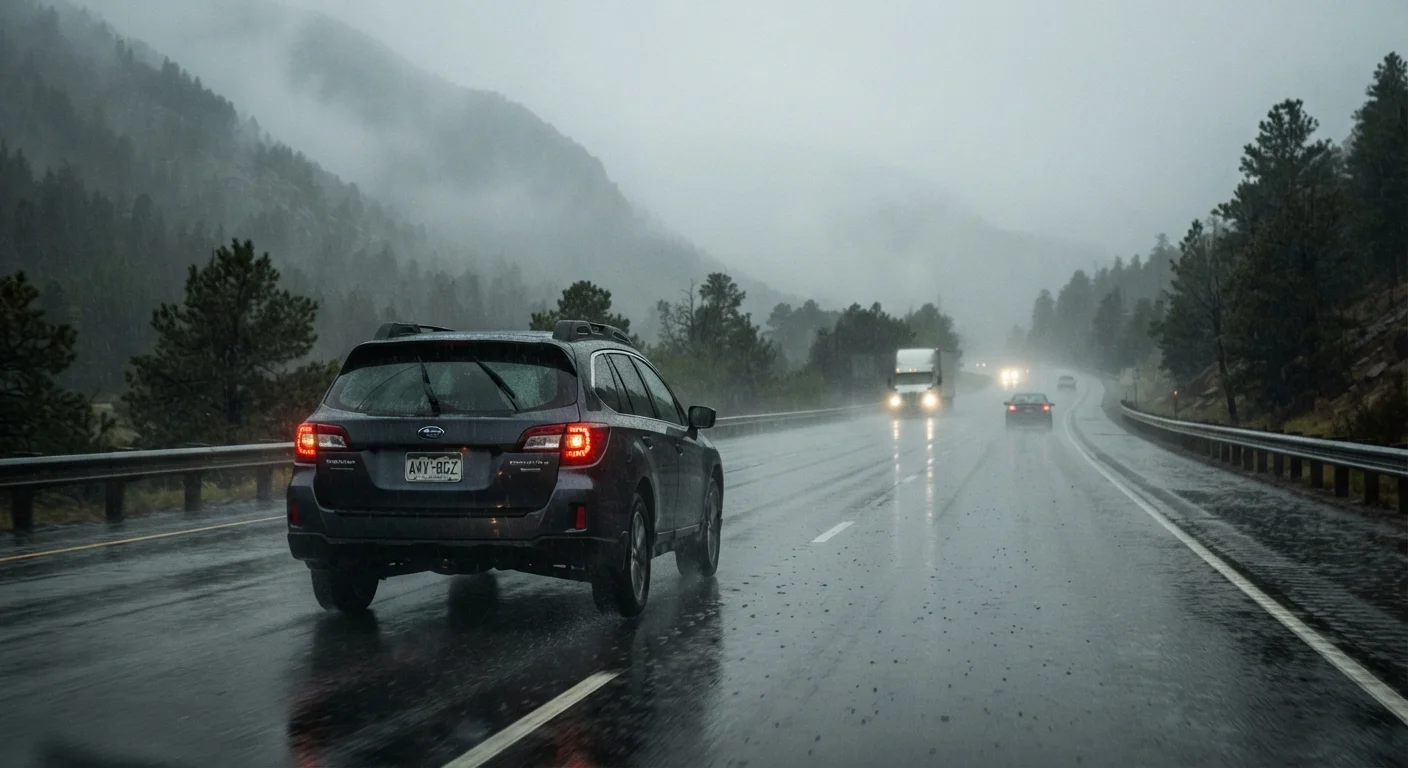
Rain reduces road friction almost immediately. Even a light drizzle can lift oil deposits from the asphalt, making the first 20-30 minutes of rainfall especially slippery. As rain intensifies, the risk of hydroplaning - where a layer of water builds between your tires and the road surface, causing a loss of steering control - increases with speed.
Key adjustments for rainy conditions include reducing your speed well below the posted limit and increasing your following distance. The standard two-second rule used in dry conditions should extend to at least four seconds in rain, giving your tires more time to grip and your brakes more room to work. For a detailed breakdown of why stopping distances grow so quickly with speed, see The Science Behind Stopping Distances.
Turn on your headlights in rain - not just for your own visibility, but so other drivers can see you. Keep your windshield defroster and wipers in good working order before wet weather arrives.
Reduce speed well below the posted limit in wet or icy conditions
Speed limits are set for dry, clear conditions. In rain or ice, stopping distances increase dramatically and posted limits may still be dangerously fast. Driving below the limit gives you meaningful extra time to respond to hazards.
Extend your following distance to at least four seconds in rain, and ten or more on ice
Wet and icy roads require far more distance to stop safely. The standard two-second rule assumes dry pavement and good tire condition - both of which disappear in adverse weather.
Use low-beam headlights - not high beams - in fog and heavy rain
High beams reflect off water and fog droplets, creating glare that actually reduces how far ahead you can see. Low beams project light downward onto the road surface where it's most useful.
Apply smooth, gradual inputs to the brake, accelerator, and steering on slippery surfaces
Abrupt inputs - hard braking, sharp steering, sudden acceleration - can overwhelm the limited grip available in wet or icy conditions and trigger a skid. Gentle, deliberate movements keep the tires working effectively.
Pull completely off the road if fog visibility drops to near zero
Continuing to drive in near-zero visibility is extremely dangerous for you and other road users. A brief stop in a safe location is far safer than attempting to navigate what you cannot see.
Driving in Fog: The Visibility Trap
Fog is deceptive. It can appear thin but obscure a hazard just 50 feet ahead. Many drivers instinctively switch to high-beam headlights in fog - this actually makes visibility worse. High beams reflect off the water droplets suspended in fog, creating a bright wall of glare. Use low-beam headlights instead, or dedicated fog lights if your vehicle has them.
Reduce your speed enough that you can stop within the distance you can actually see. If visibility drops to near zero, pull off the road completely - onto a parking lot or a rest area if possible - and turn on your hazard lights. Stopping on a road shoulder in dense fog puts you at serious risk of being struck by other vehicles.
In Fog, Less Light Is More
Switch to low-beam headlights or dedicated fog lights as soon as visibility drops. High beams create a bright glare wall off suspended water droplets and can reduce your effective sight distance to just a few feet. If your vehicle has rear fog lights, use them so drivers behind can see you sooner.
Fog often thickens in dips and valleys, and can clear suddenly as you gain elevation. Stay alert for rapid changes in visibility. Avoid the temptation to follow the taillights of the car in front too closely - if they brake suddenly, your reduced reaction margin could be catastrophic. For more on managing limited visibility at different times, our night driving guide covers similar challenges after dark.
Driving on Ice: Smooth Inputs, Extended Margins
Ice reduces tire grip to a fraction of what you'd have on dry pavement. Bridges, overpasses, and shaded sections of road freeze first because cold air circulates both above and below these surfaces. Black ice - a thin, nearly transparent layer of ice - is especially dangerous because it's nearly invisible and can appear as a slightly darker-than-usual wet patch.
On icy roads, every input - steering, braking, accelerating - must be slow and smooth. Sharp movements break traction instantly. Increase your following distance dramatically: ten seconds or more is a reasonable baseline on packed ice or snow. Avoid cruise control on slippery surfaces, as it can prevent you from detecting and responding to a developing slide.
If your vehicle begins to skid, take your foot off the accelerator, avoid slamming the brakes (unless you have ABS, in which case apply firm, steady pressure), and steer gently in the direction you want to go. Practice calm, deliberate responses rather than panicked reactions.
For a structured look at the rules that underpin safe following distances, see our driver's reference on stopping distances and the two-second rule.
Building Better Habits Before You Leave the Driveway
Preparation before a journey matters as much as your technique on the road. Check your tire tread depth and pressure regularly - underinflated or worn tires lose grip faster in wet or icy conditions. Ensure your windshield is fully clear, not just a small patch scraped through frost. Confirm your wiper blades, headlights, and defrost systems are functioning before conditions deteriorate.
Plan routes with weather in mind: avoid roads known to flood or ice over, and build extra time into journeys so you're not tempted to compensate with speed. Fatigue also amplifies poor judgment in challenging conditions, so rest before long drives in bad weather.
For broader preparation tips, our complete road safety resource covers vehicle checks and defensive driving principles that apply in any weather. And since distraction is just as dangerous in poor visibility as speed, it's worth reviewing the driving habits that quietly steal your attention.
When in Doubt, Don't Drive
If conditions are severe enough - a major ice storm, whiteout snow, or flood warnings - the safest decision may simply be to delay your trip. No appointment or commute is worth the risk of driving on roads that authorities are advising people to avoid. Check your local weather and road condition services before setting out in extreme weather.