

Key Takeaways
Why certain situations trip up even experienced drivers
Most collisions don't happen on unfamiliar mountain passes or during dramatic weather events. They happen close to home, in situations drivers encounter weekly - merging, changing lanes, navigating intersections. Familiarity breeds a kind of complacency that makes routine maneuvers surprisingly risky.
The scenarios below aren't edge cases. They're the everyday situations most likely to catch drivers off guard, and each one has a clear, learnable approach. Whether you're newly licensed or have years behind the wheel, building sharper habits in these areas pays off every time you drive. You might also want to review what to sort out before driving away in a new car to ensure your baseline setup supports safe driving from the start.
Entering a roundabout the right way
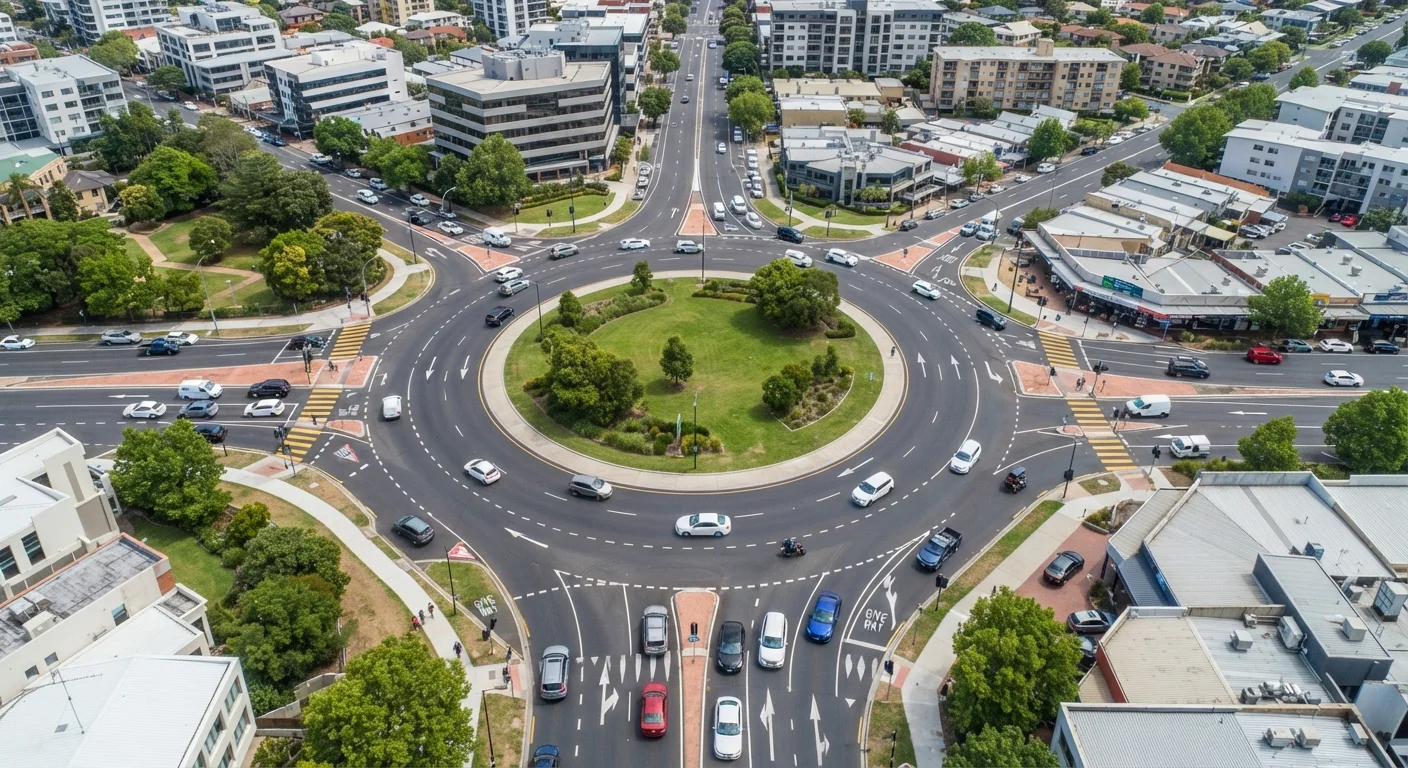
Roundabouts confuse many drivers, but the core rule is simple: yield to traffic already circulating inside. Do not treat the entry like a four-way stop. Instead, slow as you approach, check for a gap in the circulating flow, and enter only when it is clear.
Once inside, stay in your lane and signal your exit before you reach it - not after you've passed it. If you miss your turn, continue around rather than reversing or stopping abruptly. Multi-lane roundabouts follow the same principle; choose your lane based on your intended exit before you arrive, not after you've entered.
Yield to traffic already inside - then enter confidently when a clear gap appears.
Merging onto a highway without causing chaos
The most common merging mistake is slowing down on the on-ramp. The on-ramp exists so you can accelerate to match highway speed before joining traffic - not after. Entering the highway well below the flow of traffic forces vehicles behind you to brake suddenly and creates real crash risk.
Check your mirrors and blind spot early, find a gap, signal your intention, and time your entry to slot smoothly into that gap. If traffic is heavier than expected, adjust your speed within the ramp rather than braking at the point of merge. For more on maintaining safe distances once you're on the highway, see our guide on why tailgating is more dangerous than most drivers realise.
Use the on-ramp to reach highway speed - merging slowly is what causes the problem.
Checking blind spots properly
Every vehicle has areas that mirrors simply cannot cover - typically the zones slightly behind and to each side of your car. Relying on mirrors alone when changing lanes is a well-known source of collisions, particularly involving motorcycles, cyclists, and smaller vehicles.
The fix is a brief physical head check - a quick glance over your shoulder toward the relevant blind spot - performed every time you change lanes or move laterally. Adjust your mirrors to minimize overlap between what each mirror shows, then use the head check for the gap that remains. Some modern vehicles include blind spot monitoring systems, but these are aids, not replacements for the head check.
A quick physical head check catches what mirrors alone will always miss.
Navigating uncontrolled intersections
Intersections without traffic lights or stop signs - common in residential areas - are governed by right-of-way rules that many drivers have half-forgotten. The general principle in the US: yield to the vehicle on your right when two cars arrive at the same time. If you're turning left, yield to oncoming traffic going straight.
Approach uncontrolled intersections at a reduced speed, even if you appear to have right of way. Making eye contact or using a brief wave to establish mutual understanding with another driver adds a layer of practical safety that rules alone can't guarantee. Never assume the other driver knows the rules or has seen you.
Never assume the other driver knows the right-of-way rules - reduce speed and confirm.
Lane changes on multi-lane roads
On busy surface roads or highways with three or more lanes, lane changes pile risk on top of risk when done without a system. Use this sequence: mirror check, signal, blind spot check, move - in that order, every time. Signal before you check, not after; this tells other drivers your intention early enough for them to respond.
Avoid changing multiple lanes in a single move. Move into the adjacent lane, confirm it is safe, then continue to the next. Speed consistency matters here too - abrupt accelerating or braking mid-maneuver surprises the drivers around you. Our reference on speed limits and stopping distances can help you understand how speed affects your options.
Signal before you check - early signaling gives other drivers time to respond.
Handling left turns across traffic
Left turns across oncoming traffic are statistically among the more dangerous routine maneuvers, especially at busy intersections without a dedicated turn signal. The risk is misjudging the speed or distance of an oncoming vehicle - a gap that looks adequate at 30 mph may not be at 50 mph.
Wait until you have a clear, comfortable gap - not just a technically possible one. Position your front wheels pointing straight ahead while you wait; if you're rear-ended while waiting with wheels turned, you'll be pushed into oncoming traffic. Only turn the wheel when you're actually moving through the intersection. Conditions like fog, rain, or night driving shrink those gaps further - for tips on adjusting in poor visibility, see our guide on driving in rain, fog, and ice.
Keep your front wheels straight while waiting to turn left - it's a critical safety habit.
Building habits that hold up under pressure
What separates a confident driver from an anxious one isn't talent - it's having a reliable process for each type of situation. The drivers who struggle most in roundabouts, merges, and blind-spot checks are those who've never been clearly shown what to do, not those who lack ability.
Practice unfamiliar maneuvers deliberately
If roundabouts or highway merges make you nervous, seek them out during low-traffic periods - early weekend mornings, for example. Repeated, low-stakes exposure builds the muscle memory that makes these maneuvers feel routine. Confidence in tricky situations comes from practice, not from avoiding them.
Right-of-way rules vary by state
While many traffic rules are consistent across the US, specific right-of-way and roundabout regulations can vary by state or even municipality. Always familiarize yourself with local rules, particularly when driving in an unfamiliar area. Your state's DMV handbook is a reliable, free reference.
Apply the approaches above consistently until they become automatic. Over time, the mental load of each maneuver drops, your reactions become more predictable to the drivers around you, and the road feels less like a gauntlet and more like a manageable space. For a broader look at the distinct demands different road types place on drivers, our piece on motorway driving vs. city driving is a practical next step.