

Key Takeaways
Option A
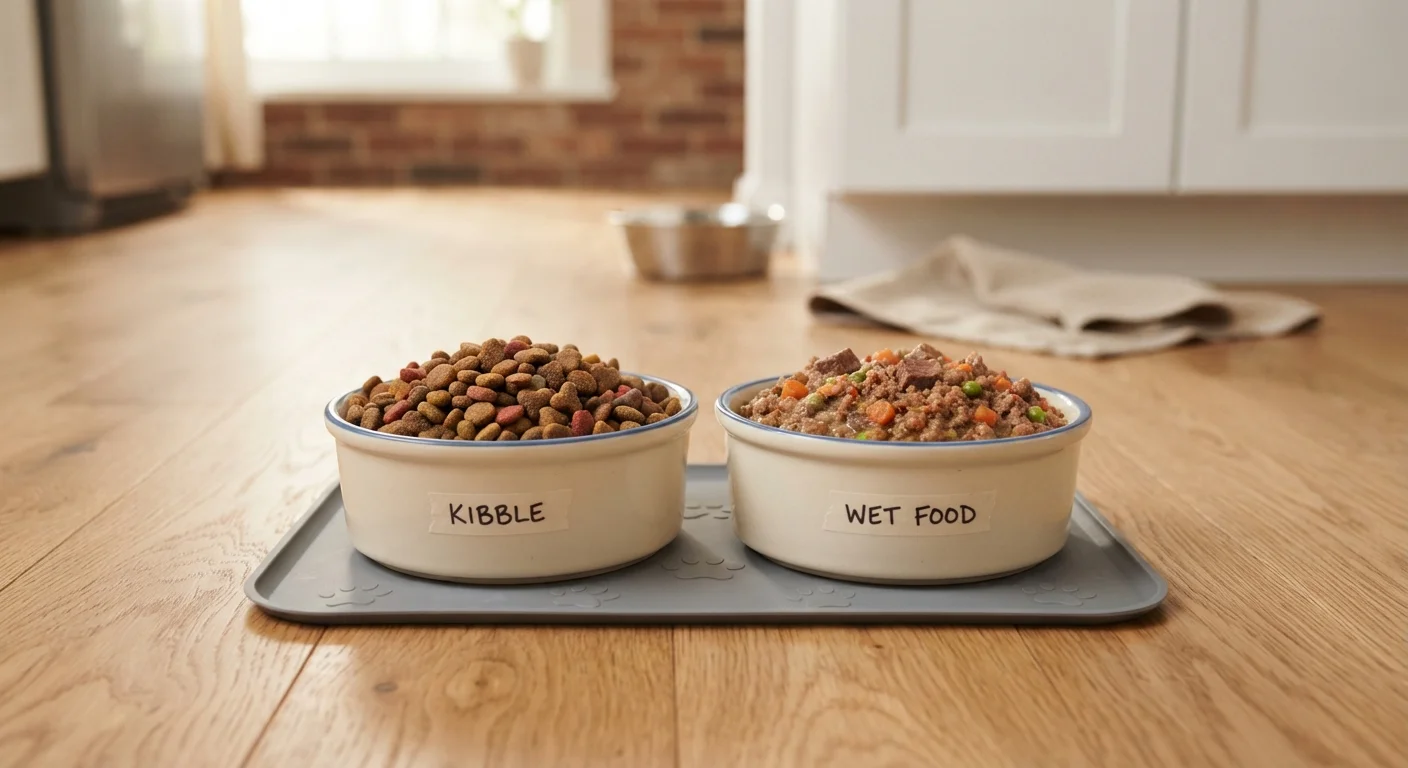
Dry Kibble
The convenient, long-lasting everyday staple.
Best for: Dogs with healthy teeth, owners who value ease of storage, and households feeding on a budget.
Option B
Wet Food
The palatable, moisture-rich alternative.
Best for: Picky eaters, senior dogs, dogs with dental issues, or those who need extra hydration.
If you want convenience and lower cost
Dry Kibble
Kibble is easier to measure, store, and serve. It typically costs less per meal and stays fresh in the bag for weeks without refrigeration.
If your dog is a picky eater or has a poor appetite
Wet Food
Wet food's stronger aroma and softer texture tend to be more appealing to finicky dogs or those recovering from illness.
If your dog struggles to chew due to age or dental pain
Wet Food
The soft consistency of wet food is far easier on dogs with missing teeth, dental disease, or jaw discomfort.
If you want to support hydration alongside regular meals
Wet Food
Wet food is typically 70-80% water, making it a practical way to boost daily fluid intake, especially for dogs that drink little on their own.
If you want nutritional flexibility without committing to one format
Dry Kibble
Starting with kibble as a base and occasionally adding wet food as a topper gives you cost control while still varying texture and flavor.
What's Actually Inside Each Format?
At their core, both dry kibble and wet food can be formulated to deliver complete, balanced nutrition for dogs. The key difference lies in moisture content and how that shapes everything from texture to shelf life.
Dry kibble typically contains around 10% moisture. Ingredients - which may include meat meals, grains or legumes, vegetables, and added vitamins - are cooked at high heat and extruded into those familiar bite-sized pieces. The low moisture level is what gives kibble its long shelf life and crunchy texture.
Wet food usually contains 70-80% moisture. It's generally made from fresh or frozen meats, broths, and other ingredients, then sealed in cans or pouches and heat-sterilized. The result is a softer, more aromatic product that many dogs find highly palatable.
Neither format is automatically superior. What matters most is whether the food carries an AAFCO statement confirming it's "complete and balanced" for your dog's life stage. See our guide to reading dog food labels for help decoding the packaging.
| Criterion | Dry Kibble | Wet Food |
|---|---|---|
| Moisture content | ~10% | ~70-80% |
| Shelf life (unopened) | Weeks to months | Years (sealed); 2-3 days once open |
| Cost per serving | Generally lower | Generally higher |
| Palatability | Moderate | Typically higher |
| Hydration support | Minimal | Significant |
| Dental chewing benefit | Modest | None |
| Ease of storage | Simple; no refrigeration needed | Requires refrigeration after opening |
| Best texture for | Dogs with healthy teeth | Senior dogs, picky eaters |
Practical Trade-Offs for Everyday Feeding
Once you understand what's in each format, it's worth thinking about how each fits into your daily routine.
70-80%
Moisture content in wet dog food
Compared to roughly 10% in dry kibble, making wet food a meaningful contributor to daily fluid intake.
~10%
Moisture content in dry kibble
The low moisture level is what gives dry kibble its long shelf life and crunchy, chewable texture.
Cost and storage: Kibble is generally less expensive per serving and can sit in a sealed container for weeks. Wet food costs more ounce-for-ounce and must be refrigerated after opening, typically used within two to three days. If you're feeding a large dog, the cost difference becomes significant quickly.
Dental health: The mechanical chewing action of kibble is sometimes credited with reducing plaque buildup, though veterinary dental experts note this effect is modest compared to regular tooth brushing. Wet food does not provide that abrasive chewing action, so dental hygiene becomes more important if wet food makes up most of the diet.
Hydration: Dogs on a dry-only diet rely entirely on their water bowl for fluids. Wet food contributes meaningfully to daily water intake, which can be beneficial for dogs prone to urinary tract issues or those that are reluctant drinkers.
Portion accuracy: Kibble is straightforward to measure with a cup or scale. Wet food portions can be trickier - an opened can contains a fixed amount that may not divide neatly into your dog's required servings. Our article on how much to feed your dog covers portion sizing in detail.
Mixing Kibble and Wet Food
Many owners combine both formats - using kibble as the base and adding a small amount of wet food as a topper. This can increase palatability without dramatically raising cost. If you go this route, adjust total portion sizes to avoid overfeeding, since both foods contribute calories. Your veterinarian can help you calculate appropriate amounts for your dog's weight and activity level.
Which Dogs Benefit Most from Each Option?
There's no single right answer for every dog, but certain life stages and health situations do lean toward one format.
Puppies can eat either format, as long as it's labeled for growth or all life stages. Some owners soften kibble with a small amount of warm water during the transition from mother's milk. For more on how puppy needs differ day-to-day, see our piece on puppy vs. adult dog care.
Senior dogs often benefit from wet food's softer texture, especially if they've lost teeth or developed arthritis in the jaw. Higher moisture content can also support kidney function, a common concern in older dogs.
Dogs with health conditions such as kidney disease, urinary crystals, or megaesophagus may be specifically directed toward wet food by a veterinarian due to its moisture levels and texture. Never switch a dog's diet based on a health condition without guidance from your vet.
Active adult dogs with no specific health concerns often do well on quality kibble, with wet food occasionally mixed in as a palatability boost. A consistent feeding schedule matters as much as format - something we explore in building a daily routine your dog will thrive on.
This article is for general informational purposes only and does not constitute veterinary or medical advice. Always consult a qualified veterinarian before making changes to your dog's diet, especially if your dog has a health condition.