

Key Takeaways
Option A
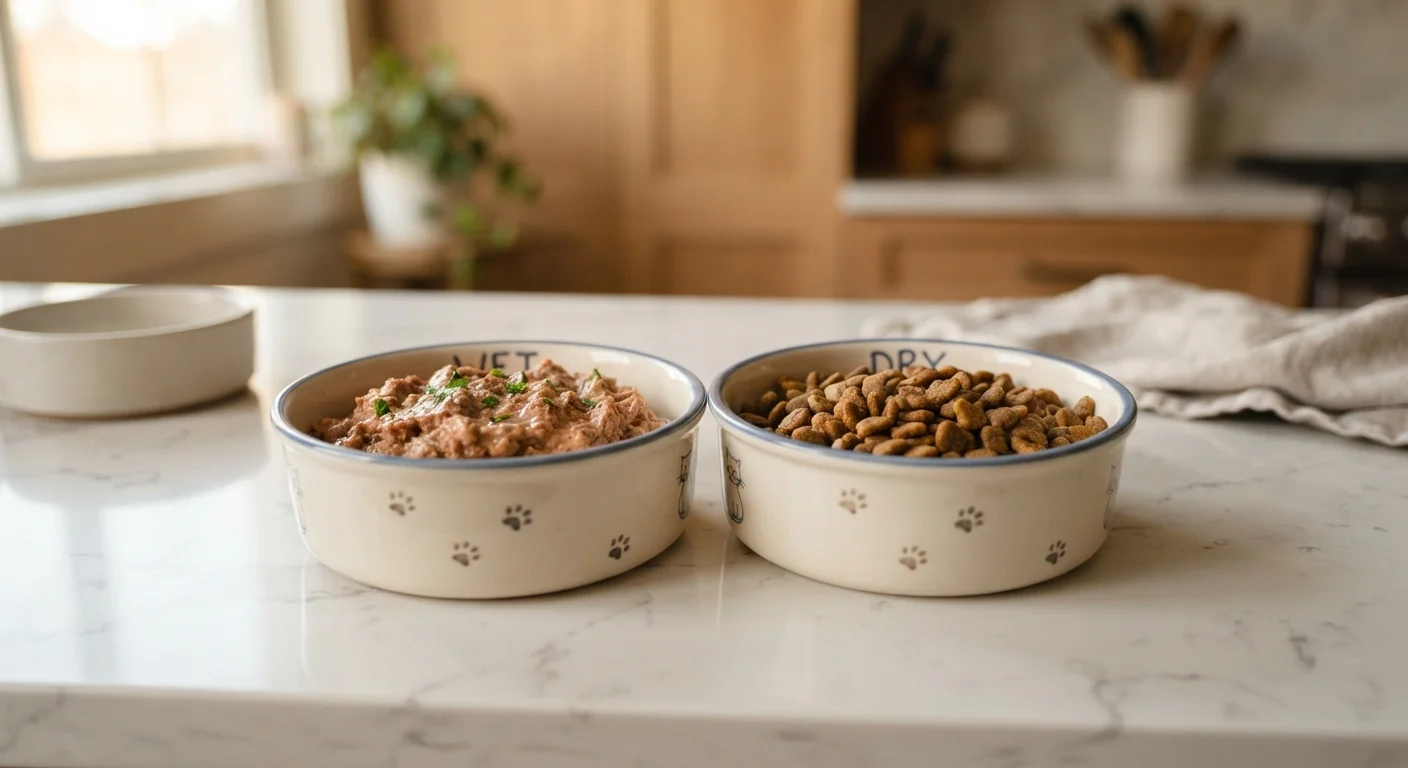
Wet Cat Food
The high-moisture, palatable option for hydration-focused feeding.
Best for: Cats who need extra hydration, are picky eaters, or have urinary, kidney, or dental concerns.
Option B
Dry Cat Food (Kibble)
The convenient, shelf-stable staple for everyday feeding routines.
Best for: Owners seeking easy portion control, longer shelf life, and budget-friendly daily feeding.
If your cat has urinary tract issues or kidney disease
Wet Cat Food
Wet food's high moisture content helps flush the urinary tract and reduces the concentration of minerals that can form crystals or stones.
If you need convenience and budget-friendly daily feeding
Dry Cat Food (Kibble)
Kibble is easier to portion, stays fresh in the bowl longer, and typically costs less per serving than wet food.
If your cat is a picky eater or has a reduced appetite
Wet Cat Food
Wet food's stronger aroma and softer texture tend to be more appealing, especially for older cats or those recovering from illness.
If dental health is your primary concern
Dry Cat Food (Kibble)
The mechanical action of crunching dry kibble may provide modest plaque reduction, though it is not a substitute for regular tooth brushing.
If you want to cover multiple nutritional bases
Wet Cat Food
A mixed diet - wet food for hydration and palatability, kibble for structure and cost control - is a practical middle ground many vets support.
The Core Difference: Moisture Content
The most fundamental distinction between wet and dry cat food is water content. Wet food typically contains 70-85% moisture, while dry kibble contains only around 6-10%. This gap matters because cats evolved as desert animals with a naturally low thirst drive - they are biologically adapted to get most of their water from prey. In a domestic setting, that instinct doesn't disappear, and many cats simply don't drink enough water from a bowl alone.
Feeding wet food is one of the most straightforward ways to increase your cat's daily fluid intake without relying solely on a water bowl or fountain. Veterinary guidance consistently links adequate hydration to a reduced risk of feline lower urinary tract disease (FLUTD) and chronic kidney disease - two of the most common health concerns in domestic cats. If your cat has been diagnosed with either condition, your vet may specifically recommend wet food as part of ongoing management.
To dig deeper into your cat's broader nutritional needs, see our guide to feeding your cat well, which covers label reading and portion sizing.
| Criterion | Wet Cat Food | Dry Cat Food (Kibble) |
|---|---|---|
| Moisture content | 70-85% | 6-10% |
| Hydration support | Excellent | Low |
| Palatability | High - strong aroma | Moderate - varies by cat |
| Dental benefit | Minimal | Mild mechanical scraping |
| Cost per serving | Higher | Lower |
| Shelf life (opened) | 1-2 days refrigerated | Weeks in sealed container |
| Calorie density | Lower per gram | Higher per gram |
| Best for urinary health | Yes | Less ideal |
Palatability, Dental Effects, and Cost
Beyond moisture, three practical factors drive most owners' decisions: how much their cat enjoys the food, what it does for dental health, and how much it costs over time.
Palatability
Wet food wins for most cats when it comes to taste appeal. Its higher fat content and stronger aroma make it more enticing, which is especially important for senior cats, kittens transitioning to solid food, or any cat recovering from illness. Dry food can still be palatable - particularly if your cat was introduced to it young - but is generally less aromatic and texturally stimulating.
Dental Health
The claim that dry kibble cleans teeth is partially true but often overstated. The crunching action can provide some mild mechanical scraping, but most kibble simply shatters without meaningful plaque removal. Wet food, by contrast, can stick to teeth and potentially contribute to tartar buildup if oral hygiene is neglected. The single most effective way to protect your cat's teeth is regular brushing with a pet-safe toothpaste - regardless of food type.
Cost
Dry food is almost always more economical. Wet food carries a higher price per calorie and has a short shelf life once opened - typically one to two days refrigerated. Kibble can sit in a sealed bag for weeks and is far easier to buy in bulk. For multi-cat households on a tight budget, this difference is significant.
70-85%
Moisture in wet cat food
Compared to around 6-10% in dry kibble, making wet food a key hydration source for cats who rarely drink from a bowl.
~60%
Cats affected by urinary issues
Feline lower urinary tract disease is among the most common reasons cats visit vets, and low moisture intake is a recognised contributing factor.
Mixing Both: A Practical Middle Ground
Many cat owners - and veterinarians - find that a combination feeding approach sidesteps the either/or dilemma entirely. Offering wet food once or twice daily provides hydration and palatability benefits, while dry food left available between meals gives cats the option to graze and helps manage cost. This can work well for healthy adult cats without specific dietary restrictions.
That said, mixing foods requires careful attention to total daily calorie intake. Overfeeding is one of the most common mistakes cat owners make, and it's easy to underestimate how quickly calories add up when combining two food types. Each food has its own caloric density, so you'll need to adjust portion sizes accordingly - your vet can help you calculate appropriate amounts for your cat's weight and activity level.
Kittens and Senior Cats Have Different Needs
Very young kittens transitioning from milk often do better starting with wet food due to its softer texture and higher moisture. Senior cats may have dental pain or reduced kidney function that makes wet food particularly beneficial. If your cat is under one year old or over ten, ask your vet whether their food format needs to be adjusted as part of a life-stage nutrition plan.
Whether you feed wet, dry, or both, the underlying nutritional profile of the food matters just as much as the format. Understanding what cats actually need to thrive indoors can help you evaluate any food against your cat's real requirements.
This article is for general informational purposes only and does not constitute veterinary advice. Always consult a qualified veterinarian before making significant changes to your cat's diet, especially if your pet has an existing health condition.