

Key Takeaways
Our Verdict
All three methods can help you build lasting habits when used consistently. Paper journals suit reflective, creative thinkers who want depth. Apps work well for busy people who benefit from reminders and data. Calendars are the most friction-free starting point for anyone who feels overwhelmed by the other two.
| Best for | Recommended |
|---|---|
| Reflective readers who enjoy writing and self-analysis | Paper Journal |
| Busy individuals who need automated reminders and visual feedback | Habit-Tracking App |
| Beginners who want the simplest possible starting point | Wall or Desk Calendar |
| People tracking more than three habits simultaneously | Habit-Tracking App |
Why Tracking Methods Matter
Starting a new habit is one challenge; sticking with it past the first two weeks is another. Research in behavioral science consistently points to a simple truth: what gets measured tends to get done. Tracking creates a visual record that reinforces commitment and makes it harder to rationalize skipping a day.
But the way you track matters just as much as whether you track. A method that feels clunky, time-consuming, or intimidating will quietly fade from your routine. This comparison lays out three widely used approaches - paper journals, habit-tracking apps, and calendars - so you can match a tool to your actual life rather than an idealized version of it. If you're still defining which habits to track in the first place, the Daily Habit Starter Checklist is a practical place to begin.
| Paper Journal | Habit-Tracking App | Wall/Desk Calendar | |
|---|---|---|---|
| Setup effort | Moderate - design your own layout | Low - guided setup in-app | Minimal - just hang it up |
| Daily time required | 2-5 minutes | Under 1 minute | Under 30 seconds |
| Reminders | None - self-directed | Push notifications available | Visual cue only |
| Number of habits trackable | Many (custom grids) | Many (unlimited entries) | 1-2 habits comfortably |
| Reflection & notes | Excellent - open-ended writing | Limited - structured fields | None |
| Screen time impact | None | Adds daily screen use | None |
| Cost | Low - notebook and pen | Free to paid tiers | Very low - one calendar |
Paper Journals: Depth Over Convenience
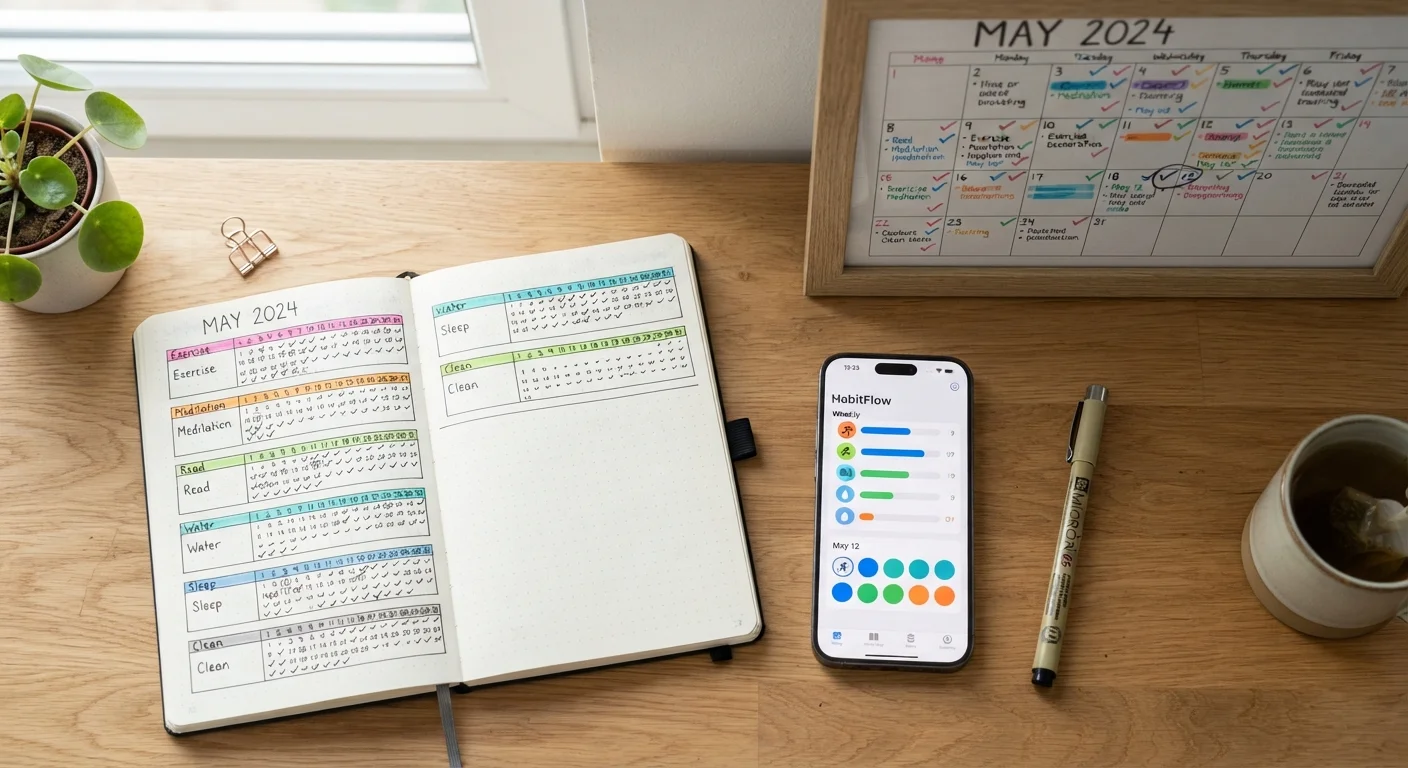
A paper journal - whether a dedicated habit-tracking notebook or a simple ruled pad - puts you entirely in control of what you record and how. Many people use a grid layout: habits listed down the left side, dates across the top, with a checkmark or dot filled in each day.
What works well: The physical act of writing reinforces memory and intention. Journals also allow for open-ended notes - you can jot down why you skipped the gym or what made a meditation session feel different. That kind of reflection is hard to replicate digitally.
Where it gets tricky: Journals don't send reminders. If the notebook sits under a pile of mail, days slip by unrecorded. They also require a small daily time investment, which some people find calming and others find burdensome.
Start Simple, Then Expand
If you're new to habit journaling, resist the urge to build an elaborate layout on day one. Start with a single column tracking just one habit for two weeks. Once recording feels automatic, you can add more habits or more detail. A simple system you maintain beats a complex system you abandon.
Best suited for: People who enjoy analog routines, morning journalers, or anyone already keeping a planner or diary.
Habit-Tracking Apps: Structure With Automation
Smartphone apps designed for habit tracking bring two advantages that paper can't match: push notifications and automatic streak counters. Both tap into psychology - reminders reduce forgetting, and streaks create a mild loss-aversion effect that nudges you to keep going.
Most apps let you set a daily or weekly goal for each habit, log completion with a single tap, and view color-coded progress charts over time. Some include notes fields, mood logs, or integration with other wellness tools.
What works well: Minimal effort per check-in, consistent reminders, and an instant overview of multiple habits at once. For beginners who feel overwhelmed by designing a journal layout, an app removes that barrier entirely.
Where it gets tricky: Apps add another item to your screen-time load. If you're already working on reducing digital distractions - see our article on digital habits and screen time - adding another app may feel counterproductive. Notifications can also shift from motivating to irritating if poorly timed.
Best suited for: Busy schedules, anyone tracking more than two or three habits, or people who respond well to visual streaks and progress data.
Calendars: Low-Friction and Always Visible
A simple wall calendar or desk calendar is arguably the most underrated habit-tracking tool. The method is straightforward: each day you complete your habit, draw an X or add a sticker. Over time, a chain of marks forms - and the goal becomes not breaking the chain.
What works well: Calendars are always visible, require zero setup, and carry no learning curve. Because they live on the wall or your desk rather than inside an app, they serve as passive reminders throughout the day without demanding active attention.
Where it gets tricky: A calendar works well for one or two habits at most. Trying to track five different behaviors on a single monthly grid quickly becomes confusing. Calendars also offer no space for notes or reflection.
Best suited for: Anyone just getting started with habit tracking, or those who want a dead-simple system for a single keystone habit like daily exercise or drinking enough water.
Once you've established whether you prefer structured timing or a looser approach to your day, the article on fixed-time routines vs. flexible habits can help you decide how to schedule the habits you're tracking. And if you're ever wondering whether tracking itself is helping or adding pressure, it's worth reading Tracking Your Habits: Useful Tool or Added Pressure? for an honest look at both sides.